How Do We Launch Things Into Space? NASA’s Space Place explains the science
Good morning, Space Fans! In our Science column, we love to share exciting updates and news about how things work on planet Earth and beyond.
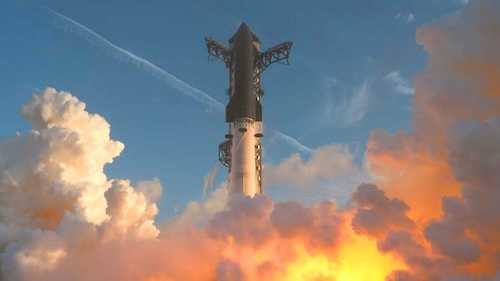
This was a big week for exploration. On Monday, September 28, SpaceX launched the largest rocket ever built — Starship and Super Heavy megarocket — into orbit for 1st time. The biggest and most powerful launch vehicle ever built, it finally reached orbit, but the launch from SpaceX’s Starbase site in South Texas was not without drama.
During liftoff, one of the six engines on Starship’s Ship upper stage failed, raising doubts about whether SpaceX would attempt to reach orbit after all. SpaceX spokesperson Dan Huot even announced it was called off, then reversed course as flight controllers decided to press ahead. What happened next? Learn more about it on Space.com.
The big event made our editors wonder: How are rockets actually launched into space?
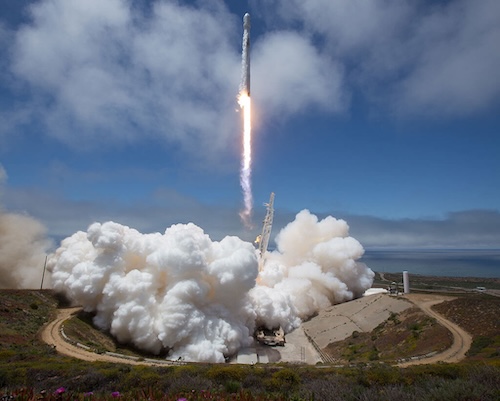
The GRACE Follow-On spacecraft launched into orbit in May 2018. Credit: NASA/Bill Ingalls
According to NASA’s Space Place: Scientists and engineers launch things into space by putting them on rockets with enough fuel — called propellant — to boost them above most of Earth’s atmosphere. Once a rocket reaches the right distance from Earth, it releases the satellite or spacecraft.
We launch satellites and spacecraft by putting them on rockets carrying tons of propellant. Propellants give the rocket enough energy to lift off from Earth’s surface. Because of Earth’s gravity, the largest, heaviest spacecraft need the biggest rockets and the most propellant.
How does a rocket lift off? More than 300 years ago, a scientist named Isaac Newton laid out three basic laws that describe the way things move. One of the laws says that for every action, there is an equal and opposite reaction. This is the most important idea behind how rockets work.
If you see pictures or videos of a launch, you’ll see exhaust streaming out the bottom of the rocket. Exhaust is the flames, hot gases, and smoke that come from burning the rocket’s propellants. The exhaust pushes out of a rocket’s engine down toward the ground. That’s the action force. In response, the rocket begins moving in the opposite direction, lifting off the ground. That’s the reaction force.
Once a rocket launches, will it keep going? Apparently, it’s not that simple.
Earth’s gravity is still pulling down on the rocket. When a rocket burns propellants and pushes out exhaust, that creates an upward force called thrust. To launch, the rocket needs enough propellant so the thrust pushing it up is greater than the force of gravity pulling it down. A rocket needs to speed up to at least 17,800 miles per hour—and fly above most of the atmosphere, in a curved path around Earth. This ensures that it won’t be pulled back down to the ground. But what happens next is different, depending on where you want to go.
How does it orbit Earth, and how can we get to other planets? Click here to learn all about it!