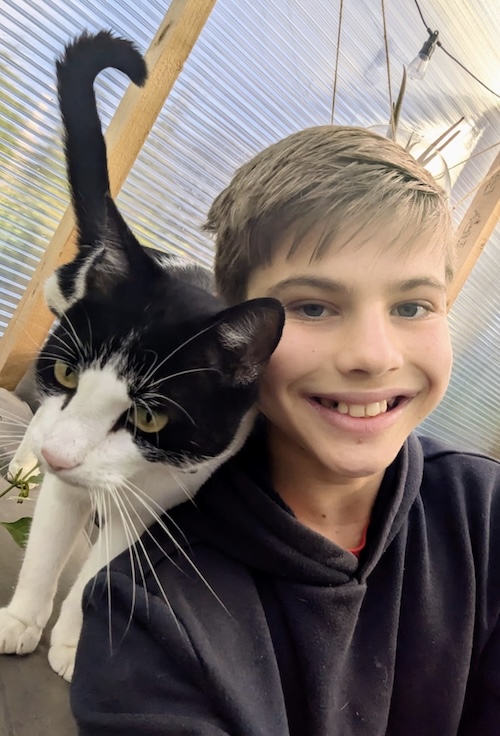
About the Author: Seth is a 14-year-old author living in Co. Waterford, Ireland. He has been writing books over the last few years with the help of his amazing cats. Together they capture the imagination and sincerity of youth, plus the occasional typo from when they walk across his computer keyboard! His published books include The Boy and the Griffin, How to Save a Kingdom on a Budget, Walk in the Shadows, and many more.
About the Book: Twelve-year-old Daren has spent his whole life among the snowy peaks of the mountains, and he’s perfectly happy with snowball fights, dangerous …
Read More
By Vivienne K., 8, InkandescentKids.com reporter for The Zebra newspaper • With Hope Katz Gibbs, publisher, InkandescentKids.com
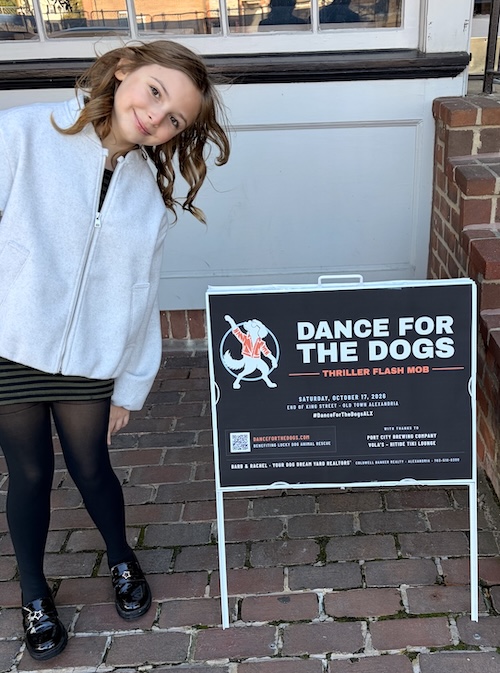
Saturday, October 17 — More than a thousand people gathered near the waterfront on King Street tonight to watch a flash mob dance to Michael Jackson’s “Thriller” to raise money for Lucky Dog Animal Rescue.
As an Inkandescent Kids magazine reporter, I was on site to cover the event for InkandescentKids.com online and Alexandria’s newspaper, The Zebra.
Here’s what I discovered just before King Street went quiet at dusk — and the dead-icated dance began.
Meet the women behind the Thriller: Coldwell …
Read More
InkandescentKids welcomes Austin Graff, a journalist and author of 111 Places for Kids in Washington That You Must Not Miss.
The book will be available for sale at the Inkandescent Kids Book Fair on August 8, 2026.
Reserve your tickets to win our grand prize.
About Austin: There’s profession, and there’s passion. Sometimes they collide. Curiosity & Connection is the collision of 14 years leading social media, digital, and influencer marketing for top brands professionally while exploring Washington, D.C. and the world personally. Growing social platforms into the millions and launching award-winning campaigns while publishing travel guides for The Washington …
Read More
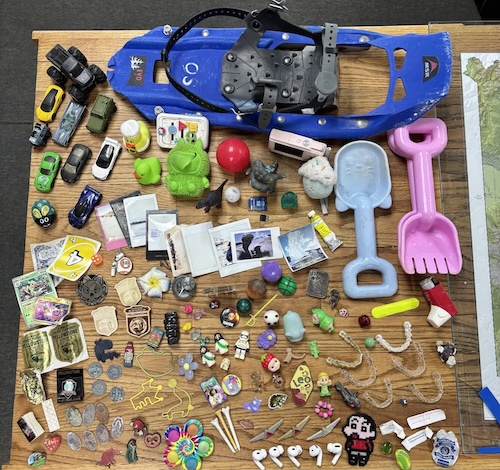
Popular Science, September 14, 2026 — In addition to hats, lost items at Yellowstone include hair ties, dozens of lens caps, AirPods, and an inhaler.
With more than 4.5 million visitors from around the world every year, sightseers arrive well prepared to admire the hotsprings, geysers, scenic lookouts, and wildlife.
But experts agree, there is only so much anyone can do about life’s little unexpected accidents. Each season, Yellowstone’s gusty winds are responsible for blowing away hundreds of hats, maps, and even sunglasses from the heads and hands of onlookers. Each season, park workers scour the grounds to …
Read More
In the News: The European Union is moving to ban social media for under 13s across the bloc and impose restrictions on the digital technology for older children, European Commission President Ursula von der Leyen announced Wednesday.
The move to develop EU-wide rules comes after several individual EU member states have introduced social media limits on teenagers amid a global push to restrict children’s access to social media. Australia became the first country in the world to ban social media for under 16s in December 2025.
“No social media under the age of 13. No personal account under the age …
Read More
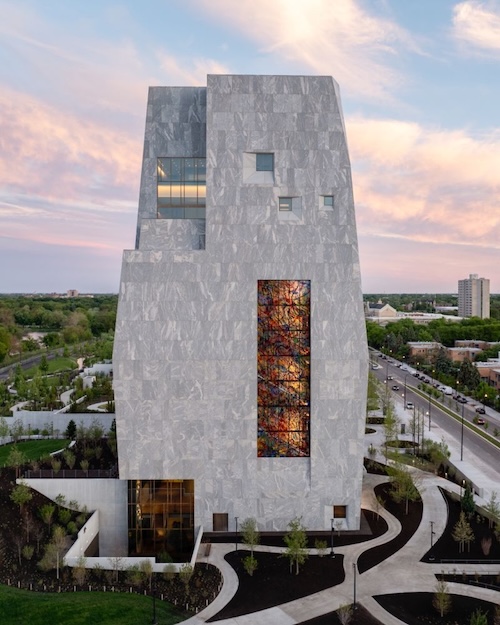
“HOUSING IS A HUMAN RIGHT. BUILD IT.”
That’s the message today from the International Union of Architects. Created in 1985, World Architecture Day is celebrated each year on the first Monday of October, in parallel with the United Nations’ World Habitat Day.
The theme of World Habitat Day 2026 is “Adequate Housing for All”, drawing attention to the global housing crisis. Within this context, the UIA Council has chosen “Housing is a Human Right. Build It.” as the theme for World Architecture Day 2026, to be marked on Monday 5 October 2026.
This theme aligns with global …
Read More
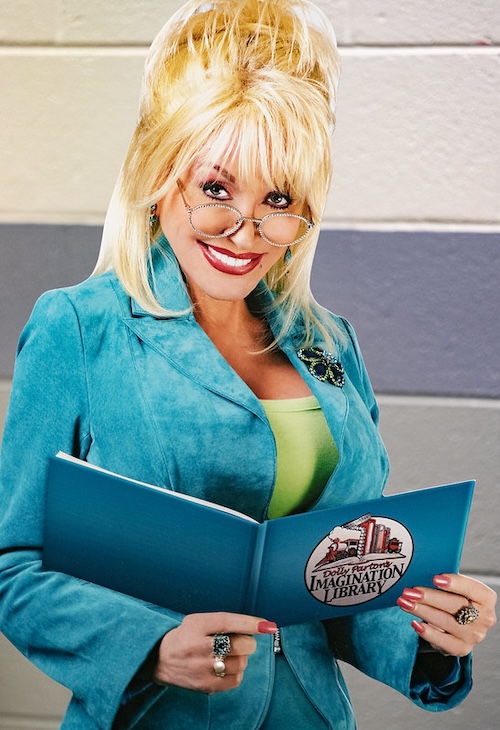
Dolly Parton once helped slash the dropout rate in her home county by offering students money to finish school. In 1991, she launched something called the Buddy Program in Sevier County, Tennessee. At the time, the dropout rate for the participating classes was around 35%. So Dolly made students a deal.
Every 7th and 8th grader was paired with a buddy. If both graduated high school, Dolly would give each student $500. The idea was simple: Give students a reason to encourage each other to stay in school.
And it worked. For those participating classes, the dropout rate reportedly fell …
Read More
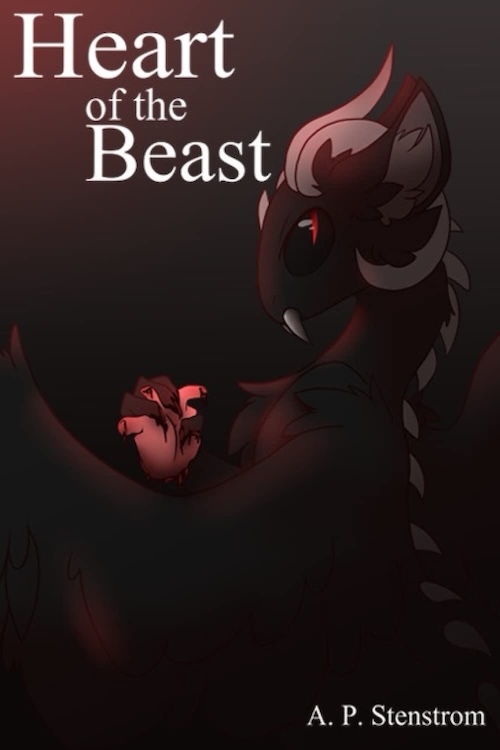
About the Heart of the Beast: On a continent-sized island, four dragons must learn to work together to defeat a rising evil. These four unlikely heroes will have to reveal their secrets and who they are to have a chance of victory. One secret might put the whole dragon world in peril.
Best for young adults: This book has some scenes of heavy amounts of violence, gore, and genocide.
Click here to read the first chapter • Learn more about the book here!
About the author: Hello! My name is A. P. Stenstrom. I am 23, and am a …
Read More
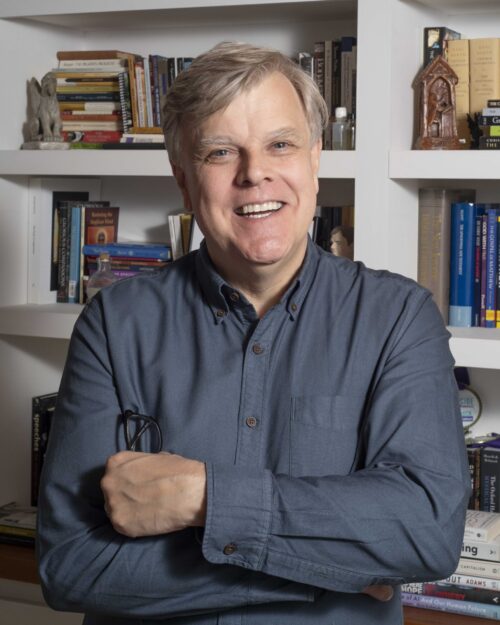
Please welcome our new columnist: Rev. Dr. Robert Flanagan!
About Father Bob: An esteemed Episcopal priest and author, Rev. Dr. Robert Flanagan has dedicated his life to spiritual transformation and caring for others. With a profound connection to his faith and an unwavering commitment to helping those in need, he has touched countless lives through his ministry, writings, and teachings. Bob’s book, “Letters of an Unexpected Mystic,” was a 2023 Selah Book Award finalist in the Bible study category.
“We thrive when we relate to who and what is around us in a healthy manner. We can discover ourselves—who …
Read More
Good morning, Space Fans! In our Science column, we love to share exciting updates and news about how things work on planet Earth and beyond.
This was a big week for exploration. On Monday, September 28, SpaceX launched the largest rocket ever built — Starship and Super Heavy megarocket — into orbit for 1st time. The biggest and most powerful launch vehicle ever built, it finally reached orbit, but the launch from SpaceX’s Starbase site in South Texas was not without drama.
During liftoff, one of the six engines on Starship’s Ship upper stage failed, raising doubts about …
Read More
About the Author: She’Meka Wilson is a passionate children’s book author and creative storyteller, best known for her uplifting series featuring Jade the Hippo. Inspired by her own experiences as a mother and veteran, She’Meka creates heartfelt stories that empower young readers to face their fears, express themselves, and believe in their unique strengths. Through her publishing brand Life in Pink, she’s on a mission to bring joy, representation, and confidence to children everywhere, one colorful, rhyming story at a time. When she’s not writing, She’Meka enjoys spending quality time with her family in Maryland.Learn more: lifein-pink.com
About the Jade …
Read More
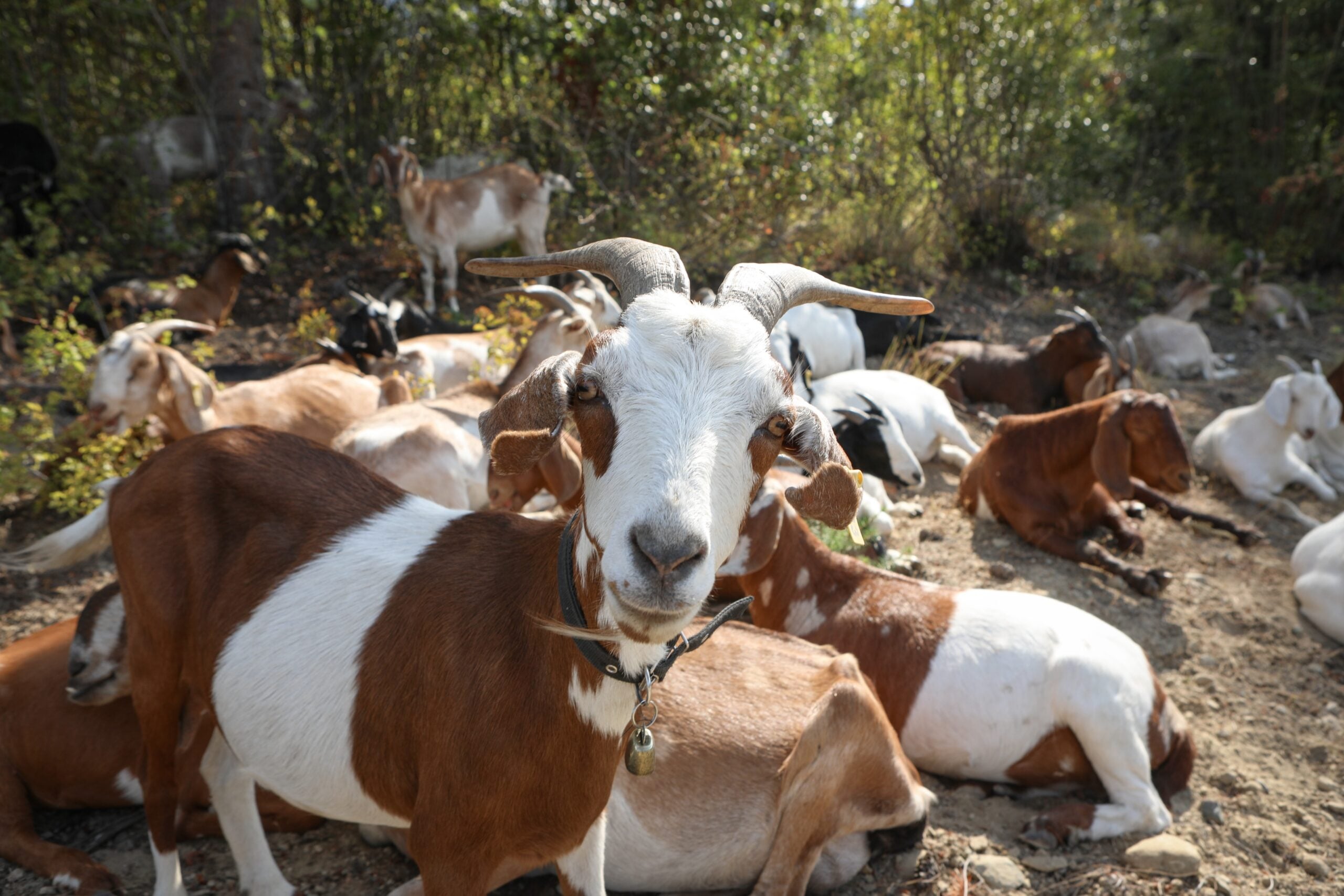
Animals are the heroes across the country as many towns are bringing in goats and sheep to clear invasive plants!
In Alexandria, VA: City officials say using livestock is safer and more cost-effective than sending human crews with heavy equipment onto steep or rocky terrain. The goats will target invasive plants growing along the park’s steep slopes. City officials say using livestock is more cost-effective than sending human crews with heavy equipment onto steep or rocky terrain, which can pose safety risks. The city says the method offers an environmentally friendly way to eliminate invasive weeds and support a …
Read More
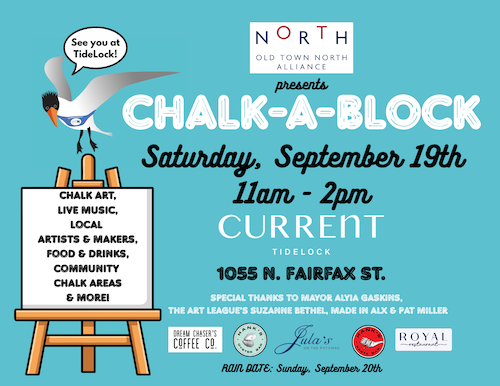
The Old Town North Alliance presents the 3rd Annual Chalk-A-Block from 11am to 2pm on Saturday, September 19th.
Visit the newly completed TideLock project in Old Town North (1055 N. Fairfax St.) for a free, family-friendly event featuring chalk artists, live music from The Okays, local makers and artists showcasing their works, and an array of food and drinks for sale from neighborhood favorites Jula’s on the Potomac, Hank’s Oyster Bar, Hank’s Pasta Bar, and Royal Restaurant plus a special appearance from Dream Catcher’s Coffee!
Artist/architect Anila Angjeli, who captivated the crowd last year with her colorful “Wings in …
Read More
Research shows many members of the animal kingdom rival human intelligence.
Here are 8 of the top smartie pies, courtesy of SentientMedia:
African Gray Parrots are thought to be one of the most intelligent species on the planet, rivaling even apes. In some areas, they surpass the abilities of five-year-old children. The reason, scientists believe, is that they can use deductive reasoning to solve problems, specifically determining which of two cups contains a food reward. More advanced versions of the same test revealed the parrots’ ability for logical thinking. In one such experiment, Griffin, the test …
Read More
This week, Step Afrika is celebrating what happens when young people step into the arts.
- In classrooms, at summer camp, and in theaters across the country, stepping brings students together, gets them moving, and gives them a chance to discover something new.
- Step Afrika!’s award-winning Arts Education programs serve students from PreK through 12th grade through high-energy performances, interactive workshops, and immersive residencies. Rooted in the values of teamwork, commitment, discipline, and academic achievement, each program builds confidence, fosters cultural understanding, and empowers students through the transformative power of stepping.
- Want to bring some stepping into your school
…Read More
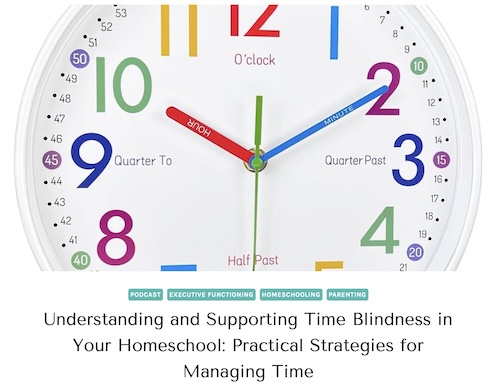
When something is hard for our kids, we naturally want to fix it. If handwriting is messy, we practice handwriting. If shoe tying is hard, we practice tying shoes. Sometimes that is exactly what a child needs. But as an occupational therapist and homeschool mom, I’ve learned to ask another question: Where else am I seeing this? One Hard Thing Doesn’t Tell Us the Whole Story.
Let’s say handwriting has become a struggle. Your child complains that writing takes too long. They lean across the table, constantly reposition themselves, or avoid assignments that require writing. Now zoom out. Is tying …
Read More
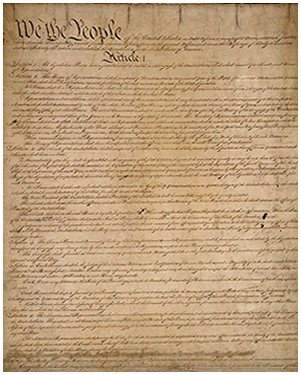
Every September 17, we celebrate Constitution Day and Citizenship Day to commemorate the formation and signing of the U.S. Constitution by 39 delegates at the 1787 Constitutional Convention in Philadelphia. It recognizes all who are born in the U.S. or become citizens through naturalization.
A little history: On February 29, 1952, by joint resolution (36 U.S.C. 106), Congress officially designated Constitution Day. It begins the first day of Constitution Week, which continues through September 23. Before this law was enacted, the holiday was known as I Am an American Day and Citizenship Day and …
Read More
What can we say about Dolly Parton other than — WOW! And THANK YOU! Born on January 19, 1946, in Sevier County, Tennessee, Dolly Rebecca Parton grew up in a humble family as one of twelve children in a small one-bedroom home nestled in the Smoky Mountains of East Tennessee. She consistently drew inspiration throughout her career from her deep love for the place and people who raised her.
One of the best-selling artists in history with over 100 million records worldwide, she recorded 49 albums that spawned 26 No. 1 hit singles on the Billboard country charts, the most …
Read More
Entrepreneur and activist Janice Murphy founded Light the Way Foundation (LTW) in 2016 because, as a child, she was unable to participate in activities due to limited resources.
“My mission is to ensure all youth are afforded the opportunity to participate in enrichment activities, as they are critical to development,” shares Janice, who received a Master of Business Administration degree from UMUC and a Bachelor’s degree in Computer Information Systems from Strayer University. “I have always had a passion to help youth reach their goals. LTW has enabled me to watch community youth develop into confident and educated young men …
Read More
About National Grandparents Day: A presidential proclamation was signed by President Jimmy Carter in 1978 to being the observance of this special holiday.
According to grandparentsday.org, the leaders behind this special day are Jacob Reingold and Marian McQuade.
- During the 1961 White House Conference on Aging, Jacob Reingold of the Hebrew Home at Riverdale (now part of RiverSpring Living) was inspired by a speech concerning the “new image of the aged,” and focused on recognizing the role of millions of older Americans who are grandparents.
- That same year, on September 16, 1961, the Hebrew Home held the first day
…Read More
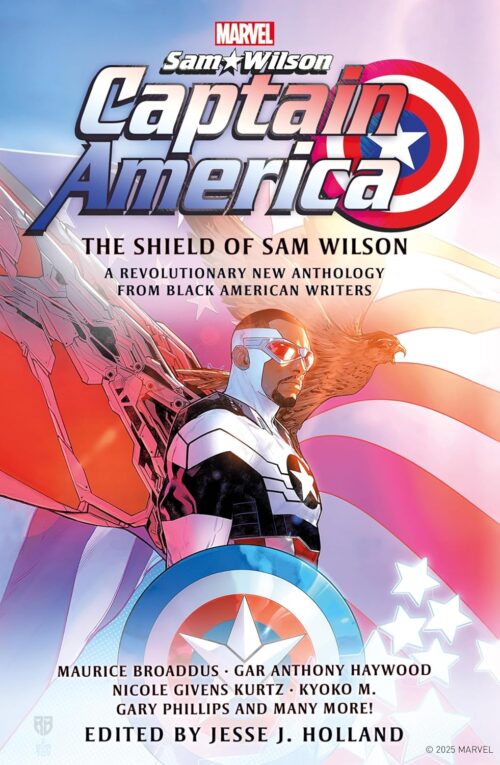
The new Captain America has a big shield to carry. Is he up to the task? Find out in these subversive, exciting and uplifting short stories inspired by the Marvel comic book universe, written by celebrated Black authors. The new Captain America has a heavy shield to hold. As a Black man in America, Sam Wilson knows he has to be twice as good to get half as much credit. He must be a paragon of virtue for a nation that has mixed feelings towards him. In these thirteen brand-new stories, the all-new Captain America must thwart an insurrectionist plot, …
Read More
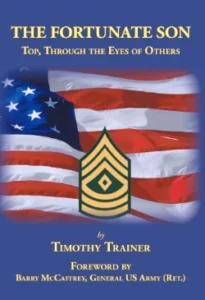
About the Book — The Fortunate Son recounts the parallel lives of an army brat and a group of Vietnam veterans who intersect decades after the war. “The veterans open up to me, the army brat, perhaps in a way they never have with their own families,” explains author Timothy Trainer. “Through my father, Top, their First Sergeant, we have a common link. Over the years, we’ve gotten to know each other. They begin to understand the sacrifices of an army family. But, more importantly, they want me to understand how our family’s sacrifice and my father’s tour of duty …
Read More
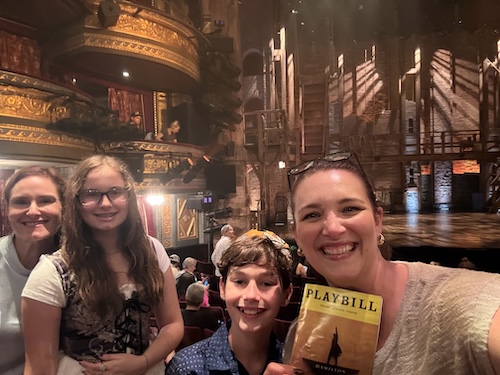
Inkandescent Kids magazine: You had the opportunity to go to the Broadway performance of Hamilton to celebrate your 13th birthday. Congratulations! What made you want to choose this gift as a way to usher in your teen years?
Nathaniel: I’ve always loved Hamilton. It’s always been my favorite musical. My Mom gave me two options : go to the beach or see Hamilton. Obviously, I chose Hamilton.
Inkandescent Kids magazine: Who got to go with you?
Nathaniel: It was me, my mom, one of my friends, Harper, and her mom.
Inkandescent Kids magazine: Are you a fan of American …
Read More
One of my favorite activities for the past few years has been judging games for the Serious Play Conference. I have had the chance to play games used to protect workplaces from cyber-attacks, video games for K-12 students to learn just about every subject imaginable, board games for nurses and scientists, card games for mental health, and more. The possibilities for helping people to learn in engaging ways are only limited by our imaginations.
Last month I challenged you to become a gamification detective and to start looking for examples of gamification in the world around you. Did you …
Read More