A Note from Ellen Smith, editor, Inkandescent Kids magazine
Dear Readers,
I am thrilled to join you as the editor of Inkandescent Kids magazine! Here at Inkandescent Kids, we are all about empowering young people. In our magazine, kids will learn to “think like a journalist” and have opportunities to share their ideas with the world.
I am grateful to begin this position in April, also known as Autism Awareness and Acceptance Month. I began my career as a special education teacher and often worked with kids on the autism spectrum. That was where I learned about writing social stories.
Social stories were first introduced by Carol Gray in 1990. Carol was a special education teacher, too. Carol noticed that writing stories for her students on the spectrum helped them understand social information. Since then, social stories have become an internationally recognized tool used in classrooms and across the community.
You may have seen social stories before. Some places have a social story on their website so that people with autism know what to expect when they visit. KultureCity is an app that shares social stories so that people with autism can see important information and prepare for their visit. Here is an example of KultureCity’s social story for the National Aquarium in Baltimore, Maryland.
Social stories can also help people with autism prepare for an abstract concept or experience with concrete support. For example, visiting the local library for storytime is different than visiting the library to check out a book. The Richmond Public Library has this social story by Tori Nunnally on their website to help people with autism understand all these possibilities.
Over the years, I have written dozens of social stories for my students, family, and friends. However, my very favorite social stories were those written by my students for their friends! One little girl wrote and illustrated a social story about losing a tooth. An older teen wrote and photographed a detailed social story about ordering a sandwich at a local restaurant. Both of them were inspired to write their stories because they had a friend who did not know how they would handle that experience. Watching these kids create and share their social stories was an incredible thing to witness! Both the kid authors and their readers were empowered by the exchange. They created connection through their stories.
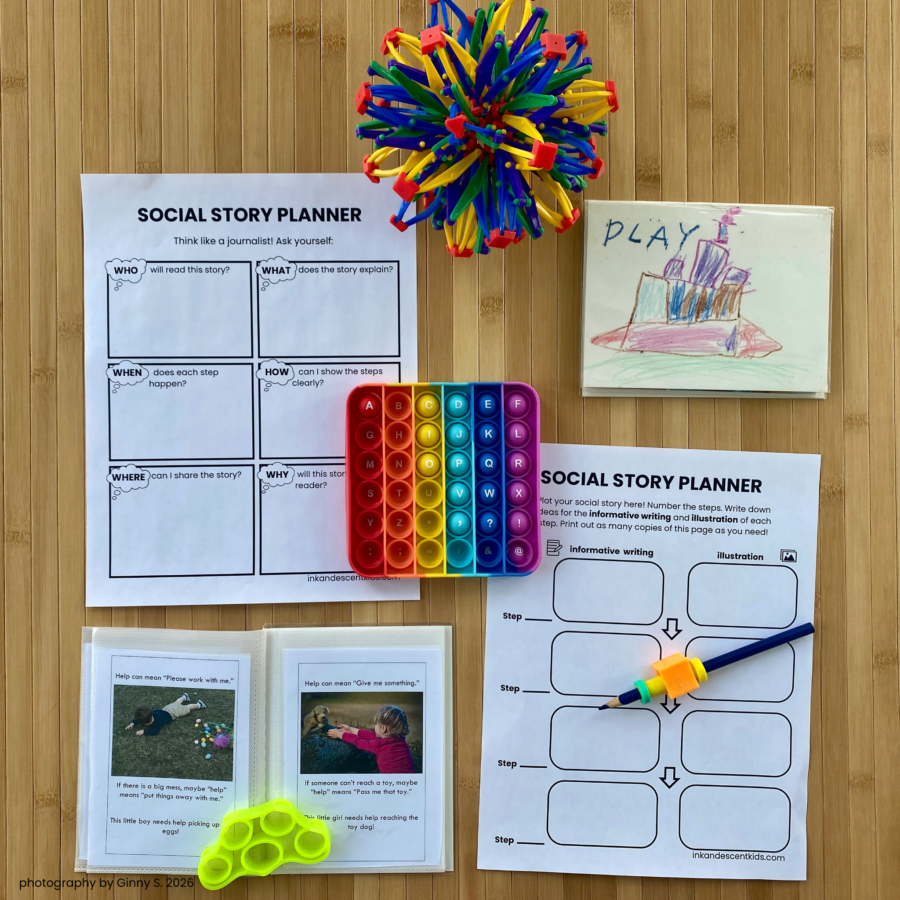
In honor of Autism Awareness and Acceptance month, I want to share this strategy with our kid reporters! This month, we will host the first Inkandescent Kids Writing Challenge: How to Write a Social Story. You’ll find a guide for writing your own social story, free planning handouts, and an opportunity to have your social story published on our website!
Here’s to our Inkandescent Kids!
Ellen Smith
Editor, Inkandescent Kids Magazine
Click here to access the Inkandescent Kids Writing Challenge for April 17-24, 2026: How to Write a Social Story!
Children’s book author and illustrator Liza Uddin was born in Washington DC and raised in Alexandria, Virginia. She received her bachelor’s degree in graphic design from American University, starting out at the Corcoran School of the Arts & Design.
She says: “I’ve always drawn, since I was a child. Art has always been a part of my life. I worked briefly at an ad company and did freelance jobs for a bit. I wanted to return to fine art, so I joined the Del Ray Artisans in 2013 and am loving being part of the artist community here. And, I had three pieces featured in the City Hall of Alexandria in 2015.”
“My book was a project that I’ve long been wanting to complete, and I am happy that it has finally been published and in the hands of children around the world,” Liza shares.
Discover the magic of bedtime with this enchanting tale written by Liza Uddin. Perfect for young children, this heartwarming story follows a whimsical adventure, full of imagination and gentle life lessons that lull little ones into a peaceful night’s sleep.
With charming characters and vivid storytelling, this bedtime story takes young readers on a journey through dreamy landscapes and soothing moments, encouraging positivity, courage, and kindness. It’s a perfect read-aloud experience for parents and children to enjoy together, fostering connection and setting the tone for sweet dreams.
Whether it’s the enchanting dialogue, the magical settings, or the comforting conclusion, each page is designed to calm and delight, making this book a must-have addition to every child’s bedtime routine.
Ideal for children aged 3-7, this beautifully illustrated story will quickly become a favorite, encouraging both learning and peaceful rest.
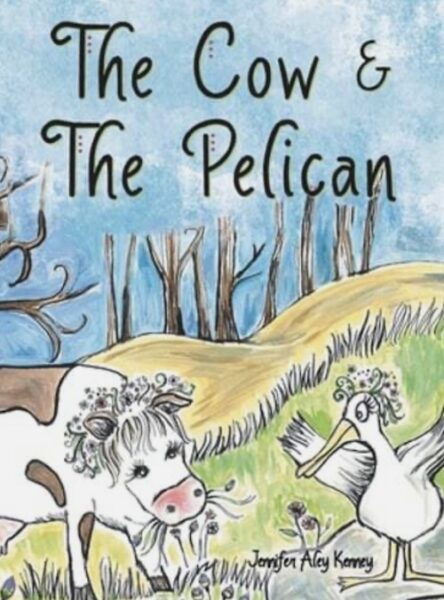
In this first of a series of three books, The Cow & the Pelican reflects on the two oddball friends who rely on their friendship to get through some difficult times with humor, compassion, and fun!
In this story they find themselves in a town with some pretty snobby folk. These two fun-loving friends create a great bond in friendship and teach a lesson to some “nosy ol hoots”. Their friendship continues to this day and they spend much of their time laughing and remembering great experiences with their kids and through many adventurous trips.
A cow and a pelican are an unlikely pair of fun-loving friends who spend their time laughing and remembering great experiences with their children.
One day as they wonder how much better the world could be if they put moms in charge to protect Mother Earth and its inhabitants, the cow and the pelican explore all the simply marvelous possibilities with help from their other animal friends. Could mothers really rearrange the world, change the planet’s diapers, and stop all life forms from reaching extinction? Maybe, just maybe, everything would run smoother and more efficiently with moms at the helm!
In this charming tale for all ages, a cow and pelican take an adventurous journey together as they imagine the improvements mothers could make if they were in charge of the world.
Alexandra Kuehn was born and has lived in Maryland for most of her life. From a young age, she loved to write and read and was often found buried in a book. Her favorites ranged from “The Velveteen Rabbit” and “The Little Prince” to anything by RL Stine. After spending a brief time living in Louisiana, she developed a love of all things New Orleans. She now lives in Stevensville, MD, a small town on the Chesapeake Bay, with her husband Jeff and two beautiful daughters, Harper and Vivienne. Learn more: plumbennybooks.com
Here’s the story: Vivienne is nervous the night before her first day. Where will she sit? Will anyone talk to her? Will she have any friends at all? She gets through it all with a little help from a new friend. This story focuses on the importance of art and the imagination to help children gain the confidence they need to believe in themselves. Click here to buy the book!
We’ve all been there—tightening tiny shoelaces, slipping a lovingly packed lunchbox into a backpack, and waving goodbye as our child walks into a brand-new school with nerves written all over their face. As parents and guardians, we want to fix everything, soothe every fear, and guarantee that they won’t sit alone at lunch. But we can’t walk them into every friendship or shield them from every pang of worry.
What we can do is hand them a story like Libby the Lunchbuddy by Alex Kuehn.
This charming, emotionally rich picture book delivers more than colorful pages—it delivers empathy, imagination, and a whole lot of heart. It centers around Vivienne, a little girl who’s feeling overwhelmed by the idea of starting a new school. Her biggest fear? Sitting alone at lunch.
Rather than brushing it off, Vivienne’s mom meets her where she’s at. She doesn’t offer generic comfort like “You’ll be fine!”—she offers a creative idea: draw a friend. A lunchbuddy. A magical companion who can sit with you in spirit, help you be brave, and keep loneliness at bay.
It’s such a simple suggestion, but it opens a powerful emotional door.
Vivienne dives in with markers and glitter. She imagines and creates Libby—a furry-eared, rainbow-haired, sparkling-eyed friend who radiates confidence. And that night, with her masterpiece by her side, she goes to bed a little calmer.
The next morning, in the middle of nervous bus rides and itchy noses, something magical happens: Libby comes to life. Not in a loud or over-the-top way. Just a whisper in her ear, a smile on her face, and a twinkle in the air. She’s exactly what Vivienne needs: quiet encouragement, not rescue.
Together, they navigate the school day. Libby gives Vivienne just enough support to try—a hello here, a lunch invite there. Soon, Vivienne is talking, smiling, and making friends. And by the end of the day, something changes. Vivienne realizes that maybe—just maybe—she doesn’t need Libby tomorrow.
And that’s the brilliance of this story.
Libby the Lunchbuddy isn’t about escaping fear—it’s about transforming it. It shows kids how their own imagination, creativity, and honesty can give them the tools they need to face challenges. Libby is a manifestation of inner strength, not a fantasy escape.
As a parent or guardian, this book is gold. It offers a gentle way to talk about anxiety and social fears. It invites your child to draw their own Libby, to name their worries, and to imagine their own path to courage.
So the next time your child feels the weight of a new beginning, hand them a box of crayons. Ask them what their llunch buddywould look like. Let them dream it up. And then, read this story together.
A Note from Hope, publisher, Inkandescent Kids magazine — I am honored to introduce you all to Dr. Gayani DeSilva, a child and adolescent psychiatrist, Gayani obtained her medical training at Albany Medical College before interning at Brown University and doing a residency at Harvard. She has won numerous awards for her insights and work, including helping children in juvenile justice centers and foster care.
“Much of that work consists of understanding the complex array of needs of adolescent and young adult criminal and violent offenders,” Gayani explains. “I work to understand the interplay between mental illness, societal factors, and interpersonal issues.”
Based on her experience and research, she has so far written two books (see below) that provide insight for parents hoping to help depressed tweens and keep their children from suffering from addiction.
“I am dedicated to improving the health and wellness of children, and also the whole family,” says the mother of a son who practices in Laguna Beach, CA. “Straight talk and practical expertise are my tools. “To understand the deeper needs of a child, a parent can better support them as they mature.”
If there’s ever a time when more parents need advice on how to keep kids mentally safe and well, it’s now!Scroll down for more! Follow Dr. Gayani DeSilva on Twitter.
Dr. DeSilva explains:In my practice as a child and adolescent psychiatrist, the parents of my patients most often ask me, What do I say to him (or her)? These are well-meaning parents who care deeply for their children but find themselves at a loss for how to begin, maintain and resolve conversations with their children who struggle with illnesses like depression, ADHD, anxiety, and bipolar disorder.
Though this book focuses on how parents can converse with their children who have a mental illness, the skills, and tools presented in this book apply to parents of all children.
When faced with the challenge of trying to connect with their children, parents are frequently so focused on their child talking with them that they miss ways to make a meaningful connection that leads to increased understanding between the parent and child. This book will help parents learn to be cognizant of childhood developmental processes and how their child s illness impacts development. Using knowledge about neurodevelopment, psychological development, and psychiatric disorders, parents will learn how to use conversation to improve bonding, bolster their child s self-esteem, and aid their child s development.
Dr. DeSilva explains: “Addictive substances and activities hijack the teenage brain to create an addiction. This book demystifies addiction from a neurological and psychological perspective, explaining how the brain changes in response to addictive stimuli and psychological factors.
The teenage brain and psyche are particularly vulnerable to developing addictions because, during the teen years, the brain is in a phase of rapid and profound development. Moreover, more than half of all suicides were with people who were intoxicated.
With a non-judgmental approach, I describe family dynamics and parenting choices that inadvertently promote the development of an addiction. Armed with knowledge about how addiction develops, I coach parents on optimizing their parenting strategies to help their children avoid getting addicted.
Few parents forget the first time they put their infant into the car. Many hospitals won’t release a new mother unless she has an infant car seat for her baby. Installing car seats correctly is an essential part of being a good parent. But almost anyone who has installed a car seat knows it’s a challenge to get the seat set up correctly. The good news is that help is available.
At Curry’s Auto Service, we want to be part of the solution for parents with young children.
Although we aren’t car-seat specialists, we are your partner in car safety. So we turn to the experts at the VA Dept. of Health for advice on installing a car seat, as well as other great tips on keeping your kids safe in the car.
Remember: Virginia law requires that all children under 18 be adequately restrained in the car. The VA Highway Safety Office wants to ensure that all children in Virginia are riding safely in the car. Read on for tips and assistance on safely transporting your children.
Studies have shown that children are more likely to become lifelong seat belt users when their parents are lifelong seat belt users. So, your child’s safety begins with you. Set a good example by making sure that you buckle up on every ride.
Car-Seat Safety Tips
1. Until they are two years old, children should ride facing the rear—or as long as the safety seat manufacturer allows, according to the American Academy of Pediatrics (AAP) and the National Highway Traffic Safety Administration (NHTSA).
2. Everyone needs to be adequately restrained in the car, whether in a child safety seat, a booster seat, or a seat belt. This means one seat belt for each safety seat or person. Do not share seat belts!
3. Did you know that an individual is four times more likely to die outside the vehicle than inside? The primary function of the safety seat and seat belt is to prevent ejection from the car.
4. Keep in mind that individuals not buckled up can be thrown from the car or tossed around inside the vehicle, which can seriously injure them or others.
5. Never hold a child on your lap while in the car. And do not allow anyone to ride in the cargo area of a station wagon, van, or pickup.
6. One of the most frequently asked questions about safety seats is: “What’s the best child safety seat I can buy?” Federal regulations state that all safety seats made in the United States must conform to a specific set of guidelines. Hence, the best seat is the safety seat that fits the child, the vehicle, any child’s special needs and is used correctly every time.
7. Child safety seats need to be tightly installed with either a safety belt or LATCH (Lower Anchors and Tethers for Children) to hold them in place.
8. How “tight” is tight? After installation, you’ll know you have installed the seat securely when it can move no more than one inch side-to-side or forward.
9. Use the correct slots on the safety seat for your child: at or slightly below the rear-facing infant’s shoulders, at or slightly above the forward-facing toddler’s shoulders.
Note: Harness straps should be positioned on the child’s shoulders and chest, not on the arms. The goal is to keep the straps flat on the child’s body and snug enough that you cannot pinch any slack in the straps at the child’s shoulders. Place the harness retainer clip at the armpit level on the child.
10. “When is my child ready for a booster seat?” When the child reaches the upper weight and height limits set by the manufacturer of the convertible seat, a belt-positioning booster can be considered for use. This forward-facing seat requires a lap/shoulder belt and “boosts” the child to fit the vehicle seat belt system better.
11. To be able to fit in an adult seat belt, the child must be tall enough to: sit without slouching, keep his or her back against the vehicle seat back, keep his or her knees completely bent over the edge of the seat, keep his or her feet flat on the floor, and be able to stay comfortably seated this way.
12. The lap belt must fit low and tight across the upper thighs. The shoulder belt should rest over the center of the shoulder through the center of the chest. Never put the shoulder belt under the child’s arm or behind the back. This can cause serious internal injuries in a crash. If the seat belt does not fit properly, use a belt-positioning booster.
With ten locations in Northern Virginia and Maryland, Curry’s Auto Service is legendary for providing the best full-service car repair and vehicle maintenance in the Washington, DC, area serving the communities of Alexandria, Arlington, Chantilly, Dulles Town Center, Fairfax City, Falls Church, Gainesville, Gaithersburg, Reston/Great Falls, and its newest and 10th location, in Leesburg, which opened in December 2012.
An Inc. 5000 Honoree, Curry’s Auto Service specializes in the repair and maintenance of European import and domestic cars—including Audi, BMW, Honda, Mercedes, Porsche, Toyota, and Volkswagen. Using state-of-the-art equipment, its factory-trained, ASE-certified technicians take pride in customer satisfaction.
Curry’s is also the exclusive TIREPROS dealer in the area. In the fall of 2012, it became a Certified Maryland State Auto Safety and Emission Inspection Station.
American poet, musician, and composer Michael Franti and his band Spearhead have been rocking their message of peace, love, and social justice since 1994.
Blending funk reggae, jazz, folk, and rock, their album is “All People.” Their high-energy shows, which they perform around the country, get the audience jumping, singing, and dancing.
Often the band is part of ensemble shows, including their performance on Dec. 14 at the 25th annual Warren Haynes Christmas Jam in Ashville, NC. We were privileged to meet Franti and interview him at his hotel just before the concert.
Be Inkandescent: Let’s start off talking about your Do It For The Love Foundation. What inspired you and co-founder Sara Agah to create this nonprofit organization?
Michael Franti: My better half, Sara, is an emergency room nurse, and for the last couple of years we have been trying to figure out a way to combine what she does in healthcare with my music. Our Do It For The Love Foundation brings people to live concerts who are in an advanced stage of a life-threatening illness, as well as kids with severe challenges and veterans.
It’s the perfect fit because I’ve been making music and touring for 27 years, and over the years, I have had a lot of people tell me they know someone who is dying and would love to meet me. I’ve been in Iraq to play music on the streets for both Iraqi civilians as well as soldiers. I have played in Walter Reed Hospital and I have met a lot of veterans along the way, and a lot of families who have kids with special needs. We started the Foundation in August 2013 and it has really taken off. We started out assuming just the two of us could do it all ourselves, and now it has grown so large we have one full-time worker and are about to hire a second one.
The best part of my work with the Foundation is meeting people. Just last night I met a young woman who has lymphoma and has had a difficult life. Although she is an honors student, her disease has worsened to the point where she has had to stop going to school. A friend of hers got in touch with us and they all flew down to our show as a surprise to her. When I sat and talked with her, she told me she has lived with pain her whole life, and it is just getting worse and worse. She says she doesn’t have much time to live, but that she is worried about the world, and that if she could take away everyone’s pain even just for 15 minutes, she would take it on herself.
I was so moved by hearing this 20-year-old woman say that, and by meeting her younger brother and his friend who were both 17 and who had pulled off this whole plan to get her here through our Foundation.
Be Inkandescent: That’s a big theme for you, too, the idea of taking on the world’s problems as your own and trying to come up with solutions. What inspired you to have that as your mission?
Michael Franti: When I was a born, my birth mother carried me for nine months and then she held me for one hour and gave me up for adoption. I was adopted by the Franti family. They are Finnish-Americans, second generation in this country. They had three kids of their own, and they adopted me and another African-American son, and I grew up in this very mixed household.
My mother was a public school teacher in California for 30 years, and she was very much a leader in our house. She insisted that even though we were all very different—different heights, different colors, different views on the world—she would treat all of us the same, and we would all have the same opportunities to succeed. I really learned that ethic from her, and I believe it’s the same for the whole world. We all should share the same rights and should be given the same opportunities to succeed. We see places where this is not happening, and it takes the efforts of the rest of us to try and give a boost to people who need it. You see it whether it’s war, poverty, or because of climate changes affecting people around the world.
For example, I was in Southeast Asia visiting with a family in East Timore who was raising ducks instead of chickens. I asked why they had switched to ducks, and they said, “We used to have this long rainy season where the rain came slowly, but now the season is shorter and drier, and when the rain comes, everything floods. Ducks swim.” So these are the things I write about and try to work on as much as I can.
Be Inkandescent: Tell us more about the work you do traveling around the world to promote your message of love and social justice.
Michael Franti: I’ve had the opportunity to play for people in so many different countries and under so many circumstances. We have played in prisons, schools, on the street … we play all over the world. But I’ve found that it doesn’t matter where you play, it doesn’t matter what economic sphere people are in or what education, culture, language, or religion … people are the same when the music starts. You look in their eyes and see smiles, people start to dance, they start to move, eventually people laugh, they cry, they hug their friends. Music really is a universal language. One of my favorite things to do is to travel and play with people of other cultures and other musical experiences that I didn’t know about.
Before I was traveling as a musician, I worked as a doorman in a nightclub, and I was a bike messenger for three years. When I was a bike messenger, I would deliver checks to people for hundreds of thousands of dollars and deliver architectural plans for buildings that were worth millions of dollars … and no one ever clapped! They barely said thank you, it was usually just “sign here,” and that was it. Now I really get to make people happy. It’s fun.
Be Inkandescent: How did you hook up with Warren Haynes to play at his 25th Annual Christmas Jam in 2013?
Michael Franti: I met Warren 10 or 12 years ago at a festival we were both playing at. Warren is one of the nicest people I know; he’s really a kindhearted person. One of the beneficiaries of this Christmas Jam is Conscience Alliance, which is a food bank; they collect food all over the country and distribute it to people in need. He’s also a giver with music.
For this festival, Warren brings in individuals from nearly 70 different bands, and then he creates collaborations based on his intuition. The first one we did was about four years ago. Warren came backstage and said, “Michael, you got a minute? There’s this guy who wants to sit in with you.” I said, “Who?” He goes, “John Paul Jones from Led Zeppelin. Do you mind doing a song with him?”
My mouth hit the floor. Through nearly tears I responded, “Of course I’ll do a song with him!” He walks into the room and takes out his mandolin and starts playing this song with us. We were so blown away and happy. We played a whole bunch of songs, and finally we had done a whole set of probably 12 songs backstage. Right before we were walking on-stage, I said, “John, is there a song you wanted to play on?” and he said, “Well, Michael, I thought I’d play mandolin on the first four, then I’d play bass on the next five, then drums on the last three,” and I just said, “All right, Dude, let’s do it!” and he ended up playing the whole set with us!
That’s the kind of magic that happens here.
Be Inkandescent: Greg Allman, Government Mule, Grace Potter and the Nocturnals … it’s really cool! We are all so excited to be here and watch all of you play. So, tell us a little bit more about your career. You started Spearhead in ’94, and that was your third band?
Michael Franti: Yes. My first band was a little punk rock band called the Beatings in 1986 through 1988. Then in 1989 and ’90 I had a band called Disposable Heroes of Hiphoprisy. We had a video and a song called “Television, The Drug of the Nation,” which became somewhat of a minor-league hit internationally. It didn’t really do much here, but U2 heard the song and loved the video, so they used the video to open up their Zoo TV tour in 1992, and then they invited us to become the opening act.
I remember after the show we played at Yankee Stadium, at the time the Pope, Nelson Mandela, and Billy Joel were the only people who had done a performance there apart from U2. After the show I joked with Bono. I said, “You know, the Pope played here, and Nelson Mandela and Billy Joel, and then we played here, and then you guys played. We played here before you.”
Be Inkandescent: Did you ever think when you were a little kid that you would be doing this?
Michael Franti: It really was not an ambition of mine. Throughout my childhood, all I wanted to do was be a basketball player, and I eventually played basketball at the University of San Francisco. My dorm room was right above the campus radio station, so I’d hear these bass lines coming up through the floor all of the time and at first, it was kind of annoying. And then I started getting the thrill of music, hearing all of these different styles of music coming out of the campus radio station. For two hours it would be hip-hop; for two hours it would be punk rock; for two hours it would be jazz; whatever it was, and then at 6 a.m. they would switch to a Chinese news program and they would only play Chinese music for a little while.
It was a great musical education. So I bought a bass and I would just copy the bass lines that I heard coming up through the floor, and that was sort of my initiation into music. But mainly I was writing lyrics. I would write poems, and then I started performing these poems with other artists and it was not until many years later when I actually started to play guitar. The mixture of the melody and the chords and the portability of just being able to go out onto the street or beach, wherever, and just sit there and play; that’s what I love about it.
Be Inkandescent: What’s your favorite song that you have written?
Michael Franti: There are many. On this new record I really like the song “Life Is Better With You” that I wrote for Sara. There is a song called “11:59” that will be our next single. The first single, “I Am Alive,” I really love, too. Many people ask me whether or not I have a favorite song, and the answer is usually the song I am playing right then or whatever song I have just written.
Be Inkandescent: Do have a new record coming out?
Michael Franti: We should have one probably by the end of next year. We never really stop writing. When we are on tour, we always carry a tiny little portable recording rig, and any time we have ideas we just put the ideas down on little recordings and then we go back later and pull out the best artifacts that we can find and try to put them in more concise songs from just random ideas.
Sometimes I come up with a title in the beginning and it then influences what I write about. The last record we put out before “All People” was called, “Sound of Sunshine.” My appendix had ruptured on tour four years ago and I came really close to dying. Every day I was in the hospital, I was so grateful to be alive that I would lean on the window and just feel the sun on my face, and think, “Wow. If I never felt this way again, I would feel such loss.” And then to see my two sons there, and all my friends. … I was just so grateful to be alive.
I then started writing this song about the sun—what the sun feels like, what it sounds like, what it tastes like. So I came up with the title, “The Sound of Sunshine.” Then all the titles on the record followed that theme.
Be Inkandescent: Who are some of your musical influences?
Michael Franti: Musically, I love artists who write songs about their concern for the planet and write songs about how much they love their girlfriend. For example: Bob Marley, John Lennon, Marvin Gaye, Stevie Wonder, and Johnny Cash. John Lennon wrote “Imagine,” this Utopian view of what the world could be. And then he would write a song like “Beautiful Boy” or “Woman,” and that always made me feel like he doesn’t just care about the world because it is in his head; he’s concerned because it is in his heart. He wants to see his child grow up in a better place. That always moves me.
Be Inkandescent: Switching gears a little bit, tell us why you don’t wear shoes.
Michael Franti: I stopped wearing shoes on my birthday in April of 2000. I had been traveling to a lot of countries where people couldn’t afford to wear shoes, so I would take off my shoes and go play soccer with the kids and I couldn’t even take three steps. There would be these gravely fields and I just couldn’t do it. So I went home and I wondered what it would be like to never be able to afford shoes. So I took off my shoes, and decided I would go barefoot for three days.
I went three days, and my feet didn’t get any tougher. So I went for a week, then a month, then a year, and finally after 10 years of being barefoot, I partnered with an organization called Soles4Souls. They bring shoes to people all around the world who can’t afford them. They started after Hurricane Katrina, and moved onto Haiti, and now they are in about 60 different countries. (See the May 2013 Be Inkandescent feature on Soles4Souls) We work with them at our concerts collecting shoes from our fans as well as just getting the word out about the work that they do.
Be Inkandescent: Can you give our readers tips on three topics: one on business in general; one on getting into the music business; and a last tip on making a difference?
Michael Franti: Definitely.
In terms of business: To be a musician for 27 years requires an incredible team. The first thing I would say is learn how to collaborate and to delegate responsibilities to people who are better at it than you. At the same time, it also helps you to know every job. It is good to have some diversity so that if one thing goes awry, the other could work out. I also have a yoga hotel in Bali called Soulshine Bali. We do yoga retreats there. I think the best advice that I have ever had is from a book called The Go Giver, by Bob Burg and John David Mann. It’s about giving and making sure that the quality of experience for other people you come into contact with is best. In business, it is all about relationships and connecting with people. Not doing things because you’re trying to get something, but because it is the right thing to do. That leads to the longevity of what you are able to do. You then have people who will recommend you and call you for service when they need something because they remember you in a good light and trust you. It helps you to create community around your business.
In terms of the music industry: It is a fickle field. One week, one artist is huge; the next week it is a new artist, though some artists have been able to maintain it for many years. I think the main thing you need is passion for what you do, and to recognize that not everybody is on stage singing and holding a guitar. Hundreds of people have worked behind the scenes to make a show happen, as a producer, stage manager, caterer, music producer, videographer, publicist, whatever it is. If you have a passion for music, follow it, but follow it where your nose is really taking you. Don’t try to force yourself to play one specific role. If it’s not working out for you, there are other ways to do it. Whenever there are other people joining our production team, I always say the same thing: The moment you step out of your hotel room, you are on stage. So, when you walk into the hotel, if you do not treat the guy picking up your bags with kindness, he will remember that. You want everyone to remember you in a kind way so they want you back. That way, when you go through ups and downs, people are willing to go through them with you. Otherwise, when you go through the downs, people will think you deserve it.
When it comes to making a difference: That’s the joy of doing what you do. You can sell records and own a beautiful house and car and have everything look perfect on the outside, but when you go back to your house, you should ask yourself, “What did I do today? What did I make happen for someone else?” Really, making a difference is about doing what you can. A woman came up to me in Denver and said that she was a hairdresser and she saw my film and was so moved by it, but didn’t know what she could possibly do to make a difference in the world. Then one day, a woman walked into her salon who was undergoing chemotherapy; her hair was falling out in clumps, and she sat her down in a chair and knew there was nothing she could do with her hair but cut it all off. So she sat there and talked with this woman who cried as she shaved off all of her hair, and they made her up to look as beautiful as she was from the inside out. And from that experience, the two of them decided they should do this one night a week. So now, once a week, they close down the salon and invite people going through chemo in to let her take care of their beauty needs. There is always something we can do to serve our community. It doesn’t have to be the big-letter-“P” politics, because the small-letter-“p” politics can make the bigger difference.
Be Inkandescent: This joy is conveyed in your two children’s books, too. What inspired you to write them?
Michael Franti: For the first one, I had written a song called What I Be, about being oneself. It was on one of my records, and a friend of mine had an idea to turn it into a children’s book. The whole book is about embodying the best characteristics of nature—so if I was the sun, I would radiate and make others warm, etc.
The other book, called Where In The World Is Away, is about recycling. In the book two kids try to find a place to throw away their empty juice bottle. They sit near a pond going through the reasons why not to throw it in there or in the forest, and then a bird comes along and takes them on a journey to a recycling center where they, and the reader, get to see the whole process of recycling.
At the end, they realize there is no place in the world that is “away,” there is just “some place else.” The two kids learn about reducing and reusing and recycling, and they decide to reuse the bottle by each putting a flower in it.
Be Inkandescent: Here’s to that! Thank you so much for being here with us, Michael Franti. We look forward to keeping up with you and sharing your amazing message with with our readers, listeners, and viewers.
About the book: Zamzam is a young boy who enjoys life with his Egyptian grandparents in Alexandria, Egypt, and his American grandparents in New York City. He shares big and little differences in his daily experiences in each country – including phrases in Arabic and English — but ultimately realizes that the most important experiences are exactly the same across cultures.
About Karen: A native of Cuyahoga Falls, Ohio, Karen grew up surrounded by writing and books. Her father was a journalist and her mother a school librarian. Karen then became an award-winning broadcast journalist for more than two decades. She began reviewing and discussing children’s books on ABC WMAL Radio in Washington, DC, and reviewed children’s books and interviewed authors for the Washington Post, New York Times, the Baltimore Sun, Children’s Literature, Washington Parent, and others.
“Educators have an opportunity to discuss their students’ own experiences with family members from around the country or the world and have them compare similarities and differences of their cultures.” — A Book and a Hug
“Page after page weaves a message of difference into a fabric of harmony, across continents and customs, contexts and cultures, showing a seamless, integrated life that is bridged by love in both directions…The sweetness of the text is well-matched by the whimsy of the art in a way that every child can enjoy. A true pleasure to see and share!” — Andrea E. Stumpf, author Memoirs of an Arabian Princess
“Conveying that even though sights and sounds and language might be different, the love is the same. The book does a good job of not othering one set or making one seem better than the other. It also weaves in Arabic words and culture.” — Anonymous Edelweiss
More about Karen: A graduate of Brown University (international relations), Karen met her Egyptian husband in Washington. They have two grown children and two grandsons, are active in many cultural exchange initiatives, and have been lucky enough to visit Egypt many times — especially Alexandria, her husband’s hometown.
Nonviolence has been seen as a weak or passive approach to resolving conflicts. However, Cesar Chavez’s quote, “Nonviolence is not inaction. It is not a discussion. It is not for the timid or weak. Nonviolence is hard work. It is the willingness to sacrifice. It is the patience to win, ” contradicts these views. This quote shows the demanding nature of nonviolence, highlighting courage, sacrifice, and perseverance. To fully understand and appreciate the quote, we must explore the meaning, understand the life of Ceasar Chavez, and explore the fight for nonviolence.
This quote shows that nonviolence is far from the weak or passive stereotype. Chavez states that nonviolence is not only about avoiding physical confrontations or endless conversations but instead, it’s also about engagement and willingness to tackle injustice face to face. Nonviolence requires courage and bravery beyond physical strength. It involves moral and emotional resilience. It consists of the willingness to endure suffering and the patience to persist in difficulty. Those who want to practice nonviolence should be prepared to work hard and exercise great patience. Patience plays a key role in practicing nonviolence. To maintain peace, you need to be patient and control negative feelings of hate and anger. It is not an approach for the weak but for those committed to pursuing justice and peace. Nonviolence is having to endure the efforts to bring change.
Cesar Chavez was a leader and a civil rights activist. He dedicated his life to improving the conditions for farm workers in the United States. Chavez co-founded the National Farm Workers Association, which later became the United Farm Workers (UFW). Chavez fought for better wages, safer working conditions, and for the rights of agricultural laborers. He fought through nonviolent means such as strikes and boycotts. He also led marches to draw attention to the plight of farm workers and to pressure employers and lawmakers to implement reforms. Chavez’s movement significantly changed the lives of many farm workers. He also inspired a broader movement for social justice and workers.
There have been many successful nonviolent movements throughout history. One of the most well-known was the Indian Independence Movement, led by the notable Mahatma Gandhi, another famous civil rights activist. The movement used nonviolent resistance to end British colonial rule in India. Another important movement was in the United States, with leaders like Martin Luther King, Jr., who advocated for racial equality. They used peaceful protests and civil disobedience. Another nonviolent act was The Velvet Revolution in Czechoslovakia, where the Czechs used nonviolent protests to end Communist rule. These movements show the power nonviolence has. Nonviolence is a significant movement to change.
In summary, Chavez’s quote emphasizes the demanding nature, hard work, sacrifice, and patience for nonviolence. Nonviolence has been shown in several successful movements around the world throughout history — Gandhi and the end of British Colonial rule, Dr. King and his advocacy for racial equality, and the Czech Velvet Revolution for the end of Communist rule. Cesar used nonviolence to his advantage and succeeded in his goal. Together, all of these demonstrate the power nonviolence has to change the world.
About Shay Jackson: A high school sophomore, Shay was the second-place winner in the 2025 “Living the Dream” art, poetry, and essay competition.
A Note from Hope Katz Gibbs, publisher, Inkandescent Kids magazine — LouAnn Lofton, the author of Warren Buffett Invests Like a Girl, knows the value of investing wisely.
Her portfolio started to grow at age 15, shortly after the death of her father, a pharmacist, who set aside funds for LouAnn and her two siblings.
“Because my father died, it meant that I would inherit some money upon my 21st birthday,” the Mississippi native told Be Inkandescent magazine from her home in New Orleans. “And because of that, I decided, about a year out of high school, to learn about investing, so I didn’t squander the opportunity presented to me by that money.
“It wasn’t an overwhelming amount of money — nothing that was going to set me up for the high life anytime soon — but it was enough that I knew I didn’t want to blow it. I also knew no one would do it for me, and had I not armed myself with knowledge, I was liable to spend it instead of saving it and investing it. That would have been a disappointing outcome. And I hated the thought of disappointing my father even after his death.”
About Dr. Peter Noonan: After an extensive, nationwide search, the Falls Church City School Board selected Dr. Peter Noonan as the ninth Superintendent of Falls Church City Public Schools in May 2017. Dr. Noonan began his career as a special education teacher in New Mexico, where he was named Teacher of the Year in 1993. After working for 11 years in the Fairfax County Public Schools division, he served as Superintendent for Fairfax City Public Schools.
Peter was also the assistant principal at Langley High School, principal at Lanier Middle School and Centreville High School, and assistant superintendent for Cluster VII schools. And, he was the assistant superintendent for the Instructional Services Department, overseeing academic programs for the system’s 180,000 students. Dr. Noonan holds bachelor’s and master’s degrees from the University of New Mexico, and completed studies to obtain the education specialist designation in educational administration. Dr. Noonan has a doctorate in education from Virginia Polytechnic Institute and State University (Virginia Tech).
“Never underestimate your ability to make someone else’s life better, even if you never know it.” — Greg Louganis
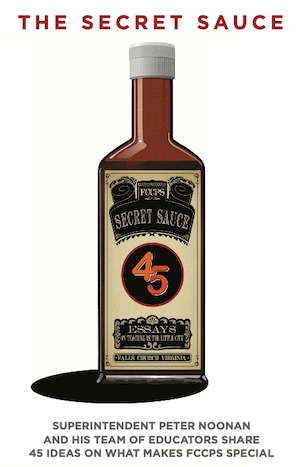
When I arrived in 2017 to serve Falls Church City Public Schools (FCCPS) as the 9th Superintendent in the division’s history, I knew something about this place was different than anywhere else I had ever worked. This is my 33rd year in public education (8th year as Superintendent in FCCPS) which has afforded me the opportunity to teach, lead, learn, and travel the globe. I’ve been in over 1000 schools in my career and worked with, or for, nearly 400,000 students. In my journey through public service I have found one truth to be universal: It is the people in any organization that make a place great. FCCPS is no different and when asked to consider what the “secret sauce” is that leads to the extraordinary outcomes for kids, it is immediately evident that it is the people and the relational culture that exists that makes us great.
A relational culture is nuanced and sometimes it’s the small things that make a big difference. This is not a new concept but it is one worth repeating and bringing focus to in the workplace. In The Leadership Challenge, by Kouzes and Posner, they refer to gestures made by others as “encouraging the heart.” Encouraging the heart is one of five (5) leadership practices that have been validated over the past decades as those that impact the culture and performance of an organization…including schools. The other four are “challenging the process,” encouraging others to act,” “inspiring a shared vision,” and “modeling the way.”
The following vignettes, while simple, are the building blocks that when taken in sum total make FCCPS special.
Rory
At the end of last year, one of our longtime teachers and leaders decided to make a change and move to another division in Virginia. FCCPS is a small division and consequently, one that can sometimes limit the opportunities for people to grow as there are limited numbers of positions that carry administrative roles. This leader, Rory, was a person who had grown “through the ranks” as an assistant principal and curriculum leader at our middle and high school. Through our years together we built a strong working relationship. I was fortunate to be the leader who promoted him to his first assistant principal (AP) position and also supported and coached him in his decision to step down from the AP role and lead from a different place that was in his “wheelhouse”…a position that would bring him great joy as the International Baccalaureate Coordinator for the Middle Years Program. The circumstances surrounding his move were also important to the decision-making process for this leader and because of the relationship we enjoyed, I knew he was becoming a dad for the first time.
When Rory left FCCPS, we tried diligently to find time to engage in an exit interview in an effort for both of us to improve on behalf of FCCPS, but given the timing of his departure, we could never make it happen. However, on the day he left, Rory did something that encouraged my heart in a way he is unlikely to know. He wrote a handwritten card and left it on my desk! It is an understatement to say that we are living in times where a handwritten note is a dying art. With email, text, Snapchat, Instagram, etc…at our fingertips, we can quickly communicate important information in the least personal way possible. Heck, I even got a happy birthday text from one of my own kids once…c’mon…pick up the phone at least – but I digress. The time taken to write out a card and leave it on my desk was disproportionately impactful relative to the impact it had on me for the months to come. Rory has no idea the power and impact the note had and, as Greg Louganis says, “Never underestimate your ability to make someone else’s life better – even if you never know it.” He made my life better and I am not certain he knows it, which, in my opinion, is a shortcoming on my end of the relationship.
The IB
As educators, we work every day to have that impact. Further, in almost every case, when a student walks across the stage at graduation, we celebrate the end of one journey and the start of another…and we don’t hear from the graduates of that class again. But, in Falls Church, that is different.
Each year, we have an opportunity to welcome back our students who completed and earned the International Baccalaureate Programme diploma to receive their diplomas since their final IB exams from the spring prior aren’t adjudicated in time for graduation. We do this during a holiday break for most of the colleges, and a great majority of the students return to collect their diplomas and see friends and teachers. It is a great site.
At the same time, we ask a group of students to join in on a panel discussion about their experiences as students in college. To a student, we hear that the IB program made their freshman year a breeze because their Freshman year in college is writing intensive, and the IB is heavily focused on writing. There are a host of questions we ask to get at information that will help the students in the auditorium decide on going forward with the IB diploma program or seeking another path. Among the questions we ask is, “Who was your most influential teacher and why?” When this question is asked, the students’ eyes light up; they are anxious to say who it is, and in the end, this question elicits magic. While that is exciting, the amazing part is the range of those identified as most influential. Each year, we have had answers such as “my kindergarten teacher,” “my coach,” “my bus driver,” the Director of Food Services,” and more. A couple of years ago, the baseball team nominated one of our bus drivers as the Support Employee of the Year – our kids see everyone. When pressed about why they’ve named the person they have, the answer is always the same… they were kind to me, they helped me, we got along well, they came to my events to see me, or we just had a great relationship, and they made me feel important.
This exercise each year is a heart filler indeed! But the real magic is when the adult hears their name emerge from one of the returning students. The pride, excitement, and emotion of that moment is palpable.
Kindness
My first day on the job as the Superintendent of Schools in FCCPS, I was tasked (among other things) with restarting a stalled construction project at Mount Daniel Elementary School. The plans were done to do some serious demolition and add on more classrooms, a gym, and give a “facelift” to the rest of the older sections of the building. However, there were conflicts between the contractor, the permitting offices, the schools, and the general government. The situation was untenable because the “phasing” of the project had begun which meant that the entire parking lot at MDES had been converted into a village of portable classrooms which meant that no staff could park onsite. The solution was that all staff would be shuttled from Mary Ellen Henderson Middle School throughout the morning and the afternoon. To say that this was less than ideal is an understatement! Staff and faculty at MDES were unhappy with their shuttling circumstances, but like the professionals they are, they adjusted.
I decided that my first stop, on my first day, would be at MEHMS to meet the shuttle and ride with the staff to Mount Daniel. I thought…if they are living it I should too. Now, I’ve been a school administrator for a long time and learned early that one does not show up empty-handed if your intention is to make a good impression. So, I went to Costco and bought the biggest box of Kind Bars I could find. As the staff and faculty got onto the shuttle, I introduced myself and gave each person a kind bar as a gesture of appreciation and also to send a message to everyone who got on the bus that not only was I a kind person, but I also expected this above all else from FCCPS employees.
I tell this bit of the story not to somehow glorify myself or my leadership – it was $50 well spent! Rather, I share the story as a reminder that what is given in kindness often comes back when you least expect it. As I mentioned, I am in my eighth year of my superintendency in FCCPS and there is hardly a month that goes by that someone doesn’t drop off a Kind Bar to me. It’s the small things and simplest gestures that make the difference and matter the most. I am drawn in by kindness and the way it manifests itself in FCCPS.
“The Secret Sauce”
In the end, I believe that the “secret sauce” in FCCPS is the people, their engagement with each other, the relationships that are built, how we work together to support each other and every student we serve, and in the end make each other’s lives richer and more fulfilled. I was once asked the question: “Can you teach someone how to have a good relationship with their student or another person they work with?” I think the answer is no…kindness, care, compassion, empathy, and strong relationships come from the heart and not the head. However, one can engage in the elements that create the conditions for a positive relationship like writing handwritten notes, letting people know their meaning to you before it is too late, and, when all else fails, feed them – even if it’s a Kind Bar.







 Dr. DeSilva explains: In my practice as a child and adolescent psychiatrist, the parents of my patients most often ask me, What do I say to him (or her)? These are well-meaning parents who care deeply for their children but find themselves at a loss for how to begin, maintain and resolve conversations with their children who struggle with illnesses like depression, ADHD, anxiety, and bipolar disorder.
 Dr. DeSilva explains: “Addictive substances and activities hijack the teenage brain to create an addiction. This book demystifies addiction from a neurological and psychological perspective, explaining how the brain changes in response to addictive stimuli and psychological factors.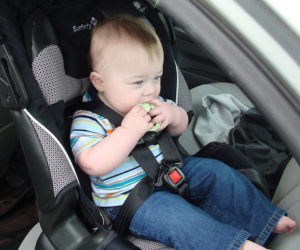



 My mother was a public school teacher in California for 30 years, and she was very much a leader in our house. She insisted that even though we were all very different—different heights, different colors, different views on the world—she would treat all of us the same, and we would all have the same opportunities to succeed. I really learned that ethic from her, and I believe it’s the same for the whole world. We all should share the same rights and should be given the same opportunities to succeed. We see places where this is not happening, and it takes the efforts of the rest of us to try and give a boost to people who need it. You see it whether it’s war, poverty, or because of climate changes affecting people around the world.


 Don’t miss the interview at Elaine’s Literary Salon:“What impresses me most is that Karen is actively involved in disability advocacy in her home state of Maryland,”