How to Write a Social Story
by Ellen Smith, editor, Inkandescent Kids magazine
“Building connection through stories.” That’s how Carol Gray speaks of the social stories she introduced for her students in 1990. As a special education teacher, Ms. Gray worked with children that were on the autism spectrum. She began writing short narratives that explained social information that her autistic students might not understand. By sharing this information in a narrative style, Ms. Gray’s students knew what to expect and how to participate.
Since then, social stories have been used all around the world! Social stories are usually meant to convey information clearly to people on the autism spectrum so they will know what to expect. Social stories are also helpful for people with many other needs.
You might see a social story on an event website or at a popular attraction. As a kid reporter, you might also notice a situation where a social story would be nice to have.
In honor of Autism Awareness and Acceptance Month, let’s learn how to write a social story!
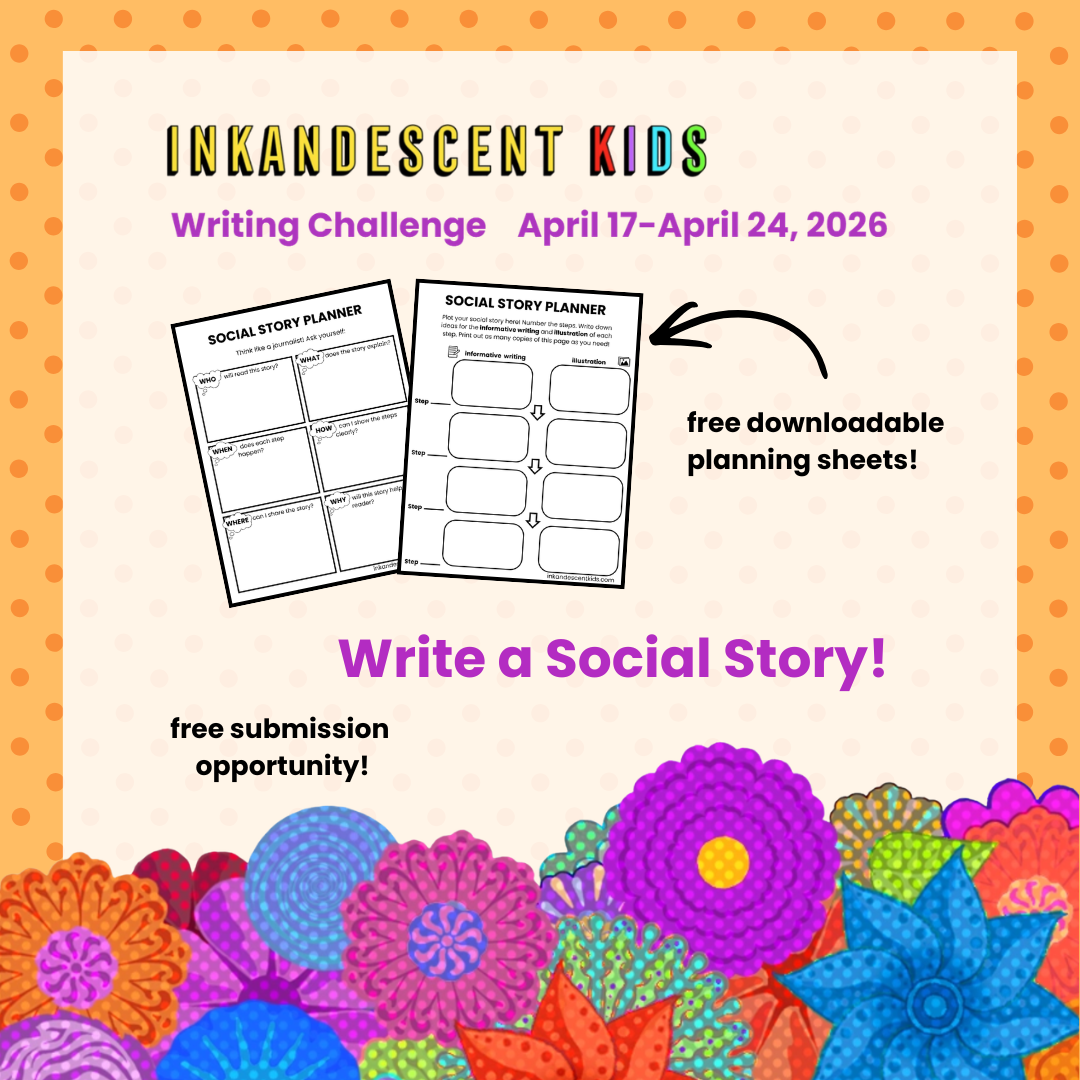
CLICK HERE for your FREE Social Story Planning Worksheets!
1. Plan your story
Ask yourself these questions:
- Who will read the story?
- What does the story explain?
- When does each step happen?
- How can I show the steps clearly?
- Where can I share the story?
- Why will this story help the reader?
2. Write and illustrate your story
See examples of many different kinds of social stories linked in the April 2026 Letter from the Editor.
Social stories use a combination of expressive sentences and coaching sentences.
- Use expressive sentences to explain what your reader will likely see, hear, or feel.
“First you will walk through a revolving door. The door moves on its own! The glass doors spin slowly, but the floor does not move.”
- Use coaching sentences to explain what the reader should do.
“There is enough room for two or three people to walk together. If there are already three people in one section, I will wait until the door passes and go in the next section.”
Social stories can use illustrations to help make each step more clear.
- Photographs are helpful for specific places and experiences.
- Picture symbols, drawings, and clip art are helpful for illustrating general actions, like “walk in a line,” or “pay the cashier.”
3. Share your story!
If you write a social story about visiting a local park or playground, your local newspaper or the park’s website might like a copy! Ask if they would like to offer the story on their website or print a few copies to have at the entrance.
If your social story is about a specific event, make sure it’s available at least a week before! That gives your audience time to read your social story several times before they participate. Maybe including your social story with tickets or adding it as a download on the sign-up page is a good idea!
Results from the Inkandescent Kids Writing Challenge for April 17-24, 2026!
Thank you to everyone who entered the Inkandescent Kids Writing Challenge for April 17-24, 2026! We enjoyed seeing your social stories!
Congratulations to Rachel S., Ms. D’s class, and Ginny S., the finalists of our writing challenge! Please enjoy their social stories below:
Sensory Friendly Movie by Rachel S., USA
How to Play Red Light, Green Light by Ms. D’s class, Maryland, USA
Go to Easy Little Plants by Ginny S., Maryland, USA