A simple question that is often asked is one of the most difficult and puzzling for me. What’s your hometown (a different version of this is: where did you grow up)? Hmm, that’s a good question. How should I answer that? I used to hesitate before answering. It took many, many years, meaning decades, before I settled on a pat answer that never explained very much. I would answer by saying that my father was in the military, so we moved a lot.
For years I adopted my father’s hometown and home state as mine. There was good reason for this. After sailing from Japan to the United States in 1959, we drove cross country and spent the summer in Ohio, my father’s home state. Soon, we were off and living in South Carolina. Mid way through second grade, my father was headed to South Korea for a year being posted along the demilitarized zone. While he was away, I returned to Ohio.
After my father’s year in South Korea ended, he was posted to Ft. Knox, Kentucky. Rather than interrupt another school year, I finished the school year in Ohio in May 1963 before moving to Kentucky. Arriving on this massive army post, little did I know that this would be a time of “normalcy”. We lived on post. Ft. Knox had elementary schools, middle schools and a high school. It offered sports for the kids, pools and everything any other community has for families.
As a kid, it was an interesting place because this was the U.S. Army’s home of armor—tanks. Driving around parts of Ft. Knox meant seeing tanks rolling down the road. For people familiar with a shooting range, just imagine living near a tank range. Yes, tankers had to improve their aim just like someone shooting a pistol or rifle. The only problem was that living near a tank range is like living through earthquakes as those shells shook everything upon impact.
Ft. Knox felt like a hometown for a while. It’s late afternoon in August. It’s 1964. I’m splashing around with my two much younger brothers. We’re in one of those water filled vinyl or plastic swimming pools, but it isn’t really a pool. It’s something that holds water because it’s only 12 to 15 inches deep and maybe ten feet in diameter. The lining is secured around the metal frame. It’s on the back patio, providing a nice flat surface.
There are no water slides, no rock-climbing walls, no putt-putt golf and not even a pool. The amenities found on today’s massive cruise ships for thousands of people on vacation were completely absent. Movies, yes, were offered, but not in the staterooms because there were no televisions.
A movie is scheduled for the evening. It will be shown outside, but not at a drive-in theater. We’ll find a spot up on deck of a ship that is ferrying military families from Japan to Seattle, Washington. When the time comes, the crew members project the movie onto some large white sheet (an extra-large version of a bed sheet) high enough for everyone to see. The wind causes the sheet to snap back and forth like a sail with the rhythm of the ship dancing on the water.
After two weeks and thousands of miles across the Pacific Ocean, we still have thousands of miles to travel. By car, we begin the journey cross-country. Too young to know where we are and having just arrived in the United States, we spend a night sleeping in the car as it is parked inside of a garage because the car needs repair. This was in the “old” days. It’s May 1959 and everything is an adventure.
Born abroad and living abroad surrounded by people who spoke a different language, English was the foreign language to my ears. As a family, we’re nomadic. We move a lot because of my father’s “job”. He’s a career soldier. The children of career military members are usually referred to as ” army brats, “” navy brats, etc. It’s not an insult. We’re a subset of people in the population.
Every place we live is temporary. Every school we attend is temporary, which means we have friends for short periods of time. In our environment, our friends drop into the neighborhood and school from different places. It’s possible that the new kid arriving mid-semester on a Wednesday might have just come from Germany, Japan, or Italy. It’s also possible that they just moved from Texas, California, Missouri, Kentucky, or one of the Carolinas.
Growing up military from the 1950s to the very early 1970s, living on a military installation meant we were immersed in a world of diverse people. The word diversity wasn’t used back then and yet our world was as diverse as any could get. This was still the post-World War II and the Korean War period. Because of where so many soldiers were posted around the world, our army neighborhood had moms who were German, Japanese, Korean, Filipino, Latino and other nationalities and we heard these various languages spoken. Adding to the diversity of mothers were the soldiers themselves: white, black, Asian, Latino. The mixing bowl effect was evident in the children who roamed the school corridors or played in the neighborhood.
(Underscoring the mixing bowl effect, I had the pleasure at a business dinner of meeting two other army brats in the early 2000s. The three of us reflected this strange brat community as we realized that the three of us had Japanese mothers, but our fathers were white, black and Latino.)
As time goes by, what becomes clear is that what happens thousands of miles away in another country can have a direct impact on a military family. Soldiers, sailors, and airmen may be needed somewhere, and in the “old” days of the 1960s, that meant any prolonged transfer of a father meant packing up and moving while he was deployed. Upon his return, there was no guarantee of being able to return to the military installation where we were previously posted.
The military brat life was one that provided periods of being a “normal” kid and periods when there was constant worry about things that occur half a world away that will cause another move, disruption, and restarting. For some of us, it makes us want to understand the world better, see more of the world, and wonder if there’s any way to engage the world to touch others and improve the world.
Stay tuned for Part 2 in this essay series. Learn more about Tim: TimothyTrainer.com
Author and Attorney Timothy Trainer in Washington, DC www.TimothyTrainer.com. Photo by AnnaGibbs.com
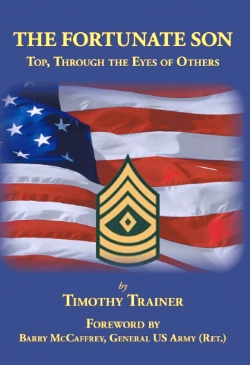
About the Timothy Trainer: Writing books is a passion for attorney Timothy Trainer, who for more than three decades focused on intellectual property issues in his day job. He has worked in government agencies and in the private sector and his assignments have taken him to 60 countries around the world.
Fiction was a genre he always wanted to try. In 2019, Pendulum Over the Pacific, was released by Joshua Tree Publishing. “This political intrigue story is set in Tokyo and Washington, D.C., and centers on trade tensions between the U.S. and Japan in the late 1980s,” Tim explains.
The Turning Point Suffragist Memorial Association is dedicated to honoring the suffragists who fought for and won the right of women to vote. Its vision is to raise awareness and funds to create a memorial that will reflect the strength of these women and the significance of their struggle. In partnership with NOVA Parks, the memorial will be located in Fairfax County, VA, near the spot where women were imprisoned.
And its goal is to raise funds to complete construction and have the national memorial fully operational by 2020, the 100th anniversary of the 19th Amendment, which recognized woman’s right to vote.
If Executive Director Pat Wirth, former chairwoman Jane Barker, and a slew of activists have their way, the garden-style national memorial will be grand. It will commemorate the suffrage struggle by educating, inspiring, and empowering present and future generations to remain vigilant in the quest for equal rights.
In this issue of Grateful American™ Magazine, we interview Pat Wirth and historian Edie Mayo, who share insights into this fascinating topic and important project.
Hope Katz Gibbs: Pat, tell us how the Turning Point Suffragist Memorial Association came to be.
Pat Wirth: In 2007, the manager at the Occoquan Regional Park approached the League of Women Voters in Fairfax, VA, to explore the idea of building a memorial to the suffragists in his park — part of the historic DC Prison grounds where scores of suffragists were jailed for silently picketing the White House in 1917. A committee of women began meeting under Northern Virginia Regional Park Authority’s nonprofit foundation to explore and expand on the concept. (They changed their name to NOVA Parks earlier this year.)
In 2011, the women, at the recommendation of attorney members, formed a 501c(3), the Turning Point Suffragist Memorial Association. Robert Beach, an award-winning architect, donated the design. The group has an Interpretation and Design Committee that has been researching the historical information that will tell the entire 72-year history of the suffrage movement. The memorial will have 19 stations because it was the 19th Amendment that gave women the vote!
David Bruce Smith: Pat, how did your involvement begin?
Pat Wirth: In 2012, I became a member of the association when I saw an exhibit about the organization at a fall arts festival in the tiny town of Occoquan across from the park. Jane Barker, the founder of the organization, is a friend of mine who encouraged me to attend a fundraising dinner and then some meetings. Turning Point hired me as its executive director on May 1, 2015.
Hope Katz Gibbs: Edie — Take us back to the mid-1800s when the suffragist movement began, and give us a brief history.
Edie Mayo: In the mid-1800s, women were subjected to many legal disabilities, which had come down through English common law. If married, women even lacked their own individual legal identities, which were subsumed in their husband’s identities. Women lacked property rights, rights to their own wages, even rights to their own children — and they did not have the most basic right of citizenship — the right to vote.
Many women were involved in the anti-slavery movement, which awakened them to their own lack of rights as women. They began to organize to change their legal status. After the Civil War, two groups emerged to work for women’s right to vote: The American Woman Suffrage Association, led by Lucy Stone and Julia Ward Howe, which had a moderate agenda to achieve voting rights state by state; and the National Woman Suffrage Association, led by Elizabeth Cady Stanton and Susan B. Anthony, which was more militant about achieving other legal rights for women and advocated a Constitutional amendment to gain women the right to vote.
David Bruce Smith: Then, in 1890, the two groups merged to become the National American Woman Suffrage Association, led by Carrie Chapman Catt.
Edie Mayo: That’s right. In the nineteen-teens, Alice Paul, Lucy Burns, and Harriot Stanton Blatch (daughter of Elizabeth Cady Stanton) returned from England, where they had been active in the British suffrage movement. They brought new tactics — such as open-air meetings, marches, and parades — in addition to aggressive lobbying, which they applied to the American movement. In 1916, these women formed the National Woman’s Party. With the larger, more moderate NAWSA pushing from one side, and the more militant Woman’s Party pushing from the other, these groups forced President Woodrow Wilson and Congress to deal with the issue of women voting as a serious national issue.
David Bruce Smith: Edie — Tell us what has happened in the years since and why this project is so important.
Edie Mayo: This rich history — which involves more than half the citizens of this nation — is virtually unknown. I like to call it “the best-kept secret in American history.” The history of women’s suffrage rarely receives more than a short paragraph in general history texts, and you would have to major in women’s history in college to really learn about this important part of our nation’s past.
Hope Katz Gibbs: Pat — You are trying to raise funds to make this memorial come to fruition. How is it going?
Pat Wirth: We have a dual challenge raising funds. Most Americans know very little about the suffrage movement because it was omitted from our history texts. The mostly male textbook authors failed to recognize the 72-year fight women fought to win the vote and abridged the challenge to the Progressive Era, 1890 to 1920, when, in fact, the movement began in Seneca Falls, NY, in 1848.
Thousands of women from every state, race, creed, and nationality fought for 72 years to win the vote. So, our number-one challenge has been to educate the public about this missing piece of history — it’s difficult to ask folks for donations for something they know nothing about!
The second challenge is that we are not eligible for any government funding, and most foundations will not donate to a capital campaign. This will be a national memorial, and we have spent considerable time this year expanding our reach nationally to get the word out about the memorial through national women’s organizations. It takes a lot of time to build relationships.
David Bruce Smith: Pat — If for some reason you don’t meet your funding goals, what will become of the Association?
Pat Wirth: The Association will build a memorial with whatever funds it has collected; it may be a scaled-down version of the design if necessary. We have been assured by NOVA Parks that there will be a national memorial commemorating all the suffragists and the entire suffragist movement in the park.
Hope Katz Gibbs: Pat — You have an amazing background in business — having spent decades in the auto industry, which has traditionally been a man’s world. You know from firsthand experience that it’s not easy to be a strong woman in a male-dominated environment and can surely relate to the plight of the suffragists. From your point of view, how do you think women should respond in the face of a challenge? And, do you see younger women — aka: the Millennials — standing up to this challenge?
Pat Wirth: As I mentioned earlier, we have the difficult task of educating everyone about this missing piece of American history, including the Millennials. Suffragist Elizabeth Cady Stanton actually likened women to slaves because of their limited role in society in the mid-19th century — if they married, their property went to their husbands; their children belonged to the husband; if they worked, their wages belonged to the husband; they could not belong to the professions and so could not become doctors or lawyers.
In the many presentations I give about the memorial to others, all are shocked to learn the truth about the treatment of women prior to winning the vote. Businesswomen now understand that without the vote they would not be in business! One of the shocking facts I like to share with my audience is that numerous state constitutions stated that “Idiots, lunatics, paupers, felons, and women shall not be entitled to vote.” That really gets their attention!
David Bruce Smith: Edie — I’d like to ask you the same question but from a historical point of view.
Edie Mayo: I think women should open their pocketbooks and make certain that this memorial is built! But it has been an uphill battle. People contribute to causes they know and care about. Few Millennials know anything about this chapter in American history, so our first job is to educate and get them fired up about this cause.
Hope Katz Gibbs: Edie — In fact, there’s an amazing exhibit about the history of bicycles at the Smithsonian’s National Museum of American History, where you work. Tell us about how the bike has freed women, and why it’s important for us to know where we’ve been?
Edie Mayo: If you don’t know where you’ve been, it’s hard to know where you are going. Frances Willard, leader of the Woman’s Christian Temperance Union, and the most widely known and popular woman of the late 19th century, wrote a wonderful little book entitled, “How I Learned to Ride the Bicycle” (which she did later in life), in which she compared learning to ride a bicycle with learning to become independent and self-sufficient as a woman.
First, you have to learn to balance yourself, then to ride a moderate amount, and finally to set off on your own journey. She told women that this journey was not without risk — you might fall off the bicycle or you might not know which way to go at first. In the end, however, you get back up, set a course, and lead an independent and rewarding life.
David Bruce Smith: Pat — What’s your ultimate goal for the Turning Point Suffragist Memorial Association?
Pat Wirth: The ultimate goal is to see the full history of the suffrage movement come to light for all Americans. Women would not be where they are today if they had not won the vote. In addition, present and future generations must remain vigilant in the quest for equal rights. We intend to provide programs through our Turning Point Institute that will include topics such as leadership, public speaking, political candidacy, social awareness and responsibility, civil rights, fiscal acumen, etc.
Hope Katz Gibbs: Pat — The last question goes to you. As we mentioned earlier, you are an advocate for women’s rights. If you were queen for a day, what would the world look like for women in 10 years?
Pat Wirth: While women are slowly climbing the business ladder to greater success and occasionally cracking the glass ceiling, that is not happening in all levels of government. Today approximately 20 percent of all elected officials in local, state, and federal positions are women. That has to change so that women’s perspective in making our laws is equal to that of men. I believe this will lead to expanded equality for all.
For more information about the Turning Point Suffragist Memorial, visit suffragistmemorial.org.
A Note from Hope Katz Gibbs, publisher, Inkandescent Kids — Hello and welcome to the newest magazine from the Inkandescent PR + Publishing Co., Inkandescent Kids. I cooked up this project in my mind back in 2017, but wasn’t quite ready to bring it to fruition in the summer of 2025. Like a great meal, sometimes a feast of an idea needs to simmer before it’s ready to serve.
Today, it is with great pride and pleasure that I share with you the publication for kids, by kids, about kids. Each day, we bring you new ideas and information designed to inspire, inform, and BeInkandescent!
Think Like a Reporter: Scroll down to learn how students K-20 can become part of our project with Our Team of professional journalists as their guides. We’ll help them write articles, shoot photos, create illustrations and videos, and more!
Watch our Video of the Day: From Elaine’s Literary Salon in Alexandria, VA, bestselling author Jeffrey James Higgins interviews Karen Leggett Abouraya, author of the amazing children’s book, ZamZam
Read our Articles of the Day: Below you’ll find essays by two of our Inkandescent student writers:
“Nonviolence,” by high school sophomore Shay Jackson. This is her award-winning essay from the “Living the Dream” contest
You are invited: Please peruse the website, where you’ll find articles that Inkandescent has written for and about kids. They are sorted by topic in the 20 categories in the sidebar. And you’ll find our podcast show on InkandescentRadio.com and dozens of kid-friendly video interviews on Inkandescent.tv.
We are on a mission: Children around the globe are invited to become a writer, author, illustrator, photographer, and videographer, and tell each other — and the grown-ups that are leaving the world in your hands — what you are thinking, feeling, experiencing, and wishing.
Here’s how it works:
Student Editorial Board: We are building an editorial board of high school and college students who will help guide the process of accepting submissions (donations to support their work are welcome).
Take a Class: We are hosting month-long classes taught by seasoned journalists to guide students to “Think like a journalist;” their work will be published ($150/class).
Partners: Educational organizations (schools, community centers, and more) are welcome to join us and share their students’ work.
Sponsors: We are looking for sponsors to help support our mission, and in turn we eagerly promote their work. Meet our generous donors here.
JOIN US! Parents and Grandparents: If you want your child to Think Like a Reporter — Write or text with your thoughts and ideas! Here’s the keeping the world a beautiful place! — Hope Katz Gibbs, founder, Inkandescent® PR + Publishing Co., hope@hopegibbs.com / 703-346-6975 (cell)
Shay Jackson
“Nonviolence,” by high school sophomore Shay Jackson: Check out her award-winning “Living the Dream” essay
Nonviolence has been seen as a weak or passive approach to resolving conflicts. However, Cesar Chavez’s quote, “Nonviolence is not inaction. It is not a discussion. It is not for the timid or weak. Nonviolence is hard work. It is the willingness to sacrifice. It is the patience to win, ” contradicts these views. This quote shows the demanding nature of nonviolence, highlighting courage, sacrifice, and perseverance. To fully understand and appreciate the quote, we must explore the meaning, understand the life of Ceasar Chavez, and explore the fight for nonviolence.
This quote shows that nonviolence is far from the weak or passive stereotype. Chavez states that nonviolence is not only about avoiding physical confrontations or endless conversations but instead, it’s also about engagement and willingness to tackle injustice face to face. Nonviolence requires courage and bravery beyond physical strength. It involves moral and emotional resilience. It consists of the willingness to endure suffering and the patience to persist in difficulty. Those who want to practice nonviolence should be prepared to work hard and exercise great patience. Patience plays a key role in practicing nonviolence. To maintain peace, you need to be patient and control negative feelings of hate and anger. It is not an approach for the weak but for those committed to pursuing justice and peace. Nonviolence is having to endure the efforts to bring change.
Cesar Chavez was a leader and a civil rights activist. He dedicated his life to improving the conditions for farm workers in the United States. Chavez co-founded the National Farm Workers Association, which later became the United Farm Workers (UFW). Chavez fought for better wages, safer working conditions, and for the rights of agricultural laborers. He fought through nonviolent means such as strikes and boycotts. He also led marches to draw attention to the plight of farm workers and to pressure employers and lawmakers to implement reforms. Chavez’s movement significantly changed the lives of many farm workers. He also inspired a broader movement for social justice and workers.
There have been many successful nonviolent movements throughout history. One of the most well-known was the Indian Independence Movement, led by the notable Mahatma Gandhi, another famous civil rights activist. The movement used nonviolent resistance to end British colonial rule in India. Another important movement was in the United States, with leaders like Martin Luther King, Jr., who advocated for racial equality. They used peaceful protests and civil disobedience. Another nonviolent act was The Velvet Revolution in Czechoslovakia, where the Czechs used nonviolent protests to end Communist rule. These movements show the power nonviolence has. Nonviolence is a significant movement to change.
In summary, Chavez’s quote emphasizes the demanding nature, hard work, sacrifice, and patience for nonviolence. Nonviolence has been shown in several successful movements around the world throughout history — Gandhi and the end of British Colonial rule, Dr. King and his advocacy for racial equality, and the Czech Velvet Revolution for the end of Communist rule. Cesar used nonviolence to his advantage and succeeded in his goal. Together, all of these demonstrate the power nonviolence has to change the world.
About Shay Jackson: A high school sophomore, Shay was the second-place winner in the 2025 “Living the Dream” art, poetry, and essay competition.
The Changing DEI Landscape: The Challenge of Finding Steady Footing
Day after day, I’m bombarded with alarming headlines: “BREAKING NEWS!” Another tariff imposed. Another restriction announced. We’re still within the first 100 days of the Trump presidency, and already, everything feels bleak.
As a first-generation American and a young woman aspiring to study healthcare, the future I had once envisioned now feels uncertain. I had dreamed of conducting research as an undergraduate, but recent funding cuts have made those opportunities more limited. I had hoped to work with government health organizations like the NIH or CDC—institutions I once saw as beacons of public service, but they are now facing political constraints and shifting leadership under figures like RFK Jr.
Rules and protections that once stood to safeguard people are being dismantled. It’s frightening. Even here at Penn, where women slightly outnumber men, I still notice gender imbalances—in classes, clubs, and especially in leadership roles within fields like engineering and finance. There are still too few women in the room.
The national debate around Diversity, Equity, and Inclusion (DEI) only adds to the tension. Americans are deeply divided on DEI Programs—some think that DEI prioritizes race or gender above merit and skill; others say it is necessary for unity and inclusivity.
While some DEI efforts are sparking outrage, I don’t think completely removing them is the solution. When done correctly, it can make a huge difference for people to help those from diverse backgrounds feel safe. It can boost productivity by strengthening worker retention and making employees feel comfortable enough to reach their potential. DEI is still relatively new, so the policies aren’t perfect and need much more work to develop, but they are a step in the right direction. Deeply rooted systemic inequalities have caused the gap between different groups to widen, and this is an effort to try to close that gap.
DEI is a complex topic with many nuances to consider. The intersectionality of my identities puts me at an advantage and disadvantage when it comes to DEI. On the one hand, I am a first-generation citizen, a child of immigrants, a person of color, and a female-identifying person. On the other hand, I am a model minority, come from a stable socioeconomic background, and have been educated at elite institutions.
While some DEI efforts have sparked outrage, I don’t believe eliminating them entirely is the answer. When implemented thoughtfully, DEI can make a real difference. It helps people from diverse backgrounds feel seen, safe, and supported. It can also improve outcomes—when people feel like they belong, they’re more likely to stay, contribute, and reach their full potential.
DEI is still a relatively new and evolving field. The policies aren’t perfect and need refining, but they represent a step in the right direction. Deeply rooted systemic inequalities have widened the gap between different communities. DEI is one attempt to close that gap.
It’s a complicated issue, especially for someone like me. The intersectionality of my identity places me both at an advantage and a disadvantage. I am a first-generation American, a child of immigrants, and a woman of color. But I also benefit from the privileges of being a so-called “model minority.” I come from a stable socioeconomic background and have been educated at elite institutions.
When I was applying to college, I struggled with the concept of Affirmative Action. The policy was overturned the summer I began my applications—a decision that was supposed to benefit people like me.
I remember being told to “hide” my race on applications if I could and not checking “East Asian” if it wasn’t required. But with a common Chinese last name, that wasn’t exactly an option. Some students began checking “Mixed” or “Pacific Islander” to distinguish themselves from the stereotype of the “high-achieving but robotic” Asian student.
Asian Americans occupy a complex space in conversations about race and equity. Many are first-generation college students, children of immigrants, and come from working-class families—yet they are often expected to excel academically. I knew so many kids growing up who would spend their afternoons helping out at the family restaurant before starting their homework late into the night.
I’ve been lucky. My parents have always supported me, and I’ve had access to resources that have helped me succeed. But my path hasn’t been without struggle. My parents didn’t know how the college admissions process worked. They only began to understand it through friends and neighbors. In elementary school, I was translating mail and writing emails for them. When I was learning the alphabet in preschool, my mom was learning it too—sitting beside me, sounding out the letters.
So why is it that so many Asian American children excel in school despite starting from behind? Because, for many immigrant families, education is everything. It’s seen as the one path to stability, to success, to belonging. But that emphasis on achievement can come with a cost. Asian Americans are often held to impossibly high standards and reduced to stereotypes of being hardworking, quiet, and academically robotic. These assumptions flatten our experiences and erase the struggles that many Asian American families face—like language barriers, financial pressure, or a lack of institutional support.
This complexity is why DEI efforts are so necessary, yet so often misunderstood. Even for communities that appear successful on paper, like Asian Americans, there are unique challenges that policies must account for. And for others—whether they are women entering male-dominated industries or students from lower-income backgrounds—the barriers may look different, but they are no less real.
Even those who benefit from DEI policies may feel conflicted. There’s a growing discomfort among students and professionals who are made to feel like they’ve only earned a position because of their identity—not their qualifications. The term “DEI hire” can be used dismissively, as if someone’s background negates their effort or ability. That kind of backlash can discourage people from even pursuing the opportunities that were created to help level the playing field.
As someone who holds many privileges, I constantly remind myself that what we call “merit” is often just a reflection of opportunity. Not everyone has the freedom to dedicate hours to studying. Some have to work jobs, care for siblings, or navigate systems their families don’t understand. DEI isn’t about giving people a shortcut; it’s about recognizing the obstacles in their path and making it possible for them to compete on equal footing.
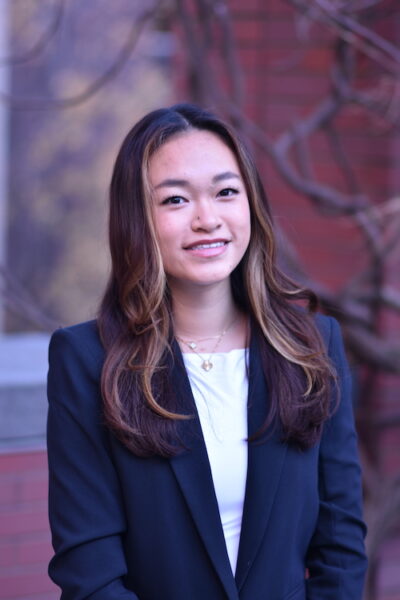
About Erin: I just finished by freshman year studying healthcare policy at the University of Pennsylvania, where I’ve been inspired to dig deeper into the complexities of our healthcare system. I’ve always believed that access to quality care is a basic human right, and my studies help me understand the legislative, economic, and social factors that affect who gets that care and why. By immersing myself in research, collaborating with peers, and staying engaged in campus forums, I hope to uncover and champion solutions that make healthcare more equitable for all. Being part of the Empowered Together Network reinforces my sense of purpose and shows me the power of a collective vision. When people come together to share ideas and advocate for change, we create a force for good that’s greater than the sum of our individual efforts. It’s empowering to know that my voice matters and that my work can contribute to a larger movement committed to improving lives around the world. Through collaboration, empathy, and a drive to serve, I aim to shape policies that will make a lasting, positive impact on communities everywhere.
It’s always a challenge for families to find an affordable, family-friendly vacation spot that’s fun for dad, mom — and the kids. So we were thrilled to find Wild Dunes in South Carolina. Just 20 minutes from Charleston, this resort by the sea has all the amenities we fantasize about: pools, tennis, golf, yoga, affordable food options — and, best of all, easy access to the gorgeous Atlantic Ocean.
Here’s why Inkandescent® Kids love this hot spot.
A Room With a Review: Wild Dunes Island Resort, Isle of Palms, South Carolina
1. The overview: Clean, easy to navigate, and quiet, this beach hotel, condo, and vacation rental resort is located in the heart of the expansive Wild Dunes Resort. With three pools in the main area, one heated and the others right on the beach, there is plenty of room to roam when the weather is good. There are also two golf courses and tons of tennis courts, fitness centers, and yoga classes to choose from.
2. The rooms: Vacation homes and condos are located throughout the Resort, including beachfront locations. Homes range from three to seven bedrooms, while condos range from one to three. Three accommodation levels allow you to find the rental size and style that best suits you:
Deluxe: These homes and condos feature upscale kitchens and baths, beautiful furnishings, and upgraded electronics, from cooks’ kitchens to plasma-screen TVs. A select number of deluxe oceanfront homes are part of The Collection and feature enhanced amenities and concierge services.
Moderate: A quality vacation rental offering updated kitchens and baths, furnishings, bedding, and electronics; all at a slightly more affordable rate.
Standard: Includes attractive décor with the essential furnishings for comfort in a vacation rental. These accommodations are the most affordable rental throughout Wild Dunes Resort.
Tucked into the heart of Wild Dunes Resort, and just 150 yards from the beach, is The Boardwalk Inn. Ninety-three rooms and suites, including five ADA-accessible rooms, offer a relaxed, private feel that keeps guests coming back year after year. The Boardwalk Inn has earned popularity among guests and critics alike, receiving the AAA Four Diamond award every year since it opened.
3. The restaurants: The Inn also offers The Sea Island Grill & Lounge, an upscale coastal restaurant in a casual atmosphere; a pool; and easy access to the popular The Grand Pavilion and Boardwalk. Also nearby is The Village Plaza, which includes The Lettered Olive Restaurant & Lounge (open seasonally), a salon with spa services, a fitness center, and a grocery market.
Area restaurants are also nearby — but packed, especially after 7 p.m. We tried a handful and can recommend:
The Boathouse Restaurant: Great views of the sunset (but only if you are having at drink at the bar upstairs, or if you ask to sit downstairs — and the tables are often reserved). Most tourists come for the seafood and South Carolina specialties. Be prepared, this place isn’t cheap (budget about $30/person). And definitely make a reservation in the morning for the night you want to eat here.
Luke ‘n Ollie’s Pizzeria If you’re in the mood for take-out pizza and salads, try Luke ‘n Ollie’s. What you get, in addition to some amazingly creative pizza-inspired options (ever had a Caesar salad in a pizza bowl?) is service from some of the nicest locals you’d want to meet. There was a wait here, too; so call ahead and consider the take-out option and consider a picnic on the beach, which is just a block away.
Piggly Wiggly Of course, eating in at your rental property can be a good option, too. To stock up, try the Piggly Wiggly, just five miles from Wild Dunes. In the same shopping center you’ll find a handful of restaurants and shops, a nail salon, and for those eager to sweat out the small stuff, try the Bikram Yoga Studio. For about $20, plus the rental of a mat, it’s a surefire way to get your heart going.
4. The service: Southern hospitality is alive and well at Wild Dunes, where the cheerful staff — including many recent college grads — is willing and able to make you feel at home. Towels, cocktails, suggestions on where to go when you head out for an adventure … you name it, they are happy to assist.
5. The extras: Golf, tennis, fitness rooms, and more make your stay a relaxing, healthy treat. Granted, there is a pretty big price tag that comes with each of these offerings, but if you have money to play with, this is a good place to pull out all the stops.
During high-traffic vacation times — spring break, Easter, and Memorial Day, in particular — there are plenty of activities for kids ages 5-12. Options include the Wild Adventures Club: Sports Day, $40/child; Barrier Island Marine Bio Day, $60/child; and craft classes, $10/item for Tie Dye, Spin Art Discs, Shell and Shark Tooth Necklaces, etc.
There are also Easter Basket deliveries, $30/basket; the Tortoise and Hare Beach 5K Run/Walk, $25/person entry fee; and a breakfast buffet with the Easter Bunny, $10/kids and $15/adults.
Golf specials include a three-day golf pass, $200/person; Round Robin tennis clinics (all levels), $15/session; the daily drill for $29/session; and the future stars clinic (ages 12-16) for $50/session, among other classes.
Two golf courses on the grounds also make Wild Dunes an ideal place to play 36 holes. Rates range from $95-$120/game on the Links Course, and $55-$85/game on the Harbor Course.
There is also a spa on the premises for manicures/pedicures, facials, and haircuts; several large fitness rooms, open to all guests; and an assortment of wellness programs that range from yoga ($20/person) to personal training ($60/session and $110 for two or more people).
6. The price: 1 bedroom oceanfront condos start at $159 per night, 2 bedrooms go for $189, and 3 bedrooms are $229 per night. For fully furnished houses that accommodate up to 10, budget for closer to $3,000 for a weeklong stay. But specials abound, especially if you are booking in advance and/or off-season. Recommended packages include options for families, romantic getaways, golfers, tennis players, meeting planners, and weddings.
Inkandescent rating = 4 seagulls out of four. Definitely worth the trip!
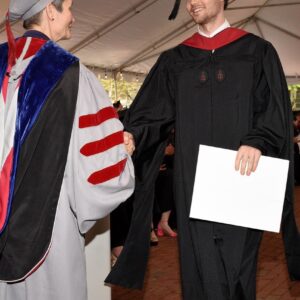
A Note from Hope, publisher, Inkandescent Kids magazine — Today, I am indulging in a mommy moment. My son Dylan graduated from Harvard’s Graduate School of Design last week with a Master’s Degree in Architecture. I am still awash in the pomp and circumstance of his grand accomplishment.
As do many parents who sit in the audience at their child’s graduation ceremony, I found myself thinking about the first time I held that baby. I vividly remember how hard his birth was (getting an 8.5 pound infant out of my small-framed body was a feat; we both almost died). Then we heard that big bold first-breath cry, and I looked up at his Dad. We both wept, knowing Dylan was here, with us, and was ok. As the nurse put him in my arms, his newborn wail turned to the sweetest smile I’d ever seen. As he grew, his kindness toward others became his superpower. I remember how proud I felt when he found besties in preschool and protected those buds with his favorite Spiderman suit, how he helped his 2nd-grade classmate learn to do her homework, how his 4th-grade teacher, Ms. Bardenhagen, showed him what it meant to love to learn.
Anna and Dylan Gibbs, Clifton VA 2002
The day that lives in my heart is the summer afternoon we walked together on the beach in Bethany, DE. Dylan was 7. I asked him what he’d like to be when he grew up. Earlier that day, I had mentioned that I’d love to live at the beach someday and have a house near the sand where we could bring our friends and family to relax and connect. Dylan said, “I want to build you that house.” With a deep breath filled with all the love in my body, I responded, “So that could mean you’ll become an architect.” He and I walked for miles planning out the path he’d take to get there: Get really good grades, embrace Dad’s award-winning gift to draw, master math. And we envisioned the schools he’d attend to accomplish that goal — UVA (because before he turned 1, his Dad and I bought into the Virginia prepaid college program. So long as we lived in VA and he went to school in the state, it wouldn’t cost any more than the $16K we invested.) And then, I suggested, he’d attend Harvard’s Graduate School of Design (GSD), one of the best in the country.
That’s exactly what Dylan did.
Anna and Dylan Gibbs, Harvard Graduation, May 29, 2025
Harvard University, May 29, 2025: After making our way through graduation security and entering the tent where the ceremony was held, I chose to stand on the wall in the very back with the GSD student ushers. I knew I’d sob. When his Dad and I heard his name called: Dylan Zane Glenwood Gibbs,it wasn’t just our pride that made us cry. It was the gift of watching this kind, gentle, powerful man walk across that stage. All those years of love and guidance, knowing Dylan could and would accomplish anything he set his mind to, watching as he found his footing, overwhelmed us with gratitude. Now, that symbol of his remarkably hard work and dedication — that diploma — was in his hands.
It’s more than that. Anyone who knows Dylan knows the quiet force that he is. Especially his big sister Anna, an accomplished photographer and videographer, who flew to Boston to assist with Dyl’s master’s thesis — a bear of a project about how society can, and must, humanize data centers. This 50-foot presentation took more than a year to envision, with the biggest push to create it coming in the final 8 weeks before it was due, on his 26th birthday.
Dozens of the Harvard students that Dylan helped as a teaching assistant, many of them international, many of them from China,stayed up with him for nights on end to help. Anna took photos and videos to chronicle this memorable experience. She watched as this crew of brilliant kids came to Dylan’s aid, just as he had for them in the years he spent as a teaching assistant as an undergrad at the University of Virgina, and then as a grad student at Harvard. Anna said that level of collaboration, cooperation, loyalty, and support taught her something, not just about the leadership and profound kindness that drew this group to her brother — but about how the world works best when we work together. Anna is a very special and wise cookie. Like Dylan, she will help to make the world a better place for generations to come. My prayer is that these young, brilliant souls around the world work together to accomplish that mission in peace. With kindness. With elegance. With grace.
Dylan Gibbs, masters thesis presentation, May 15, 2025
And then there’s the Harvard component. I am not ignorant as to the reason why some people in the world hate those of us who are educated. We are dangerous to them. We think for ourselves, and we see through the manipulation of those keen on maintaining control. I am a graduate of the University of Pennsylvania’s Annenberg School of Communication (1986). That experience helped me to know that my son had the intellectual prowess to go to an Ivy League school. I knew how to assist Dylan in his journey. He did all the heavy lifting. But like my parents did before me, I know that showing our kids the way to success is often how success works. Doctors birth doctors. Lawyers create lawyers. Scientists make scientists. Artists teach creativity. Entrepreneurs show their kids how business and self-employment needs to be navigated. And when you are given these privileges, you pass it on.
Weijia and Alex Yuen, founders, Collective Operations, San Francisco
He designed it during his senior year at UVA, bringing in two of his brilliant professors, Alex and Weijia Yuen. While we were on one of our weekly Friday meetings, Dylan jumped off to take a call. He came back to report he’d been accepted at Harvard. He also got into the architecture programs at Princeton, Yale, and Rice, but asked me what I thought about where he’d go. With tears of pride rolling down my face, I said: Harvard! Alex and Weijia nodded. They had also just accepted teaching positions there, and so the team went off to Boston. The retreat center project remains a dream; but these educated architects have accomplished amazing things in the years since. That’s what truly matters — to me.
Harvard Defies Trump, The Harvard Crimson
As for the future of education: I believe we all need to decide what it means to be smart. For me, and many people that I grew up with, education is a critical component. I am Jewish, and for centuries of pogroms, we have learned to embrace the reality that the knowledge you hold in your head, body, mind, spirit, and heart is often the only thing you take with have. That is how Jews have survived — and thrived.
In 2025, that conversation is so messy that it’s almost impossible to make sense of. And, it’s one of the reasons I hold learning dear. Before I had Anna and Dylan, I studied in the educational leadership master’s program at The George Washington University (1992). That education led me to work as the communications director for the City of Fairfax Schools in Northern VA for a decade (2001-2011). It was an honor and a privilege to work for K-12 leaders while I was raising my kids. After my kids went to college, I studied for another degree in positive psychology at Claremont Graduate University in southern CA (2020). When in doubt, I go back to school. Why? Because the opportunity to learn something new is a privilege and a gift. I hope it’s the same for you.
Dylan at work: Then (at his dad’s desk, 2001) and Now (working at his desk at Harvard’s GSD, 2025)
So what’s next? Caps off to Harvard for standing its ground, and supporting our son. When he was a toddler, my husband and I knew would Dylan make an impact in this world. This oldest institution is fighting not just for its future, but for his future — and the future of higher education in this country. I am a small voice in a vast world. My tiny but powerful PR firm and publishing company is filled with light and love, but it is just that — small. Yet, it is also mighty. As are we all. All it takes to make us stronger is one profound child. One walk on the beach. One big idea. One giant dream. And all of us working together in small and big ways — a Kibbutz, a village, a community. This is what democracy looks like: We the people. This is our power. This is how we change the world. One graduation, one miracle at a time.
Until next Monday: I send love, blessings, and wishes that our children thrive, and their dreams — no matter what they are — become their reality. Power to the people, right on! — Hope Katz Gibbs, founder and president, Inkandescent® Inc. Inkandescent.us
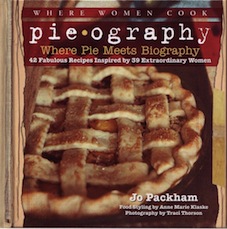
Have you ever wanted to write a cookbook? For author and publisher Jo Packham, this was something on her bucket list — and it was a goal she deliciously accomplished in “Pie-ography: Where Pie Meets Biography.”
Packham has been an innovator in the crafts and handmade publishing market for more than 30 years. A successful entrepreneur who has partnered with Stampington & Company, she has created a new imprint with Sterling, WWCPRESS.
This dynamo is the creator and editor-in-chief of three bestselling magazines: Where Women Cook,Where Women Create,and Where Women Create Business. She is also the author of “Where Women Create” (2005), “Where Women Create: Book of Inspiration” (2010), and “Where Women Create: Book of Organization” (2013).
A Note from Hope, publisher, Inkandescent Kids magazine — Hang on to yer hat, cowboy. One listen-to and read-through of Sandra Boynton’s illustrated country music songbook/CD combo, “Frog Trouble,” and you’ll be humming your way through the day.
Created for children ages 1 to “older than dirt,” this is Boynton’s fifth foray into merging music, words, and art. Like the others she’s created with keyboard player Michael Ford, it’s likely to become a certified Gold, and an award-winning New York Times best-seller.
Packed with star power — including musical performances from Linda Eder, Brad Paisley, and Dwight Yoakam — the message of the book is as charming and iconic as the lyrics and illustrations by Boynton herself.
From “I’ve Got a Dog,” to “Deepest Blue,” and “More Frog Trouble,” this 64-pager is filled with wit and wisdom — as well as lyrics and sheet music so readers can sing and play along.
We wouldn’t expect anything less from the successful artist and author, who has been writing books and drawing charming animal illustrations since the 1970s.
“I love illustrated books, and I’ve always been smitten with records, so I guess it was inevitable that I’d eventually want to put the two together,” Boynton explains.
How did the native of Orange, New Jersey, make her way to the recording studios of Nashville?
“If you love recording, sooner or later you’re going to find yourself in Nashville,” she believes. “And y’all might even start saying ‘y’all’ without even realizing it.”
Taking a traditional route through life has never been Boynton’s style. She went to UC Berkeley for a year, then dropped out, transferred to Yale School of Drama for a year and a half, and dropped out again. That’s when the art bug bit her.
“The summer after my junior year (1973), I couldn’t face the prospect of waitressing again,” Boynton explains. “So, I designed gift cards and Christmas cards, had my Uncle Bill, a printer, print them, and I trudged around to various East Coast stores selling them.”
The cards took off, and so did her love life.
“Jamie McEwan was a tall, swarthy, and cheerfully subversive Yale wrestling captain/1972 Olympic bronze medalist when we met,” says Boynton, who married and moved with him to a farm in the foothills of the Berkshires. “Then we collaborated on four perfect children and two quirky books.”
Those stories were “The Story of Grump and Pout,” and “The Heart of Cool.” Dozens of books by Boynton followed.
Then, in 1996, she met her now professional partner, Michael Ford.
“We’re a very lean team,” she explains of her collaboration with the Pennsylvania-based music man. “I write all the lyrics and most of the melody, and from there, Mike and I create each song together in our own small New England music production studio, with Mike playing scratch instrumental tracks on keyboard and helping with all the technical stuff, which he’s masterful at. I call him The Computer Whisperer.”
Was it tough to round up such stellar singers as Eder, Paisley, and Yoakam for “Frog Trouble”?
“It was!” Boynton admits, insisting it took foolish optimism on her part. “They all really loved the songs, so that helped.”
To seal the deal, Boynton also sent each country star a gift of a stuffed animal (Mr. Chicken, to be precise). “Surely there’s nothing so persuasive as receiving an unexplained stuffed chicken,” she says.
What are Boynton’s plans for the future?
“I’m thinking of tackling an enormous pile of laundry — and buying the Christmas gifts I meant to get for the kids last year,” she says. “But that’s just a little Frog Trouble.”
McDonald’s owners and operators in Philadelphia helped make the vision of a “home away from home” for families of hospitalized kids a reality when dozens of franchisees donated proceeds from the sale of the green milkshakes to the founders of the Ronald McDonald House Charities (RMHC).
The Shamrock Shake proceeds were a huge win for the the RMHC founders (shown here) — Philadelphia Eagles football team owner Leonard Tose, Eagles’ player Fred Hill (whose daughter, Kim, had leukemia), Eagles general manager Jim Murray, Dr. Audrey Evans, and McDonald’s regional manager Ed Rensi.
Inspiration for the organization came when Hill and his wife, Fran, spent nights sleeping next to their daughter’s hospital bed while she battled cancer. The Hills’ experience generated awareness of the impact and need for family-centered programming, and the founders opened the first Ronald McDonald House on Oct. 15, 1974, in Philadelphia.
A decade later, in 1984, Ronald McDonald House Charities (RMHC) was officially established, in memory of McDonald’s Corporation founder Ray Kroc, who was a strong advocate for children. In 2003, Kroc’s wife, Joan, bequeathed $60 million to the RMHC.
Today, there are 340 Ronald McDonald Houses around the world, 195 Ronald McDonald Family Rooms, and 52 Ronald McDonald Care Mobiles in 62 countries and regions. Through those programs, RMHC served roughly 5.7 million children and families in 2014 alone, and over the years has collected more than $200 million from RMHCdonation boxes. And Kim Hill (shown here with her pro-footballer dad), the little girl who inspired everything, lived to be 44. She died in 2011.
So it was a pleasure to interview Kerry Blumberg, the executive director of the team that runs one of the oldest Ronald McDonald Houses — the Richmond-based facility, which turned 35 this year.
“By providing a place for the families of sick children to stay, Ronald McDonald House Charities keeps families together and helps make sick children happier and healthier,” says Blumberg.
Kristy Seredni of Williamsburg recounts how a Ronald McDonald Family Room provided her family with comfort and care when her newborn son was hospitalized.
“The relief that we felt knowing we would be able to be by Max’s side was tremendous. We were able to be an active part of his progress, which was really important to me,” Kristy says. “I honestly can’t imagine what we would have done had we not been able to stay in the Ronald McDonald Family Room. I attribute a lot of Max’s growth and success to the fact we were able to be with him so much from day one, and could focus on his well-being instead of where Mark and I were going to sleep.”
This year, RMH Richmond will launch a new program called Happy Wheels, named for the hospitality cart that will be pushed through the Pediatric and Neonatal Units of the hospital on a weekly basis. It is stocked with coffee, juice boxes, granola bars, crackers, coloring books, Play-Doh, toiletries, and other small comforts. These items will be provided to families and children on the units free of charge.
Blumberg said the Richmond team hopes that Happy Wheels will be a simple reminder to these families that they have a network of supporters quietly working to bring them relief during a challenging time.
Scroll down for our Q&A with Kerry Blumberg, executive director of the Richmond RMHC.
Inkandescent Kids: Tell us about your organization. What is your mission?
Kerry Blumberg: Ronald McDonald House Charities of Richmond is a home away from home for families with children receiving medical treatment in Richmond, VA. Our goal is to ease the burdens faced by families during the most challenging time of their lives, so that they can stay together and stay focused on what matters most: their child’s well-being.
Inkandescent Kids: When and why did you get involved with the organization?
Kerry Blumberg: I started working with RMHC Richmond in January 2013. I was drawn to the position after spending nine years at Children’s Hospital of Richmond in fundraising and government relations positions. I am passionate about supporting and advocating for families in the midst of pediatric health crises.
Inkandescent Kids: How has the organization changed over the years?
Kerry Blumberg: The past three years have brought tremendous growth to our organization. Our strategic plan is guiding us as we strengthen our relationship with our hospital partners and the community at large, and focus on operational excellence and financial sustainability. This focused effort has led to increased usage (we often have a wait list) and program growth.
Since 2013 we have expanded our in-hospital services to Bon Secours St. Mary’s Hospital through our family sleep rooms and the addition of our hospitality cart, “Happy Wheels,” which visits pediatric units weekly. We have also made a concentrated effort to support the neonatal intensive-care unit (NICU) at Virginia Commonwealth University (VCU) Health System by providing food for its family kitchen.
Inkandescent Kids: Who is your target audience?
Kerry Blumberg: We serve families who are traveling to the Richmond area to seek medical treatment for their child — last year we served families from 78 counties in Virginia, 15 states, and six countries. We also aim to engage the community at large and increase the public’s emotional connection with our organization through volunteerism, wish-list drives, pop-top donations, and philanthropic contributions.
Inkandescent Kids: Can you give us an example of one or two families you have helped?
Kerry Blumberg: As a nurse, Shannon Bradley was familiar with the Ronald McDonald House. But like many of our guests, she didn’t know that one day she would be a recipient of its services herself.
Shannon’s son, Liam, was born in 2011 at 24 weeks. Amidst all of his medical problems, he didn’t learn to eat when he was supposed to. At the age of 4, Liam was enrolled in the Feeding Program at the Children’s Hospital of Richmond at VCU. Because of the hospital’s two-hour distance from home, she and Liam checked into the Ronald McDonald House of Richmond. Though it was a strain to be away from home for nine weeks, Shannon found a way to make the Ronald McDonald House a home.
“It’s so nice to come home and there’s dinner already made; we don’t have to eat out all the time or come back from a long day of therapies and figure out how to get groceries,” Shannon told us. Liam adjusted well, too. “It’s been good for him to be able to interact with people here; he is very social and he thinks everyone is his friend. Every morning he asks, ‘Are my friends up?’”
Inkandescent Kids: What accomplishment are you most proud of?
Kerry Blumberg: The accomplishment that we are most proud of is that we work collaboratively to keep families close. Close to their loved one, close to other families on a similar journey, and close to pediatric specialists throughout our region.
Inkandescent Kids: What are your goals?
Kerry Blumberg: Each year we reaffirm our commitment to our strategic plan. In 2016 we will have a large focus on community engagement and operational excellence as we nurture our relationships with our 10 hospital care partners and maintain our financial sustainability.
Inkandescent Kids: What is your budget, and how do you raise funds? Is this your biggest challenge?
Kerry Blumberg: Our budget is around $700,000 annually. Our staff works to raise the funds critical to operating the Ronald McDonald House Charities. Our biggest fundraiser is the Red Shoe Rendezvous Auction and Golf Tournament, which takes place in late September each year. This year’s event raised more than $215,000. We are always working to increase the number of individuals who make personal philanthropic donations.
Inkandescent Kids: If you had all the funding in the world — how much would that be? And what would you do with it?
Kerry Blumberg: This is a hard question. Our biggest challenge right now is the limited space of our house. The need for our services outpaces our ability to serve families. We currently have four families on our wait list. That said, until we have a clear picture of a potential full-service hospital in Richmond, we are continuing to do the best we can in our current facility.
The top operational item currently on our wish list is a $5,000 lobby guard system that does immediate background checks on guests, volunteers, and visitors. It’s similar to a system you might see in a school, and we want to ensure the safety of all our guests.
Inkandescent Kids: If our readers could learn just one thing about your organization, what would you want them to know?
Kerry Blumberg: We want our fan community to know that there are many ways for people to be involved in helping RMHC Richmond. We want you to join us in our effort to bring hope to families!
What annually draws nearly 600,000 students from around the world to prepare documentaries, exhibits, papers, performances, and websites for the annual National History Day competition?
It’s not the monetary awards, though there are some. Instead, it’s the recognition they receive for their work from judges — and — peers that makes a National History Day medal so intrinsically valuable, says National History Day Executive Director Dr. Cathy Gorn (pictured here with President Obama).
The finals of the June 2015 competition drew more than 3,000 middle and high school students to present their work at the 41st annual National History Day Contest at the University of Maryland in College Park, MD. All the entries were related to the 2015 theme, “Leadership and Legacy in History,” and the contestants came from all 50 states, the District of Columbia, American Samoa, Guam, Puerto Rico, and international schools in Central America, China, Korea, and South Asia.
Dr. Gorn explains what makes so many students passionate about history in this month’s Q&A with Grateful American™ Foundation founder David Bruce Smith, and executive producer Hope Katz Gibbs. Scroll down for more.
Hope Katz Gibbs: Tell us about this interesting organization. When was it founded? What is its mission?
Cathy Gorn: National History Day was founded in 1974 by Dr. David Van Tassel on the campus of Case Western Reserve University in Ohio. Professor Van Tassel was worried about the decline of the humanities in general, and history in particular, in America’s schools. Van Tassel was particularly distressed by the boring, rote memorization he saw in most history classrooms.
He wanted to invigorate the teaching and learning of history. National History Day is the means. The program, for students in grades 6 through 12. teaches students to become historians, which is what makes history come alive. It’s the antithesis of learning history by memorization.
They conduct research in archives and libraries; they do oral history interviews. Then they compile their research into a project related to an annual theme. This year it was “Leadership and Legacy in History.” Students enter their projects in the National History Day contest at a local level. Winners move to the state competition, and the top contestants come to the national contest.
David Bruce Smith: Tell us about this year’s competition. Students spend an entire year preparing these projects. Choosing among so many works must be incredibly difficult.
Cathy Gorn: There’s an energy when these young people come to campus. They’re excited to tell you everything they know about history. They set up their exhibits, around 400 in all, and present performances and documentaries, and discuss their papers and websites. The best of them make it to the final round.
The passion students have for their projects is inspiring. We’ve had teachers and parents exclaim that they had never seen their child work so hard on anything before. And of course this makes it incredibly difficult for our judges. With such high-quality work, it is often difficult to decide among entries. Our judges look carefully at each project, the research that went into it, the accompanying process paper, and, in the end, they have to make a decision. The judging is particularly challenging when it comes to the final round where you are seeing the best of the best.
Hope Katz Gibbs: How does the judging actually work, and who are some of the judges who spend days each year working on this project with you?
Cathy Gorn: To serve as a judge for National History Day, we require an individual to have an interest in history and to have worked with history in some capacity, for example, as a teacher, museum curator, archivist, etc. Our judges come from all walks of life — they are lawyers, historians, retirees, professors — basically anyone who has a love of history and learning and who can provide quality feedback to students. Some are historians who got hooked on History Day and take time off from work to judge.
Many of our judges have been with us for years. A few began as participants and have continued to come back every year to help assess students’ work.
David Bruce Smith: In fact, numerous awards are granted to students and teachers. What are the award categories?
Cathy Gorn: We actually have five categories: documentary, exhibit, paper, performance, and website. Each of the categories includes group and individual award categories, except that there is no group paper category. Then, there are two divisions, junior (middle school), and senior (high school). That comes out to 18 different categories for potential winners.
Hope Katz Gibbs: I see that the senior documentary winners receive a $5,000 award from HISTORY®. Are there other monetary awards bestowed annually?
Cathy Gorn: Yes, but the amounts are not all that significant. First place is $1,000, second is $500, and third is $250. I really think it’s the pride students have in their projects and the desire to win a medal that inspires them to work on their projects. The students receive the medals, monetary awards, and various other special prizes at the award ceremony, which is held in the basketball arena on the University of Maryland campus — it’s huge.
David Bruce Smith: The “Outstanding Affiliate Entry” award is sponsored by the National Park Service. How did you come to work with them? And what other groups sponsor National History Day?
Cathy Gorn: There are a number of prize sponsors, even beyond the first, second, and third place awards. There are more than two dozen special prizes awarded. Each sponsor has a specific interest in history; for example the Society for American Baseball Research awards a prize to a project related to baseball history. The American Bar Association presents the “Magna Carta Prize.”
Hope Katz Gibbs: You also work closely with the Smithsonian’s National Museum of American History. In fact, there’s a Night at the Museum exhibit there during the week-long event.
Cathy Gorn: This is a great event — selected students display their exhibit next to some of the most well-known exhibits in the world. In the evening, all of the participants are invited to the National History Night at the Museum. There, curators, historians, and archivists all speak to the students. Students who come back from that event often cite it as one of the highlights of the contest.
David Bruce Smith: So how can even more students get involved with National History Day?
Cathy Gorn: To find more information about our materials or to purchase more material information, you can go to our website, www.nhd.org.
Hope Katz Gibbs: With the 2016 National History Day coming up next June, tell us what the theme is — and what you are most looking forward to.
Cathy Gorn: The 2016 theme is “Exploration, Encounter & Exchange in History.” Probably one of the first things that pops into someone’s mind with the exploration theme is Lewis and Clark or Columbus, but we also encourage students to look at the exploration of ideas, the exchange of cultures from explorers, and how those impact the course of history.
For more information, visit nhd.org. And check out the monthly episodes of the “Grateful American TV Show” at GratefulAmericanTV.com.
Here’s to increasing your History IQ!
About the Grateful American™ Series
The Grateful American™ Series is an interactive, multimedia educational project created by the Grateful American™ Foundation. Founded by DC-based author and publisher David Bruce Smith (shown here), it is designed to restore enthusiasm in American history for kids and adults.
Its website, which launched on July 4, 2014, is updated each month with articles, radio podcasts, and TV episodes featuring interviews with the directors of popular presidential and historic homes, including George Washington’s Mount Vernon, James Madison’s Montpelier, and Thomas Jefferson’s Monticello.
Disclaimer: The photos of the historic figures pictured in the videos have been provided courtesy of the presidential and historic homes and museums depicted, as well as from the authors and historians, and / or are under Creative Commons usage. The Grateful American™ Series understands that these images are in the public domain and have no known copyright restrictions.




 Hope Katz Gibbs: Pat — The last question goes to you. As we mentioned earlier, you are an advocate for women’s rights. If you were queen for a day, what would the world look like for women in 10 years?
 The Changing DEI Landscape: The Challenge of Finding Steady Footing