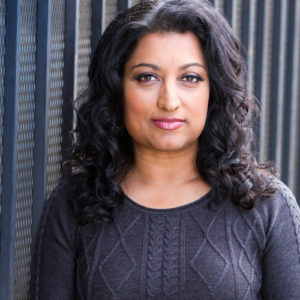
Alexandra Kuehn was born and has lived in Maryland for most of her life. From a young age, she loved to write and read and was often found buried in a book. Her favorites ranged from “The Velveteen Rabbit” and “The Little Prince” to anything by RL Stine. After spending a brief time living in Louisiana, she developed a love of all things New Orleans. She now lives in Stevensville, MD, a small town on the Chesapeake Bay, with her husband Jeff and two beautiful daughters, Harper and Vivienne. Learn more: plumbennybooks.com
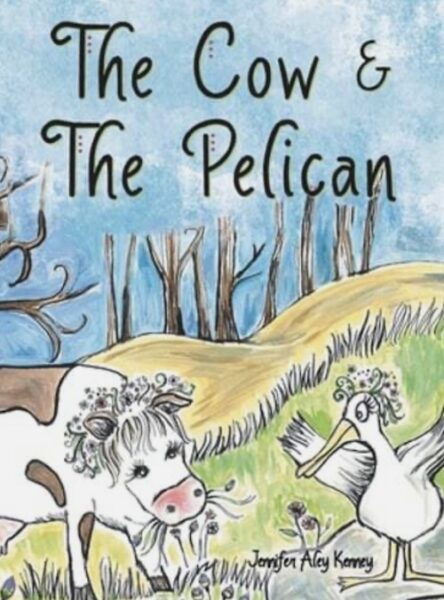
Libby the Lunchbuddy is her first book.
Here’s the story: Vivienne is nervous the night before her first day. Where will she sit? Will anyone talk to her? Will she have any friends at all? She gets through it all with a little help from a new friend. This story focuses on the importance of art and the …
Read More
A Note from Hope, publisher, Inkandescent Kids magazine — I am honored to introduce you all to Dr. Gayani DeSilva, a child and adolescent psychiatrist, Gayani obtained her medical training at Albany Medical College before interning at Brown University and doing a residency at Harvard. She has won numerous awards for her insights and work, including helping children in juvenile justice centers and foster care.
“Much of that work consists of understanding the complex array of needs of adolescent and young adult criminal and violent offenders,” Gayani explains. “I work to understand the interplay between mental illness, societal factors, and interpersonal issues.”
Based on her experience and research, she has so far written two books (see below) that provide insight for parents hoping to help depressed tweens and keep their children from suffering from addiction.
“I am dedicated to improving the health and wellness of children, and also the whole …
Read More
By Judy Curry, CMO and Co-Founder
Curry’s Auto Service
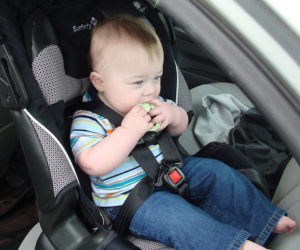
Few parents forget the first time they put their infant into the car. Many hospitals won’t release a new mother unless she has an infant car seat for her baby. Installing car seats correctly is an essential part of being a good parent. But almost anyone who has installed a car seat knows it’s a challenge to get the seat set up correctly. The good news is that help is available.
At Curry’s Auto Service, we want to be part of the solution for parents with young children.
Although we aren’t car-seat specialists, we are your partner in car safety. So we turn to the experts at the VA Dept. of Health for advice on installing a car seat, as well as other great tips on keeping your kids safe in the car.
Remember: Virginia law requires that all children …
Read More
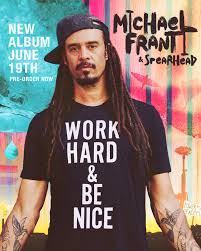
American poet, musician, and composer Michael Franti and his band Spearhead have been rocking their message of peace, love, and social justice since 1994.
Blending funk reggae, jazz, folk, and rock, their album is “All People.” Their high-energy shows, which they perform around the country, get the audience jumping, singing, and dancing.
Often the band is part of ensemble shows, including their performance on Dec. 14 at the 25th annual Warren Haynes Christmas Jam in Ashville, NC. We were privileged to meet Franti and interview him at his hotel just before the concert.
Check out our podcast interview on the Inkandescent Radio Network. And scroll down for our Q&A.
Be Inkandescent: Let’s start off talking about your Do It For The Love Foundation. What inspired you and co-founder Sara Agah to create this nonprofit organization?
Michael Franti: My better half, Sara, is an emergency room nurse, and for the last …
Read More
A Note from Hope Katz Gibbs, publisher, Inkandescent Kids magazine — It’s an honor to introduce you to children’s book author Karen Leggett Abouraya and her newest title, Zamzam.
About the book: Zamzam is a young boy who enjoys life with his Egyptian grandparents in Alexandria, Egypt, and his American grandparents in New York City. He shares big and little differences in his daily experiences in each country – including phrases in Arabic and English — but ultimately realizes that the most important experiences are exactly the same across cultures.
About Karen: A native of Cuyahoga Falls, Ohio, Karen grew up surrounded by writing and books. Her father was a journalist and her mother a school librarian. Karen then became an award-winning broadcast journalist for more than two decades. She began reviewing and discussing children’s books on ABC WMAL Radio in Washington, DC, and reviewed children’s books and interviewed …
Read More
Nonviolence has been seen as a weak or passive approach to resolving conflicts. However, Cesar Chavez’s quote, “Nonviolence is not inaction. It is not a discussion. It is not for the timid or weak. Nonviolence is hard work. It is the willingness to sacrifice. It is the patience to win, ” contradicts these views. This quote shows the demanding nature of nonviolence, highlighting courage, sacrifice, and perseverance. To fully understand and appreciate the quote, we must explore the meaning, understand the life of Ceasar Chavez, and explore the fight for nonviolence.
This quote shows that nonviolence is far from the weak or passive stereotype. Chavez states that nonviolence is not only about avoiding physical confrontations or endless conversations but instead, it’s also about engagement and willingness to tackle injustice face to face. Nonviolence requires courage and bravery beyond physical strength. It involves moral and emotional resilience. It consists of …
Read More
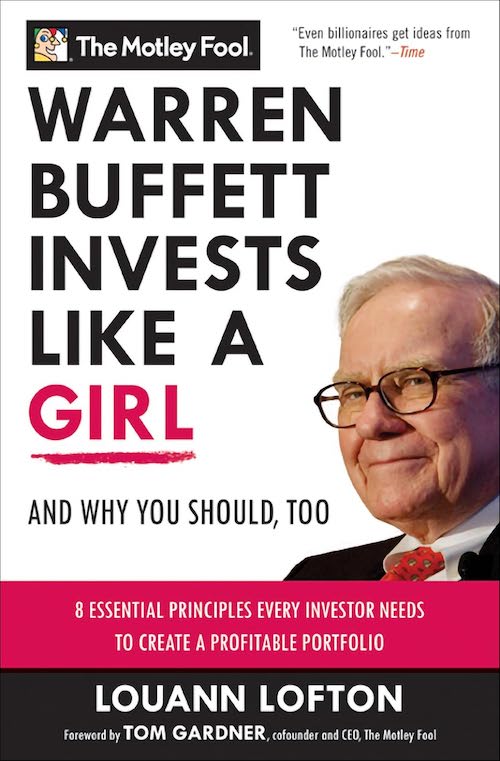
A Note from Hope Katz Gibbs, publisher, Inkandescent Kids magazine — LouAnn Lofton, the author of Warren Buffett Invests Like a Girl, knows the value of investing wisely.
Her portfolio started to grow at age 15, shortly after the death of her father, a pharmacist, who set aside funds for LouAnn and her two siblings.
“Because my father died, it meant that I would inherit some money upon my 21st birthday,” the Mississippi native told Be Inkandescent magazine from her home in New Orleans. “And because of that, I decided, about a year out of high school, to learn about investing, so I didn’t squander the opportunity presented to me by that money.
“It wasn’t an overwhelming amount of money — nothing that was going to set me up for the high life anytime soon — but it was enough that I knew I didn’t want to blow it. …
Read More
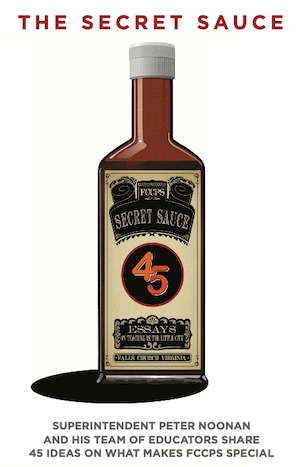
About Dr. Peter Noonan: After an extensive, nationwide search, the Falls Church City School Board selected Dr. Peter Noonan as the ninth Superintendent of Falls Church City Public Schools in May 2017. Dr. Noonan began his career as a special education teacher in New Mexico, where he was named Teacher of the Year in 1993. After working for 11 years in the Fairfax County Public Schools division, he served as Superintendent for Fairfax City Public Schools.
Peter was also the assistant principal at Langley High School, principal at Lanier Middle School and Centreville High School, and assistant superintendent for Cluster VII schools. And, he was the assistant superintendent for the Instructional Services Department, overseeing academic programs for the system’s 180,000 students. Dr. Noonan holds bachelor’s and master’s degrees from the University of New Mexico, and completed studies to obtain the education specialist designation in educational administration. Dr. Noonan has a …
Read More
A simple question that is often asked is one of the most difficult and puzzling for me. What’s your hometown (a different version of this is: where did you grow up)? Hmm, that’s a good question. How should I answer that? I used to hesitate before answering. It took many, many years, meaning decades, before I settled on a pat answer that never explained very much. I would answer by saying that my father was in the military, so we moved a lot.
For years I adopted my father’s hometown and home state as mine. There was good reason for this. After sailing from Japan to the United States in 1959, we drove cross country and spent the summer in Ohio, my father’s home state. Soon, we were off and living in South Carolina. Mid way through second grade, my father was headed to South Korea for a year being …
Read More
There are no water slides, no rock-climbing walls, no putt-putt golf and not even a pool. The amenities found on today’s massive cruise ships for thousands of people on vacation were completely absent. Movies, yes, were offered, but not in the staterooms because there were no televisions.
A movie is scheduled for the evening. It will be shown outside, but not at a drive-in theater. We’ll find a spot up on deck of a ship that is ferrying military families from Japan to Seattle, Washington. When the time comes, the crew members project the movie onto some large white sheet (an extra-large version of a bed sheet) high enough for everyone to see. The wind causes the sheet to snap back and forth like a sail with the rhythm of the ship dancing on the water.
After two weeks and thousands of miles across the Pacific Ocean, we still have …
Read More
The Turning Point Suffragist Memorial Association is dedicated to honoring the suffragists who fought for and won the right of women to vote. Its vision is to raise awareness and funds to create a memorial that will reflect the strength of these women and the significance of their struggle. In partnership with NOVA Parks, the memorial will be located in Fairfax County, VA, near the spot where women were imprisoned.
And its goal is to raise funds to complete construction and have the national memorial fully operational by 2020, the 100th anniversary of the 19th Amendment, which recognized woman’s right to vote.
If Executive Director Pat Wirth, former chairwoman Jane Barker, and a slew of activists have their way, the garden-style national memorial will be grand. It will commemorate the suffrage struggle by educating, inspiring, and empowering present and future generations to remain vigilant in the quest for equal rights.
…
Read More
A Note from Hope Katz Gibbs, publisher, Inkandescent Kids — Hello and welcome to the newest magazine from the Inkandescent PR + Publishing Co., Inkandescent Kids. I cooked up this project in my mind back in 2017, but wasn’t quite ready to bring it to fruition in the summer of 2025. Like a great meal, sometimes a feast of an idea needs to simmer before it’s ready to serve.
Today, it is with great pride and pleasure that I share with you the publication for kids, by kids, about kids. Each day, we bring you new ideas and information designed to inspire, inform, and BeInkandescent!
Think Like a Reporter: Scroll down to learn how students K-20 can become part of our project with Our Team of professional journalists as their guides. We’ll help them write articles, shoot photos, create illustrations and videos, and more!
Renee Carlson, author, “A Bee Like …
Read More
It’s always a challenge for families to find an affordable, family-friendly vacation spot that’s fun for dad, mom — and the kids. So we were thrilled to find Wild Dunes in South Carolina. Just 20 minutes from Charleston, this resort by the sea has all the amenities we fantasize about: pools, tennis, golf, yoga, affordable food options — and, best of all, easy access to the gorgeous Atlantic Ocean.
Here’s why Inkandescent® Kids love this hot spot.
A Room With a Review: Wild Dunes Island Resort, Isle of Palms, South Carolina
1. The overview: Clean, easy to navigate, and quiet, this beach hotel, condo, and vacation rental resort is located in the heart of the expansive Wild Dunes Resort. With three pools in the main area, one heated and the others right on the beach, there is plenty of room to roam when the weather is good. There are also …
Read More
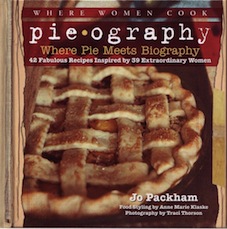
Have you ever wanted to write a cookbook? For author and publisher Jo Packham, this was something on her bucket list — and it was a goal she deliciously accomplished in “Pie-ography: Where Pie Meets Biography.”
Packham has been an innovator in the crafts and handmade publishing market for more than 30 years. A successful entrepreneur who has partnered with Stampington & Company, she has created a new imprint with Sterling, WWCPRESS.
This dynamo is the creator and editor-in-chief of three bestselling magazines: Where Women Cook, Where Women Create,and Where Women Create Business. She is also the author of “Where Women Create” (2005), “Where Women Create: Book of Inspiration” (2010), and “Where Women Create: Book of Organization” (2013).
So when she was cooking up this sweet idea, Packham says it was as easy as pie to find the cooks ready and wiling to share their favorite recipes.
“I knew …
Read More
A Note from Hope, publisher, Inkandescent Kids magazine — Hang on to yer hat, cowboy. One listen-to and read-through of Sandra Boynton’s illustrated country music songbook/CD combo, “Frog Trouble,” and you’ll be humming your way through the day.
Created for children ages 1 to “older than dirt,” this is Boynton’s fifth foray into merging music, words, and art. Like the others she’s created with keyboard player Michael Ford, it’s likely to become a certified Gold, and an award-winning New York Times best-seller.
Packed with star power — including musical performances from Linda Eder, Brad Paisley, and Dwight Yoakam — the message of the book is as charming and iconic as the lyrics and illustrations by Boynton herself.
From “I’ve Got a Dog,” to “Deepest Blue,” and “More Frog Trouble,” this 64-pager is filled with wit and wisdom — as well as lyrics and sheet music so readers can sing and …
Read More
It was the Shamrock Shake that did it.
McDonald’s owners and operators in Philadelphia helped make the vision of a “home away from home” for families of hospitalized kids a reality when dozens of franchisees donated proceeds from the sale of the green milkshakes to the founders of the Ronald McDonald House Charities (RMHC).
The Shamrock Shake proceeds were a huge win for the the RMHC founders (shown here) — Philadelphia Eagles football team owner Leonard Tose, Eagles’ player Fred Hill (whose daughter, Kim, had leukemia), Eagles general manager Jim Murray, Dr. Audrey Evans, and McDonald’s regional manager Ed Rensi.
Inspiration for the organization came when Hill and his wife, Fran, spent nights sleeping next to their daughter’s hospital bed while she battled cancer. The Hills’ experience generated awareness of the impact and need for family-centered programming, and the founders opened the first Ronald McDonald House on Oct. 15, 1974, …
Read More
What annually draws nearly 600,000 students from around the world to prepare documentaries, exhibits, papers, performances, and websites for the annual National History Day competition?
It’s not the monetary awards, though there are some. Instead, it’s the recognition they receive for their work from judges — and — peers that makes a National History Day medal so intrinsically valuable, says National History Day Executive Director Dr. Cathy Gorn (pictured here with President Obama).
The finals of the June 2015 competition drew more than 3,000 middle and high school students to present their work at the 41st annual National History Day Contest at the University of Maryland in College Park, MD. All the entries were related to the 2015 theme, “Leadership and Legacy in History,” and the contestants came from all 50 states, the District of Columbia, American Samoa, Guam, Puerto Rico, and international schools in Central America, China, Korea, and …
Read More
When the James Beard Foundation (JBF) kicked off its Better Burger Project™, it challenged chefs across the nation to create a more healthy, delicious, and sustainable burger by blending ground meat with finely chopped, cultivated mushrooms.
From hundreds of entries from chefs whose burgers appeared in the Instagram photos, uploaded by their customers, five emerged victorious:
- Chef Dan Nichols at Quaff ON! in Bloomington, in: quaffon.com
- Chef Carolyn Manning at Blue Southern Comfort, in Shreveport, LA: bluesoutherncomfort.com
- Chef Rob Ray at Belly Acres in Memphis, TN: bellyacres901.com
- Chef Lorin Watada at Bachi Burger in Las Vegas, NV: bachiburger.com
- Chefs Kiel Campbell and Fiore Moletz at Burgh’ers Restaurant in Harmony, PA: burghersinc.com
This month, on Oct. 18, these chefs will travel to New York City, where they will serve their “Better Burgers” at the official welcome reception of the 2015 JBF Food Conference at the historic James Beard House.
“This year’s …
Read More
The last president who is considered a Founding Father is James Monroe, the fifth president of the United States (1817-1825).
His image is depicted in many famous paintings from the Revolutionary War era — including the iconic image by German American artist Emanuel Gottlieb Leutze of George Washington crossing the Delaware.
Born in Westmoreland County, VA, Monroe was wounded in the Battle of Trenton, taking a musket ball in the shoulder. He served under Washington — and in fact is the only other president who was a soldier in the Revolutionary War.
We visited one of Monroe’s homes, Ash Lawn-Highland, in Albemarle County, VA, where we interviewed historian Cassandra Good, associate editor of the Papers of James Monroe at the University of Mary Washington.
Good explains how the former governor of Virginia rose to national prominence as a diplomat in France and eventually became president. We also learn more about …
Read More
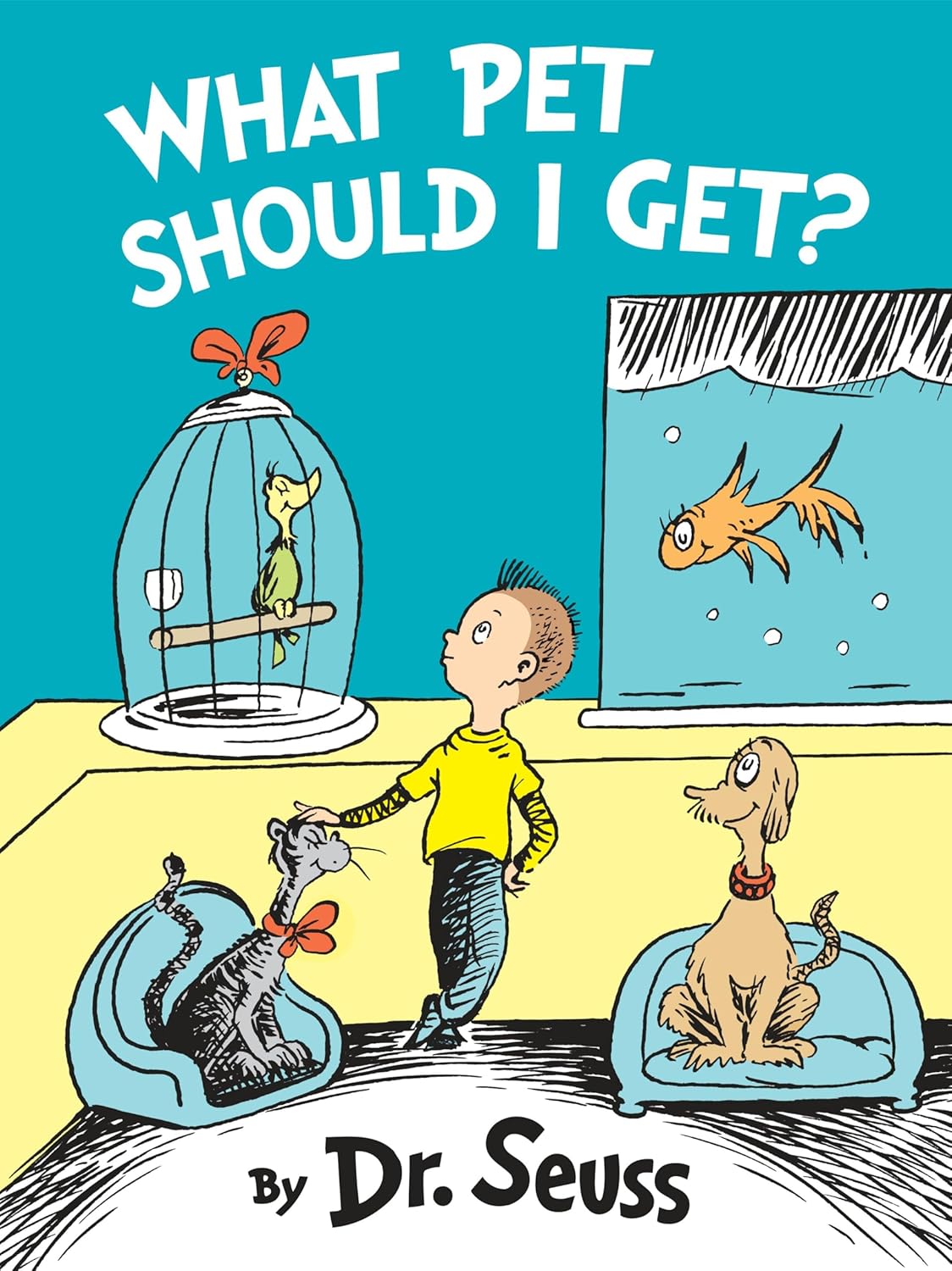
A Note from Hope Katz Gibbs, publisher, Inkandescent Kids magazine — Though Theodore Seuss Geisel died on Sept. 24, 1991, nearly 25 years later, on July 28, 2015, Random House gave us a remarkable gift — a new book by the most beloved children’s book author of all time: “What Pet Should I Get?”
In classic Seuss style, readers will find familiar characters, colors, and the anapestic tetrameter that the good doctor made famous. Plus, we get a few more lessons in the art of growing up.
“What I love about this book is that it’s about a classic childhood moment: choosing a pet,” explains Cathy Goldsmith — the art director at Random House who worked with Dr. Seuss for the last 11 years of his life (1980-1991).
Click on the video below to watch a brief interview with Goldsmith, who gives a behind-the-scenes look at the making of …
Read More
A Note from Hope Katz Gibbs, publisher, Inkandescent Kids magazine — Making kids giggle, grown-ups grin — then say “how’d he do that?” — is the goal for Rufus Butler Seder. He credits his parents for helping him become a filmmaker, inventor, toymaker, and author of several moving picture books published by Workman Publishing, including Gallop! (2007), Swing! (2008), and his 2009 release, Waddle!
“My mom was a piano teacher, and my father Eugene (Gus) was a journalist and photographer who took me to see Fellini movies, wrote news stories about inventors, and was himself an inventor and a capable electrical and mechanical engineer,” shares Seder, who dedicated Swing! “To Mom, who made things fun, and Dad, who made things work.”
Seder took it all in, and starting in elementary school began turning out work that was sophisticated beyond his years. By the time he hit high school, he’d won …
Read More
What do kids know about cooking? A lot!
Check out this fun recipe for waffles by French student Dylan Gibbs, age 17, currently a junior at St. Christopher’s high school in Richmond, VA. Videography by his sister, Anna, a photo/film major at VCUarts.
Watch the video, and prepare to get hungry.
Vous aurez besoin de :
2 tasses farine tout-usage
3/4 tasse sucre
3-1/2 c. à thé de poudre à pâte
2 gros oeufs, séparés
1-1/2 tasse de lait
1 tasse de beurre fondu
1 cuillère à café d’extrait de vanille
sirop
Voici comment :
1. Dans un bol, mélanger la farine, le sucre et la poudre à pâte. Dans un autre bol, battez légèrement les jaunes d’oeufs.
2. Ajouter le lait, le beurre et la vanille et bien mélanger. Remuer dans les ingrédients secs jusqu’à ce que le combiné.
3. Battre les blancs d’oeufs jusqu’à la formation de pics …
Read More
A Note from Hope Katz Gibbs, publisher, Inkandescent Kids magazine — If learning about American history never tickled your fancy, you haven’t read one of Rosalyn Schanzer’s illustrated picture books. Although the stories are written for children in elementary and middle schools, the hardbacks are filled with so many interesting facts and such incredibly detailed artwork that they appeal to all ages.
Take Roz’s most recent title, What Darwin Saw: The Journey That Changed The World, published in 2009 by National Geographic.
Roz begins the tale when Darwin was 22 years old and offered the chance to join the adventurous crew of the Beagle, a sailing ship about to begin a five-year journey around the world. In her deliciously illustrated graphic novel filled with quotes from Darwin’s diary, letters and books, Darwin discovers gigantic fossils and exotic animals.
For the first time, he watches volcanoes explode and earthquakes destroy entire …
Read More
A Note from Hope, publisher, Inkandescent Kids magazine — We bet you have heard of Fran Capo, a 9-time Guinness Book World Record holder — best known as the World’s Fastest Talking Woman (at 603.32 words per minute).
The comedienne, keynote motivational speaker, actress, and 21-time author is also an ordained minister, hypnotherapist, and event producer. Fran dives with sharks, eats fire, bungee jumps, climbed Kilimanjaro, visited the Titanic and is the first woman in history to zipline into an active volcano.
Wild and crazy, right? Yes, of course! That is why since we met Fran in 2011 she has been one of our favorite Truly Amazing Women. But there’s more to the woman who has wowed folks on more than 6,000 shows — including giant audiences that watched her features on Entertainment Tonight, Dr. Oz, Larry King Live, and the Discovery Channel.
It’s Fran’s giant heart …
Read More