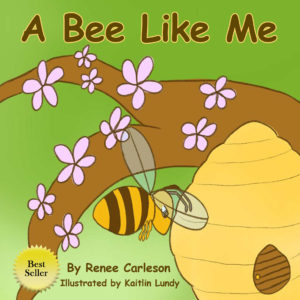
Renee Carleson’s children’s book, “A Bee Like Me,” is the perfect read for special needs kids
“I want you to know, I need you to see: Don’t be in a hurry to grow up and be like me. You are perfectly made the way God wants you to be,” writes Renee Carleson in her heart-warming book illustrated by Kaitlin Lundy, A Bee Like Me.
Dedicated to her special kneads sprout, Abby, the Mom of two kids on the autism spectrum shares: “When I began to write this book, my mission was to show society what it is like to be an autistic child. And, I wanted readers to know what it’s like to be the mother of a child with special needs. What I discovered in the process was an added gift: a deeper connection with my daughter.”
In fact, Renee said she found she had much more in common with her daughter than she realized. “This insight gave me the ability to empathize and strategize better ways to help Abby cope in the world.”
Renee is now on a mission to help special needs families everywhere to embrace their gifts and live a life full of wonderful experiences and independence. “This children’s book will hopefully show the world what it looks like to spend a day in our life. My guess is that it’s not too different than a day in yours.”
In the book, Abby writes:
Dear Mommy, please hear my plea; come along and follow me. I want you to know, I need you to see; I’m just a little sensory bee.
I need you to know, I want to confess; I feel like I can’t handle the stress!
I try to behave; I want to be good; but I often forget to do as I should.
About Illustrator Kaitlin Lundy: “I have loved art since I was a little girl and used my passion as a way to cope with my anxiety,” explains Kaitlin, who was diagnosed with autism when she was 3. A Bee Like Meis full of her original digital work.
“A Sensory Bee was born out of the heart and desperation of my personal challenges to deal with my own special needs family’s ever-changing needs,” explains Renee, whose company is based in Southern California. “With two special needs teens and sensory issues of my own, I have spent a lifetime learning how to take care of others in holistic ways.”
Renee’s career began as a medical assistant using Western medicine as a base of my practice. She realized that form of medicine was managing and treating the symptoms. Her desire to heal herself and others holistically led her to become a massage therapist.
“I believe that to achieve effective healing, you have to heal from the inside out,” insists Renee, who has created programs to teach families how to effectively calm the body, mind and reduce negative behaviors while creating positive, purposeful interactions with their special needs loved ones. I’m proud to offer the highest quality and most unique merchandise on the market today.”
A Sensory Bee’s product line allows families to shift their focus to positive parenting and productive play through organizational and routine-building tools to help your family thrive.
Meals on the bbq are summertime musts, insists award-winning Chef Kim Katz, who has been preparing heart-healthy turkey burgers for her kids, Emma and Alejandro since they were toddlers.
“My kids are grown now, but one of their childhood favorites is turkey burgers on the grill topped with their favorite fixings,” says the Philadelphia-based restauranteur, now the chef at Zallie Family Markets.
In fact, Emma and Alex now whip up this family favorite for Kim. Scroll down for the recipe!
Heart-Healthy Turkey Burgers
By award-winning Chef Kim Katz Alvarez, Philadelphia PA
What you’ll need:
1 lb. ground turkey
2 T. Dijon mustard
6 dashes of Worcestershire sauce
1 onion — chop 1 t. of it to put into the patties; caramelize the rest to top the burger
1 t. chopped garlic
Here’s how:
1. Gently mix ingredients into ground turkey, but don’t mush it up too much!
2. Form into patties, and pop on the grill.
Note: To make a perfect turkey burger that’s not too dry / not too wet inside, let the bottom get a little crusty brown before flipping. And only flip once! “You don’t want to mess around with your turkey burgers. Just put them on the grill and let them cook,” advises Chef Kim. “Then top with some savory options.” (See below)
3. Remove from pan and place atop toasted sesame or whole wheat bun — or get creative and slip it inside a grilled pita.
4. Top with your favorite condiments (lettuce, tomatoes, spicy red onion) — or try some of our favorite gourmet topping ideas.
For fun: Shape the burgers into hearts and cut the buns to match. Your kids will love this special touch.
Topping options:
A slathering of Gruyère — A fabulous topping for these lean burgers is a layer of Gruyère cheese, one of the most famous Swiss cheeses. It is made from cow’s milk and has a nutty, slightly sweet taste with complex musty and mushroomy notes.
Caramelized onions — Slice the rest of the onion into 1/4-inch wide rings and saute in butter or a combo of butter/oil in a skillet. Add a pinch of sugar and cook slowly until onions are caramel in color (about 20-30 minutes). If you’d like to get fancy, add a splash of vinegar at the end to spice up the dish and deglaze the pan.
Pesto mayonnaise — Although it’s always fun to make fresh pesto (2 cups fresh basil leaves, 1/2 cup Parmesan or Romano cheese, 1/2 cup olive oil, 1/3 cup pine nuts or walnuts, 3 minced garlic cloves, salt, and pepper — pulse in a food processor, slowly adding the oil) it’s just as easy to buy a pint of fresh pesto from the grocery store. Mix 1 T. with 2 T. of your favorite mayo, and slather on the burger.
About Chef Kim Katz Alvarez
Cooking caught the attention of Chef Kim Alvarez at age 7, when her mother enrolled her in a department store class. Within a few years, she was reading culinary magazines and adding unusual ingredients to her mother’s grocery list. Chef Kim’s love of culinary arts hasn’t faded, and she counts herself lucky to pour her passion into Zallie Family Markets. She leads the hard-working Culinary Team that runs the Catering Departments and Prepared Foods sections of Zallie Family Markets in Chews Landing, Glassboro, Knorr Street, Laurel Hill, Lawnside, Medford, Sicklerville, West Berlin, West Deptford, and Williamstown.
“The ultimate thrill for us is to try something new and see guests snapping it up,” she said. “It’s awesome to know we made a hit.” Chef Kim’s cooking skills were heavily influenced by her Jewish background, even before she graduated from the restaurant management program at Syracuse University and the two-year chef program at the Culinary Institute of America. She married Edgar Alvarez, who is Guatemalan and also a chef, and began incorporating Latin flavors into her repertoire.
During her career that’s spanned 30-plus years, Chef Kim has worked in California restaurants and food markets, and was second-in-command at The Striped Bass and head chef at Beaujolais in Philadelphia. Those experiences developed her skills in serving fish a zillion ways and perfecting the art of French cuisine. She and Edgar also owned and operated a Latin American restaurant in Mount Airy.
“I have learned how to prepare four-star meals, and I have mastered what it means to truly take care of your guests,” Chef Kim said. “But I also understand how to guide and nurture other chefs, and how to put a great meal on the table with whatever time and ingredients are available.”
For Zallie’s Fresh Kitchen, she appreciates working side-by-side with other chefs in a supportive and friendly environment. She coaches them to try different seasonings, create new combinations, and encourages them to use their individual talents. Surrounded by fresh ingredients that fill our stores, Chef Kim is grateful that Zallie’s Fresh Kitchen’s culinary staff doesn’t rely on frozen meal components – they knead yeasty dough, slice fresh vegetables, and fire-grill meats just like dedicated home cooks.
“We really enjoy developing recipes and doing the actual kitchen work from start to finish,” she said. “Our food has a homemade feel because of all that work.”
Chef Kim is also a mom to two young adults who love cooking, so she understands the stress-relieving joy of picking up prepared foods that are equal parts delicious and high-quality. At home, this self-confessed Sriracha sauce lover admits the kitchen can be a bustling place where there might be more chefs than necessary. Family meals often take place while everyone is standing up, tasting and adjusting on the fly, and talking throughout the process.
Like Zallie’s Fresh Kitchen, it’s a hub of creativity and collaboration that produces more than mere food. “Eating should be an experience of the palate, best enjoyed with people,” according to Chef Kim. “The Zallie Family Markets Culinary Team works together to give you that experience.”
Chef Kim’s kitchen at home has the usual staples, plus:
Mushroom-flavored soy sauce that imparts an earthy flavor
Jerk spice to add a hot, spicy, uniquely Jamaican seasoning
Coconut milk, a dairy alternative that serves up body and richness
Badia Everything Bagel Seasoning to be sprinkled on eggs, kale, and so much more
By Christine Cully, Editor in Chief and Chief Purpose Officer, Highlights for Children magazine.
Come with me and take a unique, inside look at American childhood through the conversations between Highlightsmagazine and its young readers and a call to grown-ups to make time to listen to the children in their lives actively.
Every year, tens of thousands of children write to Highlights magazine, sharing their hopes and dreams, worries and concerns, as if they were writing to a trusted friend. From the beginning, the editors at Highlights magazine have answered every child individually.
I have curated a collection of this remarkable correspondence (letters, emails, drawings, and poems) in Dear Highlights, revealing an intimate and inspiring 75-year conversation between America’s children and its leading children’s magazine.
From the timeless, everyday concerns of friendship, family, and school, to the deeper issues of identity, sexuality, divorce, and grief, here is a unique time capsule of American childhood in the voices–and the very handwriting–of children themselves.
The book captures a child’s-eye view of some of the most important events of the past 75 years: the COVID-19 pandemic, 9/11, the Challenger Disaster, and the assassination of John F. Kennedy. Cully’s insightful narrative becomes a call to action for adults to lean in and listen to children, to make sure our kids know that they matter and what they think matters, and to assure them that they have the power to become people who change the world.
By turns funny, heartbreaking, moving, and enlightening, Dear Highlights will cause readers to reflect, listen, and embrace the children in their lives.
From the foreword by nationally syndicated columnist Amy Dickinson: “In times of great stress or trouble, Mr. Rogers advised children: ‘Look for the helpers. You will always find people who are helping.’ That’s exactly what children writing to ‘Dear Highlights’ find when they put pen to paper: helpers whose open-minded trust and kindness surely have made our world a better place.”
Scroll down for a few excerpts from the book!
About Christine Cully
In her dual role as Chief Purpose Officer and Editor in Chief, Christine French Cully provides strategic, ongoing oversight for developing the Highlights vision and brand across all markets and channels. As Chief Purpose Officer, she focuses on growing awareness and implementing the Highlights purpose, core beliefs, and values—to help actualize the organization’s vision for a world where all children can become people who can change the world for the better. As Editor in Chief, she is the chief steward of the company’s guiding editorial principles. She is responsible for ensuring that the products and experiences the company develops are aligned with Highlights’ mission.
Cully serves as a brand ambassador through writing and speaking engagements and focuses on fostering relationships with mission-aligned organizations, companies, and individuals and creating ways to share Highlights’ vision for the world more broadly.
After 15 years in children’s publishing, Cully joined the company’s flagship magazine Highlights in 1994 and served as its editor from 2004 to 2012. Under her leadership, the company launched three additional titles: Highlights High Five and High Five Bilingüe for preschoolers and Highlights Hello for babies and toddlers. She also oversaw the editorial teams that produced seven continuity book clubs, an extensive list of Highlights branded books found in retail and online, several digital apps, and two podcasts, one for children and one for grown-ups.
In 2011, she was also named an executive vice president of the Highlights Corporation. She is only the fourth editor in chief who has led the company during its 75-year history.
Cully is the mother of a grown son and daughter, and she lives in Nashville, Tennessee.
This 335-page book is packed with exchanges between children and Highlights editor Christine Cully from letters about school and friendship to self-improvement and societal concerns.
Each exchange is touching, insightful, and revealing about what kids are thinking and feeling.
On page 172, Devorah writes:Dear Highlights, I want to start a bread business, but I don’t know-how. My parents say I need to buy my own things for baking, such as flour, yeast, and other things. It sounds like a lot of money. Please help!
Highlights respond:Dear Devorah, You sound like an ambitious person! It’s true that starting and running a business can be expensive. Perhaps it would help if you sit down with your parents and make a list of things you would need an estimate of their cost. Once you do this, you’ll have a better idea of just how much money you’ll need. Many entrepreneurs (people who start their own businesses) earn money for their start-up costs by doing other jobs. With your parents’ permission, you might offer to do some jobs, such as vacuuming, sweeping, dusting, helping with yard work, and so on, for close neighbors or relatives. If there is a friend or relative near you who has young children, you might offer to play with the children while their parents do other work around the house. Of course, you will need to speak to your parents about this idea first. You might ask your friends for ideas, too. You can also ask a librarian to recommend books about kids who have started their own businesses: best wishes — and happy baking.
On page 248, Kiara writes: Dear Highlights, People make fun of me because I’m Chinese/Japanese. They quint their eyes to mock me and always say, ‘Why are you closing your eyes? in pictures.’ People say I’m ugly. Sometimes I feel like I could be of a different nationality. What do I do?
Highlights responds:Dear Kiara, We’re so sorry to hear that people are making these ridiculous comments. We hear from many kids who get teased, so you are not alone. We hope you understand that when people make comments like this, it reflects poorly only on those people—not you! Please try not to let their comments affect the way you feel about yourself. You are a unique and precious person, and the fact that we’re all different is a big part of what makes the world interesting and beautiful. When readers write to us about teasing and bullying, we often suggest that the best response is to ignore the comments completely. Usually, teasers are trying to get a reaction, and the more you react, the more satisfying it is to them. However, if it seems appropriate, you could respond to a comment by saying, ‘You know, that’s disrespectful, and I’d appreciate it if you don’t talk like that.’ While the teasers might not change their behavior immediately, they may think about what you said. It’s important to talk to your parents about the way you’re feeling. Your parents love you and want to know when you’re unhappy, and they’ll probably have thoughts, which will help. You could also talk to another adult you trust, such as a relative, a teacher, a school counselor, or a clergyperson, if you attend religious services.
On page 300, Rachel, 9, writes:My dad died. Nothing feels right around our house. Nothing feels the same. Every time I do something, I realize that I did it with my dad. These pains are coming on me harder than I thought.
Highlights responds:Dear Rachel, We are very sorry that your dad died. It takes a long time for family members to get over the loss of a loved one. Things will never go back to being the way they were—that would be impossible. But in time, the pain you are feeling now and the constant thoughts of your father will lessen, and you will once again be able to enjoy yourself and your home. We think you are taking a step in the right direction when you write down your feelings, as you did in your letter to us. Writing your thoughts, especially when we are sad or upset, seems to have a healing effect. You might consider writing about the good memories you have of your father and the things you did together. Or you could just keep a journal of your thoughts and feelings as you go through the grieving process. If you keep writing in a notebook, you could write a dedication to your father on the inside cover, just as authors dedicate their books. One other thing that might help is to think of how your father would want you and your family to be right now. He would probably want you to all be miserable or go ahead with your lives and be the best people you can be? Think of what an honor that would be to him.
This 335-page book is packed with exchanges between children and Highlights editor Christine Cully from letters about school and friendship to self-improvement and societal concerns.
Listen: Dear Highlights: What Adults Can Learn from 75 years of Letters and Conversations with Kids • https://inkandescentradio.com/podcast/highlights/
Who she is: Helen Young of Santa Fe, NM, has been an educator for nearly two decades. A graduate with a BS in elementary education from Southern Illinois University in Carbondale, IL, she is an elementary educator with a PE endorsement, currently teaching PE and yoga at a public school in Santa Fe. She also has a Master’s in Pastoral Ministry from Loyola University in New Orleans.
What she does: With more than 1,000 hours of experience teaching yoga — after receiving her 200-hour certification from Yoga Alliance, another 200 hours of training with YogaKids International, and an SEL certificate through Breathe for Change — Helen’s mission is to bring mindfulness and social-emotional learning to families. “I am proud to be part of the faculty at the Rio Grande Mindfulness Institute in Santa Fe, which provides retreats to educators throughout New Mexico,” shares Helen, who is also passionate about social justice and has a certificate in Race and Equity in Yoga from Kelley Palmer at Accessible Yoga.
Why she does it: “I am passionate about giving kids and adults the tools they need to bring peace and calm into their lives through breath and movement,” Helen explains, “Yoga cultivates self-compassion, which is the key to having compassion for all humans. I hope to create a place where BIPOC children and their families here in Santa Fe can practice yoga in a more accessible way. I believe that yoga can not only bring inner peace but can also be a vehicle for justice.”
Inkandescent Kids: What do you do now for work? And what has your career path been?
Staci: For the past 20 years, I have worked as an educational consultant for children’s bullying prevention and have performed interactive readings and bullying prevention workshops for children in elementary schools, after-school programs, and religious institutions.
Inkandescent Kids: You are also a musical theater producer!
Staci: A few years ago, I adapted one of my children’s books into a play, Billy the Baaadly Behaving Bully Goat: The Musical, performed at the 2019 Philadelphia Fringe Festival. With additional performances canceled or postponed by the pandemic, I used the time to expand the script, and I worked with my composer to write three additional original songs (bringing the total to 8) so that the show could now appeal to an even wider audience once it’s back up and running. I created Good Character Productions, LLC, and I am currently applying for grants and corporate sponsorship to support the development of a multimedia bullying prevention package that includes live and virtual performances of the show, a soundtrack of the music, books, and teaching guides for parents/caregivers, teachers, and children—all to teach kids to be kind, empathetic, and inclusive and to stand up for themselves and each other!
Inkandescent Kids: You are also a medical doctor, right?
Staci: Yes! After graduating high school, I went to college at Ursinus and medical school at Jefferson. I completed a residency in Physical Medicine and Rehabilitation and a subsequent fellowship in Geriatric Rehabilitation at Temple University. I practiced for several years and left my clinical practice to stay home and raise our daughter. During this amazing time, I began to write and illustrate children’s books.
So many people have thought I was a pediatrician because I write children’s books and do bullying prevention work for kids, but my former clinical practice involved taking care of the elderly, especially patients who had strokes, arthritis/joint replacements, and cardiopulmonary disease.
Inkandescent Kids: Tell us about your personal life.
Staci: I have been married for 30 wonderful years, since 1992! He is is a cardiologist at Jefferson. We have one beautiful daughter who graduated from the School of Engineering and Applied Science at the University of Pennsylvania and now works for a Virtual Reality company.
Inkandescent Kids: What did you dream of becoming when you were in high school?
Staci: A doctor or a medical illustrator.
Inkandescent Kids: What advice would you give to your high school self?
Staci: I would tell myself to enjoy every minute of high school because that time of my life flew by much too quickly.
Inkandescent Kids: What advice do you have for others about creating your best life?
Staci: Always put family first, pursue your passions, don’t sweat the small stuff, and treat others with kindness and respect.
Inkandescent Kids: What would you like to say to all of your classmates today?
Staci: I just want to wish everyone the very best! We are so lucky to have grown up when we did—during simpler times. I am so grateful to have connections with classmates still, and look forward to reading our Classmates column to find out even more about what is going on in everyone’s lives!
Spring 2023: A Note from Hope Katz Gibbs, publisher, BeInkandescent Health & Wellness magazine — I had the privilege of meeting Suzette Love when we took a graduate class in the fall of 2019 at Claremont Graduate University.“Good Work” was taught by world-renowned positive psychologist Dr. Jeanne Nakamura. Since we were two of the oldest students in the class (by far), we’d huddle together when it came time for break-out class discussions. I was always fascinated to hear Suzie’s perspective on topics ranging from “What is good work?” to her term paper’s presentation on black educators’ history and powerful impact in America. Tonight, we have the privilege of interviewing Suzette for our show!
On Season 1 of the Black Lives Matter show, host Tony Farmer interviewed Suzie when she was studying for her Ph.D. in educational studies at CGU. In addition to having been a classroom teacher for much of her career, she spent more than a decade as a professional singer, songwriter, and music producer in Sweden. Born in Ann Arbor, Michigan, and raised in Southern California, Suzie admits her claim to fame is the years she spent as a rock star in Europe. Listen to the podcast now and watch it on BlackLivesMatterTV.
The Civil Rights Movement leaders of the 1950s and 1960s were moved to create a world where their children could take advantage of the economic opportunities so endemic to the American dream. With the precedent established by the Brown Vs. Board decision barring segregation in public schools in 1954, and the passage of the Civil Rights Act of 1964, which prohibited discrimination in public accommodations, most Black people believed that they were well on their way toward achieving the Movement’s aspirations.
Martin Luther King Jr. and others’ egalitarian ambitions were firmly rooted in a prescient desire to ensure equal access for Black children to America’s education system.
When Emancipation occurred in 1865, nearly 4 million illiterate men, women, and children had to be nurtured, cared for, and educated. Among Blacks, the task was taken on through a more collective approach. Well educated Black men and women answered the call and courageously migrated from the North to the South to uplift their people1.
They understood that educating the nation’s population of newly freed slaves would take more than just teaching them to read and write. For more than 150 years, Black children have been participants in the American educational system. However, the shocking disparities of their socio-economic standing in comparison to White children could leave one speechless. Today, those disparities encapsulated in a history of persistent institutional inequities have become even more apparent with the intensive impact of the COVID-19 Pandemic and its disproportionate effect on the Black community.
Friends for more than 30 years, Heidi Kaufman and Carolyn Rabidoux, are passionate about prioritizing health and wellness. “In 2008, we began working together to bring the well-being tools of yoga to a local elementary school,” explains the co-founders of the nonprofit Peacefull Kids.
With a Greater Rochester Health Foundation grant, they developed and implemented a program that catalyzed wellness throughout the school. It helped hundreds of students increase self-awareness, better manage stress, and get more movement during the school day.
In 2018 they launched Peacefull Kids to bring the research and interventions of Positive Psychology to the greater community. We are excited and honored to share these new and powerful tools with educators and students to support their well-being and help them meet challenging times.
Our Mission: Empowering children, teachers, and families with tools to cultivate their well-being. A teacher’s energy and outlook radiate in their classroom. A teacher empowered with tools for well-being will naturally share those tools with others in their lives, including their students. Supported teachers = supported kids.
Our Vision: We strive to support a world where communities champion flourishing, peaceful kids. Our children are our future. They are experiencing unprecedented stressors, so they need to be taught powerful life skills to meet these challenges.
Our Community: Communities are made up of individuals, each one with its own “root” system and branches of growth. Empowering every individual’s unique journey helps them to reach their full potential.
About the Founders
Heidi Kaufman is a trailblazer. “In 2006, I introduced yoga to schools because I knew I was also teaching students the life skills of managing energy and emotions through yoga poses. I was passionate about bringing this information to the broader community, so in 2008, I opened the first kids and family yoga studio in Rochester for families to relax, connect, and build their strength and flexibility. I am excited to bring cutting-edge content to schools after completing my Masters in Applied Positive Psychology from the University of Pennsylvania. The research in positive psychology of character strengths, happiness, resilience, grit, and optimism informs all our work and has given us new frameworks and language to support people in flourishing. At Peacefull Kids, we leverage my decades of experience teaching and training yoga and Carolyn’s 36 years in education to deliver programming that supports and empowers all constituents within school communities to enhance their well-being.
Carolyn Rabidoux is a masterful teacher. “After 36 years working in public education as a teacher and school and district level administrator, I am very aware of the importance of supporting students’ academic achievement and providing them with the tools to enhance their well-being. I have always believed that supporting teachers and other school personnel’s social/emotional well-being will help each individual and positively impact the students and the school’s culture. I retired from public education in 2020, but my desire to support the well-being of educators and students has not waned. I currently work as a coach for new administrators and hope to pass my passion for wellness initiatives on to the new generation of educators. As a co-owner of Peacefull Kids, Heidi and I provide tools that support the well-being of educators, students, and families through the programs we created based on the science of positive psychology.
Heidi Kaufman and Carolyn Rabidoux are inspiring people to develop the habit of intentionally and consistently supporting their happiness and the well-being of those around them. Don’t miss our podcast interview!
For our Classmates column, Inkandescent Kids magazine is excited to feature our longtime high school friend Fran Nelson, Ph.D. in organic chemistry, adjunct professor, currently a volunteer teaching special needs kids to bake, happily married mom of 2
Inkandescent Kids: What do you do now for work? And what has your career path been?
Fran: My career path has taken lots of twists and turns. I have been fortunate to have many diverse experiences and met fascinating and inspirational people along the way. After PW, I went to Penn State and graduated with a degree in chemistry. My senior year I looked for jobs in chemistry but found those that interested me required an advanced degree. So off I went to graduate school at the University of Pennsylvania and finished with a Ph.D. in chemistry in 1992. I then became a medicinal chemist at Wyeth Research, where I worked on novel immunosuppressants for patients needing organ transplants and novel anti-cancer agents. I greatly enjoyed my time in research; it was challenging as there were very few women in science in the 90s. I was only the third Ph.D. female chemistry hire at Wyeth then.
I left basic research when my children were in (and approaching) grade school. The balance just became too difficult. I went into science education which allowed for a much more flexible schedule. I taught at Villanova University and William Paterson University, but I truly found my next passion in teaching younger children. I joined Students 2 Science (Students2Science.org), a wonderful not-for-profit with the goal of inspiring and engaging all children (targeting those in economically disadvantaged districts) in science. I developed their Virtual Lab (in pre-covid times!) to be able to deliver high-quality science education to students anywhere in the world. This became the only source of programming when Covid hit.
In the last year, I began volunteering at Rising Above Bakery (Risingabovebakery.org) where I work with special needs young adults teaching the art and skills of baking and restaurant service. We learn, inspire, eat, and bake together. It is the highlight of my week!
Inkandescent Kids: Are you married? Since when?
Fran: I met my husband, Andrew Osiason, at the end of my graduate school education. We will be married for 30 years this November and have two children-Jacob (24) and Eden (21). Jacob is in financial services, and Eden will enter her final year of college at Brandeis in the fall. Interestingly, neither child will follow their parents into science!
Inkandescent Kids: What did you dream of becoming in high school?
Fran: I always had an interest in science. I started college in engineering, which I hated! I always loved cooking and baking (maybe I should have gone to culinary school?!). But I managed to circle back to this now, working in the bakery! Baking is chemistry, after all.
Inkandescent Kids: What advice would you give to your high school self?
Fran: Don’t sweat the small stuff!
Inkandescent Kids: What advice do you have for others about creating your best life?
Fran: Take some risks-don’t always take the safe route. Especially when you are young, you have more time than you think when you are young-embrace it! Travel everywhere. Be bold!
Inkandescent Kids: What would you like to say to all of the kids you went to school with?
Fran: If you are in the northern New Jersey area, look me up and say hello! Once I left PW, I never lived back in the area again.
Inkandescent Kids: Fran, we are blown away by your accomplishments, and have attached your bio below so we can share your research and career path: Fran Nelson CV 2023. To connect with Fran directly, send her an email: fran.nelson1@gmail.com.
Having a baby is a magical time and it also can have its challenges too. The first months, even the first year, are filled with change, connection, love, worries and of course exhaustion. The Fussy Baby Network is a support program for families who have babies one year and under. Our Infant Specialists hear from families about the worries and wonders during this time.
Here are a few examples:
Am I getting this parenting thing right?
What is my baby telling me with their cues and cries?
How do I help my baby calm and soothe better?
This is hard! Is it supposed to be? Is it like this for others?
Parents and caregivers often feel alone in their thoughts and feelings about this. One thing we know for sure is that all babies (and families) are beautifully unique and different, and one plan does not fit all! You might be wondering where infant massage comes into play here. It’s safe to say that connection and co-regulation in the first year of life help to create a strong, secure base for babies…a sense of safety. This connection between babies and caregivers creates a platform for growth and development. Helping a baby calm, soothe, and feel balanced comes from many different interactions with them: feeding them when hungry, helping them sleep when tired, calming and helping them feel balanced when overstimulated, playing with them, reading a book, singing, dancing, and movement, and sometimes just cuddling and being together. When one thing doesn’t work, we try something different. The one constant in many of these interactions is touch…and connection.
Connection and touch, especially when caring for infants, happens all day (and night sometimes!). Thinking about how babies receive touch can help us understand how it supports a baby’s regulation, enhances strong relationships, creates that secure base, and empowers parenting (it is just as good for adults as it is for babies).
Our support at Fussy Baby often turns to discussions around touch and Infant Massage as strategies. Nurturing touch elicits the release of the hormone oxytocin, which is associated with a calm mood and affiliative behavior. According to research at Stanford University, infant massage can improve babies’ sleep, reduce fussiness, increase relaxation for mothers and infants, improve lactation for mothers, and reduce postpartum depression in mothers (learn more here).
When supporting families in our Fussy Baby Network Program, no matter why a family has called, we often discuss the importance of touch, co-regulation, their baby’s unique sensory system, and attuning and understanding ways to regulate their baby. We use touch and massage as a pathway to support. Discussions around this increases parenting efficacy (and aha moments).
We wonder together what types of touch their babies respond to in a way that calms and soothes them. We even explore the opposite, what their babies show that they do not like when touched (deep pressure, light pressure, bath time, lotion, textures, etc). It’s a wonderful way to introduce connection and understanding their baby’s cues. Exploring Infant Massage is an organic way for parents and caregivers to think differently about what touch means to their babies and how it feels for them. They can also wonder how and when to use it in a way that fits their routines.
Families often walk away with a wealth of knowledge about their relationship with their baby, how touch and massage can be used as together time, and a strategy to help soothe and calm their baby. Families report a new understanding of the way their baby’s sensory system might work, and they are empowered to try some new things. One family shared that they would get anxious every day before their baby’s “witching hour.”
It felt like ground hog day, and they dreaded this time. With support from an infant specialist, the family had a better understanding of their baby’s cues, sensory likes and dislikes, and how to use touch and massage, which helped them feel more hopeful. They had some concrete strategies to try, and their anxiety went down. They also felt more “tuned in” to read their baby’s cues since their worries were lessened. This very stressful time still happened for them, but they felt more prepared and ready, even if it didn’t go well.
We know that touch experience is essential not only for the development of touch sensitivity but for general cognitive development as well (Elliott, 2000). The sense of touch is also one of the strongest developed senses when a baby is born, even stronger than taste. It makes sense why touch and feeling loved and seen have so many benefits. It supports the baby’s immune system, helps with digestive issues, and, most importantly, supports that strong relationship (and secure base). Building on this sense of touch and sensorineural development is a wonderful connecting way to support and empower the parenting journey.
The information included in this article is courtesy of the Erikson Institute, a premier graduate school dedicated to child development. They are renowned for teaching students how critical factors—brain development and public policy—influence child well-being.
In her latest TEDx Talk, “The Power of Love,” Professor Cindi Gilliland, Ph.D., knows love has the power to transform us, others, and the world.
A psychologist, Professor Emeritus, Management and Organizations Dept., Eller College of Management, University of Arizona, and the president of Gilliland Consulting in San Diego, Cindi describes the important benefits of love and shares her personal journey toward greater love using the three steps of AMA: Attend, Mend, and Ascend.
“What if the best thing we could do to increase our chance to have a long, healthy life could also benefit our family and friends and maybe even the whole world?” asks Cindi, who received her Ph.D. in social psychology at Michigan State University in 1992. She has taught 20,000 undergraduate, graduate, and executive students in her thirty-four-year university career.
Since 2019, she has been a Clinical Full Professor of Organizational Psychology in the Division of Behavioral and Organizational Sciences at Claremont Graduate University (CGU). Cindi is also an award-winning Professor of Practice Emeritus in the Management and Organizations Department at The University of Arizona. Cindi’s professional interests include resilience, well-being, love, and positive relationships. She has been married to Dr. Stephen Gilliland for 31 years, and they have two adult children, Austin, 30, a Senior Associate at Breakthrough Properties in London, UK, and Caitlin, 27, a Ph.D. student in clinical neuropsychology at UCSD/SDSU in San Diego, CA.
Please scroll down for the details of her 2024 TEDx Talk and watch the 15-minute presentation above. Stay tuned for a book on the topic by Cindi coming in 2025.
Until next Monday: May your heart be full, your life be filled with joy, and may you attend, mend, and ascend all of love’s challenges. — Hope Katz Gibbs, founder and president, Inkandescent® Inc. Inkandescent.us
The Beatles said All You Need Is Love, and decades of science suggest they were right. The Harvard Medical School Study of Adult Development has tracked hundreds of people for over 75 years to learn what leads to longevity and good health, and they’ve found, as expected, that those who smoke, drink, or overeat often fare worse. Still, do you know what factor has the most significant impact? It’s having warm, positive relationships. In other words, it’s love.
We need love today more than ever. Our current era is one of 24-7 connectivity, yet what our Surgeon General calls an epidemic of loneliness. We focus so much on career and financial success, but we act like loving relationships will naturally grow in whatever cracks of time are left over. We don’t know how to love ourselves and others enough to end war, feed the hungry, or avoid massive species extinction. Simply put, our brains have grown faster than our hearts.
I relate personally to this imbalance because growing up, I got good grades, but I didn’t know how to love myself or others very well. I had anxiety, depression, and eating disorders, but I hid what I saw as these shameful weaknesses behind a brittle, jaded shell that I thought was sophistication. At 17, I wanted to become a corporate attorney, live in a glass penthouse, and tie my tubes at 21. I think my kids are glad I changed my mind on that.
Even then, I secretly longed to find more love in life. I’d caught glimpses of happy relationships in books and TV, and I knew well what unhappy ones looked like deceit, abandonment, and endless tug-of-war. I knew what I did not want, but I had no idea how to find something different.
Luckily for young Cindi and all of us, there IS a roadmap to greater love, and I call it AMA, which is also how you could tell someone to “Go love!” in Spanish. Ama is spelled AMA, and to grow love, we do three things: attend, mend, and ascend. Attending means learning about healthy love and ourselves relative to it. We mend thoughts and behaviors that reduce our ability to give or receive love. When we ascend, we savor, amplify, and celebrate the joy love brings us. Let’s look at each part of Ama in turn.
First, we attend to love and ourselves. Underpinned biochemically, love has been defined as an emotion, a relationship, or a positive energy exchange. We often associate love with romance, but it also includes love for ourselves, our friends and families, our communities and world, and those of faith, the Divine.
We can attend to ourselves by writing a personal love history. My parents collectively had seven marriages and six divorces, and my mom left my Dad and me when I was two. I didn’t see her for months and then only on weekends. When I was five, she drove to my dad’s on Thanksgiving Day and found me crying alone in the snow with no coat, and she sued for custody. The court psychologist asked me who I’d rather live with, and I chose my mom. When she won custody, I didn’t see my Dad for almost a year, and I was sure it was because I hadn’t chosen him.
Early experiences create what psychologists call our attachment style, or what we think, feel, and do in close relationships. After the inconsistent early care, my attachment style became anxious, meaning I crave love but fear losing it, and I can be clingy and insecure in relationships.
We can see how our attachment style impacts us now through self-distanced observation, which is watching how we think and act as if we were outside looking in. It’s helpful to do this because thinking and memory don’t work as they seem. We feel like we have video cameras in our heads, that when we remember something, we’re playing a recording, but really, we’re more like directors than videographers.
We don’t passively record our lives, we actively create perception, our version of reality, because in this complex world we choose what we focus on and decide what it means. To see this, self-observe your inner dialogue, the voice or voices most of us hear in our heads. Mine was anxious and self-critical, often telling me I’d said or done something “stupid.” If a friend ended a conversation abruptly, my inner voice would say I’d upset her, not that something else had come up. I rejected securely attached dating partners, saying they didn’t light a spark and instead kept trying to draw love from avoidant ones uncomfortable with intimacy.
What do you see when you self-observe? Are you kind, accepting, and generous toward yourself and others? Or are you often emotionally detached, angry, or afraid? Do you see the worst in yourself or others because your inner voice tells you to?
When are your perceptions TOO generous? Do you ignore or excuse injustice, neglect, or abuse? Sometimes, I accept less than I should have from people. Like the boyfriend who wouldn’t let me record him playing the song he wrote just for me, but it turned out he was playing the song for two other women. Or the graduate advisor who was emotionally abusive to me for years and threatened to tank my career if I left. How often have I allowed myself or others to suffer when I might have escaped, offered support, or helped create change?
It can be painful to see our shortcomings when we attend, but doing so is worth it because if we create perceptions that limit love, then we also have the power to change those perceptions, which is how we begin to mend.
The first step in mending is to unlearn fear of our feelings. People avoid pain even as mild as boredom, distracting themselves with food, drink, shopping, and social media, and most of us learn to swallow our feelings to fit in as we grow up. In high school, I saw that successful dating meant playing hard to get as if it were a race to see who could care the least. And it can be scary to smile at a stranger or reach out to a long-lost friend, even though research shows we’re more likely to enjoy the experience and get a positive reaction than we think. Opening our hearts to love does not risk the pain of loss.
But it turns out that feeling a wide range of emotions leads to better health and well-being. It’s not possible or reasonable for us to always try to be happy. Life isn’t always good or fair, so when we try to avoid sadness or anger, Brene Brown says, “we run straight into the arms of fear, perfectionism, and the desperate need to control.” This is not love but toxic positivity. Barb Frederickson tells us In Love 2.0 that a better life motto than “Stay Positive” is “Stay Open.”
When we’re open to our emotions, we find they come and go, and sometimes they’re sweet summer breeze and sometimes golf ball hailstones, but even the worst storm DOES pass, and the most effective umbrella? Support from those we love.
We can also give ourselves support. Mindful self-compassion is learning to comfort ourselves the way we would comfort a suffering friend. Now, when my inner voice begins to squawk, I stop, hug myself, and say, “That hurts. Everyone hurts sometimes. Thanks, voice, but I’ve got this.”
Harmful behavior should also be mended. As Bell Hooks told us, love is both a noun and a verb: when we love someone, we don’t just wish them well; we take positive action toward their well-being. We can reduce our prejudice by practicing seeing each person we meet as a unique individual, looking for commonalities, and treating them with kindness and respect.
And we can mend self-harming behaviors, too. Once I learned about attachment style, I promised myself that the next time I met someone attractive who was warm and secure, I would give them a chance even if at first I found them boring. (SLIDE 4) Six months later, I began to date Stephen, now my husband of 31 years. We’ve never had the crazy rollercoaster of fights and cold shoulder and making up that I‘d confused with romance, and it turns out healthy love isn’t dull; it’s the best part of life.
The natural world also helps us mend. Caring for pets and plants makes us healthier and happier. Time in nature lowers pain and inflammation, improves our immune system and mental focus, and makes us kinder. (SLIDE 5) Hiking helps me become more like the person my puppy, Percy, thinks I am.
Many of us love our pets dearly, and we should extend that love to all life, even creepy crawlies because all beings are precious, interconnected, and worthy of care. Science shows many assumed distinctions between humans and animals aren’t real. Bumblebees can learn to open puzzle boxes by watching other bees; prairie voles mate for life and share much of our same neurobiology of love; and parrots can initiate and enjoy video chats with each other. Animals are smart and social, and they have lives of value, just like us. Caring for them gives us another chance to give love.
Attending and mending our love brings more joy, awe, and gratitude to our lives, and when we savor and amplify these good feelings, we ascend.
Practicing mindfulness connects our thoughts and feelings to the present, so we feel what’s in our hearts and bodies now rather than getting stuck ruminating about the past or worrying about the future. When mindful, we’re better able to feel and savor others’ love. We’re more likely to be grateful for our heart’s love capacity. We’re more likely to act with generosity instead of fear.
We can also celebrate love through prayer and metta, loving-kindness meditation, breathing in good wishes for ourselves, and breathing out the same for others. I’ve practiced metta daily for at least 20 years, and it makes me feel more connected, hopeful, and peaceful.
Finally, we ascend through love rituals. Before going to sleep at night, Stephen and I asked each other three questions: What was the best thing that happened to you today? What did you do today that you’re proud of, and what are you looking forward to tomorrow? We then express gratitude for one action, big or small, that the other partner took today. We’ve done this for 25 years, and it helps us stay close to each other amid busy lives. Families or friends can do this, too, or create their own rituals to savor and celebrate their love.
Attend, mend, and ascend has been powerfully transformative for me. At 59, I’m a work in progress, but I’m happier, healthier, have better relationships, and am more active in my community than when I was young. Ama brings more joy and health and helps grow peace, connection, and better lives for all. So what are you waiting for? Go, love. AMA!


 About Renee Carleson and A Sensory Bee
 Heart-Healthy Turkey Burgers
 About Chef Kim Katz Alvarez
 During her career that’s spanned 30-plus years, Chef Kim has worked in California restaurants and food markets, and was second-in-command at The Striped Bass and head chef at Beaujolais in Philadelphia. Those experiences developed her skills in serving fish a zillion ways and perfecting the art of French cuisine. She and Edgar also owned and operated a Latin American restaurant in Mount Airy.
 “We really enjoy developing
  Chef Kim’s kitchen at home has the usual staples, plus: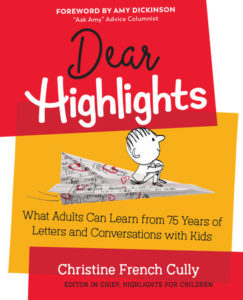
 About Christine Cully
 Staci: A few years ago, I adapted one of my children’s books into a play, Billy the Baaadly Behaving Bully Goat: The Musical, performed at the 2019 Philadelphia Fringe Festival. With additional performances canceled or postponed by the pandemic, I used the time to expand the script, and I worked with my composer to write three additional original songs (bringing the total to 8) so that the show could now appeal to an even wider audience once it’s back up and running. I created Good Character Productions, LLC, and I am currently applying for grants and corporate sponsorship to support the development of a multimedia bullying prevention package that includes live and virtual performances of the show, a soundtrack of the music, books, and teaching guides for parents/caregivers, teachers, and children—all to teach kids to be kind, empathetic, and inclusive and to stand up for themselves and each other!
 Inkandescent Kids: Tell us about your personal life.
 Inkandescent Kids: What advice would you give to your high school self?


 Carolyn Rabidoux is a masterful teacher. “After 36 years working in public education as a teacher and school and district level administrator, I am very aware of the importance of supporting students’ academic achievement and providing them with the tools to enhance their well-being. I have always believed that supporting teachers and other school personnel’s social/emotional well-being will help each individual and positively impact the students and the school’s culture. I retired from public education in 2020, but my desire to support the well-being of educators and students has not waned. I currently work as a coach for new administrators and hope to pass my passion for wellness initiatives on to the new generation of educators. As a co-owner of
 Inkandescent Kids: Are you married? Since when?
  Inkandescent Kids: What would you like to say to all of the kids you went to school with?
