When the James Beard Foundation (JBF) kicked off its Better Burger Project™, it challenged chefs across the nation to create a more healthy, delicious, and sustainable burger by blending ground meat with finely chopped, cultivated mushrooms.
From hundreds of entries from chefs whose burgers appeared in the Instagram photos, uploaded by their customers, five emerged victorious:
Chef Dan Nichols at Quaff ON! in Bloomington, in: quaffon.com
Chef Lorin Watada at Bachi Burger in Las Vegas, NV: bachiburger.com
Chefs Kiel Campbell and Fiore Moletz at Burgh’ers Restaurant in Harmony, PA: burghersinc.com
This month, on Oct. 18, these chefs will travel to New York City, where they will serve their “Better Burgers” at the official welcome reception of the 2015 JBF Food Conference at the historic James Beard House.
“This year’s conference will look at the future of food through three lenses: the farm, the kitchen, and health,” says Kris Moon, senior director of strategy and development at the James Beard Foundation. “In keeping with the future-focused theme, the Better Burger Project was an inventive contest that challenged the culinary community to create new versions of an American standard, working toward a better tomorrow for food lovers nationwide.”
Why Meat + Mushrooms?
Moon explains that blending meat with mushrooms reduces calories, fat, and sodium while adding important nutrients like vitamin D, potassium, and B vitamins. A blended burger also brings more sustainable, plant-based items to menus, allowing Americans to enjoy the taste and flavor of the burgers they love, knowing the preparation is healthier and more sustainable.
“Burgers are an iconic American food, particularly for summer grilling, so we are eager to host the Better Burger Project™ and explore how blending meat with mushrooms can create new versions of burgers that are healthier and more sustainable,” notes Moon. “An exciting part of the future of food is creating better-for-you versions of beloved foods. The Better Burger Project is a great example of how we can work with chefs to make these healthier options a reality.”
Chefs are jumping on the bandwagon.

“As a chef, restaurateur, and chair of the D.C. Food Policy Committee, I’m thrilled to join the Better
Burger Project™ in an effort to help educate diners across the country on the many benefits of blended burgers,” says Spike Mendelsohn, who was a fifth place finisher of the fourth season of “Top Chef.” “We have an amazing opportunity to highlight how strategic food choices can reduce strain on the environment, and also provide a variety of flavors and nutritional benefits. A blended burger is the perfect example of how a small change can make a significant impact on our food system.”
Want to try the blend at home?
Chop up your favorite mushrooms to match the consistency of ground meat.
Cook and season the mushrooms the way you would the meat.
Combine with sautéed onion mix and sauce, form into four patties, about 3/4-inch thick.
Prepare on a hot grill or hot fry pan, turning burgers only once, and cook until internal temperature reaches 165º — about 4 to 5 minutes for each side.
And check out the place that was voted the Best (mushroom) Burger in Richmond, VA, for its mouthwatering Truffle Burger: Brux’l Cafe
The Classic
What you’ll need:
1 medium onion, chopped
1 T. olive oil
2 T. ketchup, divided
2 T. mayonnaise
2 tsp. pickle relish
1 tsp. white vinegar
1 lb. ground beef
2 T. Worcestershire sauce
And, of course, a bun, lettuce, and tomato
Here’s how:
Sauté the onions, oil, and 1 T. ketchup in a medium saucepan — cook until tender.
Combine the remaining 1 T. ketchup, mayo, relish, and vinegar in a small bowl — for sauce.
Add beef and Worcestershire sauce to the onion mixture and form into four patties, about 3/4-inch thick.
Prepare on a hot grill or hot fry pan, turning burgers only once and cook until internal temperature reaches 165º — about 4 to 5 minutes for each side.
Nutrition information: 393 calories per serving, 18g fat,
4g sugar, 27g protein, 41% vitamin A, 39% zinc, 26% iron
Chicken Cordon Bleu Burger
What you’ll need:
¼ cup mayonnaise
1 tsp. Dijon mustard
5 T. finely chopped shallots, divided
1 ½ T. fresh thyme, chopped and divided
1 lb. ground chicken
⅓ c. diced ham
¼ tsp. salt
¼ tsp. pepper
4 slices of Swiss cheese
8 slices of pumpernickel bread
12 large spinach leaves
Here’s how:
Combine mayonnaise, mustard, 1 T. shallots, and ½ tsp. thyme in a small bowl for sauce. (Spread the sauce on the buns after the burgers are cooked.)
Combine remaining shallots, thyme, chicken, ham, and salt and pepper in a medium bowl, and form four patties.
Cook each burger 4 to 5 minutes on each side, until temperature reaches 165º.
Top each burger with cheese and cook until the cheese is melted.
Nutrition information: 368 calories per serving, 19g fat, 1g sugar, 29g protein, 2% vitamin A, 160% potassium, 25% folate, 23% vitamin C
Sweet-Potato Fries
Ann Butler asks: Do you say sweet potato or yam? Another great American debate. “In fact, the colorful potato we eat in America is a sweet potato, which comes in a variety of shades — including white, orange, and purple.”
Yams, she explains, are actually grown in Africa and Latin America, and can get really huge, “like 3 feet long. They have scaly, thick skin and have to be pounded out and boiled for a long time to be prepared correctly.”
For un-wimpy sweet-potato fries:
What you’ll need:
4 T. olive oil,
4 tsp. sea salt
Ground pepper to taste
Sweet potatoes, unpeeled, sliced into “fries”
3 T. powdered sumac (This is not the wild, poisonous stuff from the woods!)
Here’s how:
Preheat the oven to 425º — you will need the high heat to get a good crisp.
In a large bowl, toss together olive oil, sea salt, and ground pepper.
Lay the potatoes flat on a baking sheet — be sure to leave those washed skins on, for this is the most nutritional part of the potato.
Brush the olive oil mixture on the sweet potatoes.
Bake in the oven for about 30-40 minutes until they are slightly caramelized and brown. You will want to flip them a couple of times during the baking process. Tongs work very well.
“Upon removing them from the oven, I love to sprinkle powdered sumac on the fries,” Butler shares. “I had this once at a German restaurant, and it was so good I had to try it for myself at home.”
She notes that powdered sumac “can be a little difficult to find, so check out your specialty spice stores or order it online.”
The last president who is considered a Founding Father is James Monroe, the fifth president of the United States (1817-1825).
His image is depicted in many famous paintings from the Revolutionary War era — including the iconic image by German American artist Emanuel Gottlieb Leutze of George Washington crossing the Delaware.
Born in Westmoreland County, VA, Monroe was wounded in the Battle of Trenton, taking a musket ball in the shoulder. He served under Washington — and in fact is the only other president who was a soldier in the Revolutionary War.
Good explains how the former governor of Virginia rose to national prominence as a diplomat in France and eventually became president. We also learn more about the man who:
Studied law under Thomas Jefferson — Monroe’s lifelong friend, mentor, and political ally,
Served as a delegate in the Continental Congress, and
Changed the direction of America’s foreign policy.
Scroll down for our Q&A with Good to find out why President Monroe was the 18th century Forrest Gump. — Hope Katz Gibbs, executive producer, and David Bruce Smith, founder of the Grateful American™ Foundation,dedicated to restoring enthusiasm in American history for kids, and adults!
Hope Katz Gibbs: Ash Lawn-Highland, one of Monroe’s homes, is just a stone’s throw from Thomas Jefferson’s Monticello. We’ll talk in a bit about the lifelong friendship these two men shared, but first, tell us why President James Monroe was important.
Cassandra Good: James Monroe was the consummate public servant; his service included an extensive diplomatic career in France, England, and Spain.
We joke that he’s like Forrest Gump, because he comes up everywhere. He was part of the American Revolution, the Continental Congress, and the Louisiana Purchase; he served as secretary of state and secretary of war during the War of 1812; and he helped shepherd the Missouri Compromise through Congress and hold together the Union during his presidency. He was the last Founding Father to become president. Because of his long and varied career, learning about Monroe gives us insight into who we are as Americans and how we came to be.
David Bruce Smith: What was Monroe’s role in the American Revolution?
Cassandra Good: Monroe left the College of William & Mary at age 17 to join the army as a lieutenant. He fought with Washington’s army at Monmouth and Trenton, which is how he ended up in the boat with Washington in Emanuel Leutze’s painting, “Washington Crossing the Delaware.” That’s Monroe, holding the flag.
He was injured at Trenton and spent the winter at Valley Forge at age 19, where he socialized with high-ranking people, including the Marquis de Lafayette and John Marshall, the future chief justice of the United States.
During the Revolutionary War, Monroe served in a staff post working under Lord Stirling, but he really wanted to be back out on the battlefield. Though he got the authority to raise troops in Virginia in late 1778, he was never able to gather enough men to return to an active command.
David Bruce Smith: What were the hallmarks of Monroe’s presidency?
Cassandra Good: Monroe’s inauguration began what a newspaper columnist at the time dubbed the “Era of Good Feelings.” The Federalist party was fading and Monroe was a symbol of national unity, bringing the country together after the divisive War of 1812. But those good feelings didn’t last long, and fights over slavery threatened to split the Union. Monroe worked behind the scenes to secure passage in 1920 of the Missouri Compromise, which regulated slavery in the Western territories.
Monroe is best known, though, for his foreign policy. After more than 15 years of working with the Spanish, he finally was able to obtain Florida for the United States in 1819 with the Adams/Onis Treaty, which also confirmed American claims to the Pacific Coast. And of course there is the famous Monroe Doctrine, which was a portion of his 1823 annual address (akin to what is now the president’s State of the Union address). The Monroe Doctrine established a much stronger role for the United States in the world, declaring that if European powers interfered anywhere in the Western Hemisphere, it would be seen as an attack on America.
Hope Katz Gibbs: Now let’s get a little more personal. What kind of person was James Monroe?
Cassandra Good: Monroe was a well-liked, sincere person who got along with people from both parties. He was very close with his family, and unlike many other politicians of his time, he took his family with him wherever he was appointed. He was known as competent leader with good judgment.
David Bruce Smith: How did the public view Monroe as president?
Cassandra Good: Monroe traveled the country in a set of tours when he became president, and for most Americans, it was the first time they saw the president in person. It was those tours that generated the “good feelings” that became the name for the era. Even though his presidency took place long after the American Revolution, people respected him for his service in that war. He was so popular that he ran unopposed for re-election.
Hope Katz Gibbs: What was happening in the country when he was president?
Cassandra Good: Monroe was president during a time of great change; there was financial volatility, growth in manufacturing, and expanding forms of communications and transportation. Monroe, for example, was the first sitting president to ride on a steamboat. The very size of the country expanded — five new states were admitted during his presidency.
The expansion led to problems, however. Removal of native peoples, which was devastating, accelerated. The newly emptied land meant more space for plantations worked by slaves in the South and Southwest. This led to serious conflicts between the North and South, for which the Missouri Compromise was a sort of Band-Aid that lasted three decades. There were other divisions, too: The first party system of Federalists and Republicans had collapsed, and one-party rule didn’t last long. New factions were developing, and the partisan fights often played out in Monroe’s cabinet.
David Bruce Smith: How was Monroe’s presidency a transitional moment for America?
Cassandra Good: So much was changing in this period, in Americans’ everyday lives — what they did for a living, where they lived, how they communicated — and in American politics. As I mentioned, the first party system ended and the second one began to take shape, redrawing political affiliations. The country grew larger, both in size and in international stature. The United States had finally settled its major disputes with European powers when it settled with the Spanish in 1819, allowing more time for the government to focus on domestic affairs. The very role of the president also changed, in part because of Monroe’s tours and in part because of expanding forms of communications; the president was becoming more of a public figure.
Hope Katz Gibbs: What were Monroe’s relationships with the other founders?
Cassandra Good: Monroe was close friends and allies with James Madison and Thomas Jefferson. Like the two of them, he did not get along with Alexander Hamilton — in fact, he almost got into a duel with him in the 1790s. Monroe also knew George Washington well from serving with him in the Revolutionary War, but the two later fell out when Washington recalled him from his diplomatic mission in France. Monroe was able to stay friends with Washington’s successor, John Adams, and his son, John Quincy Adams, who served as secretary of state under Monroe.
David Bruce Smith: What was Monroe’s party affiliation?
Cassandra Good: Democratic-Republican, allied with Jefferson and Madison, and he often favored ideas like a weaker central government and more power in the states; and an economy based on farming. However, Monroe also argued for positions closer to Federalists and as president, was a centrist — he wanted a strong military and did in fact strengthen the federal government.
Hope Katz Gibbs: Let’s talk a little about some of Monroe’s biggest accomplishments. For example, what was the significance of the Monroe Doctrine in 1823?
Cassandra Good: The Monroe Doctrine stated that further efforts by European nations to colonize land or interfere with states in North or South America would be viewed as acts of aggression, requiring US intervention. Up until this point, the United States had been rather isolationist; the Monroe Doctrine changed this stance by staking out a larger role in the hemisphere. It also set the tone for US foreign policy for rest of the century and, in some ways, still influences foreign policy today.
David Bruce Smith: As Hope noted earlier, we’re talking with you in Monroe’s house in Albemarle County, but he had other homes. Where did Monroe live?
Cassandra Good: He was born in an area of Westmoreland County, VA, known as the Northern Neck. After going to college in Williamsburg at William & Mary, he moved to Fredericksburg, VA, where he had a house and a law office. During the 1790s, he had a small home on the campus of the University of Virginia at what is now called Monroe Hill. While governor, he lived in the Virginia state capital, Richmond, and later rented homes in Paris and London while serving as an ambassador in those cities.
In 1793, he purchased the farm at Ash Lawn-Highland at Jefferson’s urging, though he was away as ambassador or in Washington, DC, for much of the time. While serving as secretary of state under President James Madison, he rented a large townhouse, still standing, on I Street in Washington, DC. After the War of 1812 when he lived in the White House as president, he saw that it was renovated and refurnished. He also built a house in Loudoun County called Oak Hill. The largest of his homes, Oak Hill is now a private residence
David Bruce Smith: Tell us about Monroe’s family.
Cassandra Good: Monroe was born into an affluent planter family in Virginia’s Northern Neck in 1758. His father died when he was 16, and he became very close to his uncle. In 1786, Monroe married a woman named Elizabeth Kortright, who was from a wealthy New York family. They had two daughters, Eliza in 1786 and Maria in 1802, and he later became close to their husbands and with his grandchildren. Monroe was certainly the most successful one of his family, and throughout his life he supported various siblings, nieces, and nephews who had financial troubles.
Hope Katz Gibbs: What sources exist about this interesting man, who many people don’t really know much about? As the associate editor of the Papers of James Monroe at the University of Mary Washington, what kind of sources do you have access to about Monroe’s life?
Cassandra Good: We have cataloged around 40,000 letters to and from Monroe, which sounds like a lot, but actually is limited because this trove includes very few personal letters. Many of his personal letters were destroyed, probably at his request, after his death; thus far only two of his wife’s letters to him have been found. If he kept detailed records of his farm the way that Thomas Jefferson and George Washington did, those records have not survived. What has survived doesn’t include much about his political philosophy.
Hope Katz Gibbs: Thank you, Cassie, for telling us about this interesting historic figure. It is a pleasure to learn more about our fifth president, James Monroe.
Here’s to restoring enthusiasm for American history!
About the Grateful American™ Series
The Grateful American™ Series is an interactive, multimedia educational project created by the Grateful American™ Foundation. Founded by DC-based author and publisher David Bruce Smith (shown here), it is designed to restore enthusiasm in American history for kids and adults.
Its website, which launched on July 4, 2014, is updated each month with articles, radio podcasts, and TV episodes featuring interviews with the directors of popular presidential and historic homes, including George Washington’s Mount Vernon, James Madison’s Montpelier, and Thomas Jefferson’s Monticello.
Disclaimer: The photos of the historic figures pictured in the videos have been provided courtesy of the presidential and historic homes and museums depicted, as well as from the authors and historians, and / or are under Creative Commons usage. The Grateful American™ Series understands that these images are in the public domain and have no known copyright restrictions.
A Note from Hope Katz Gibbs, publisher, Inkandescent Kids magazine — Though Theodore Seuss Geisel died on Sept. 24, 1991, nearly 25 years later, on July 28, 2015, Random House gave us a remarkable gift — a new book by the most beloved children’s book author of all time: “What Pet Should I Get?”
In classic Seuss style, readers will find familiar characters, colors, and the anapestic tetrameter that the good doctor made famous. Plus, we get a few more lessons in the art of growing up.
“What I love about this book is that it’s about a classic childhood moment: choosing a pet,” explains Cathy Goldsmith — the art director at Random House who worked with Dr. Seuss for the last 11 years of his life (1980-1991).
Click on the video below to watch a brief interview with Goldsmith, who gives a behind-the-scenes look at the making of Dr. Seuss’s newer-than-new new book.
“It also drives home another essential message: Make up your mind,” says Goldsmith, referring to the portion of the story where the children are behaving as do most kids — and some adults — when having to choose from a cornucopia of possibilities. They ask:
“What if we took
one of each kind of pet?
Then our house would be full of the pets
we could get.”
But then they reconsider.
“NO …
Dad would be mad.
We could only have one.
If we do not choose,
we will end up with NONE.”
Goldsmith, now 65, seems as amused by the book as most kids will be. And for good reason. Now the president and publisher of the Beginner Books line and the Dr. Seuss publishing program at Random House, she was one of the first recipients of a call from Dr. Seuss’ widow, Audrey, who discovered the unpublished manuscript in the fall of 2013.
“We got the call as soon as she rediscovered the box filled with pages of text and sketches, which she had originally found shortly after Ted’s death in 1991 while remodeling their home,” Goldsmith shares. “But it spent all this time forgotten in a closet in his office until Audrey and Ted’s longtime secretary, Claudia Prescott, were cleaning house.”
Three days later, Goldsmith flew to Geisel’s La Jolla, CA, home to check out the treasure.
“The contents of the box were placed in neat piles on a glass-top table, and ‘What Pet’ was there waiting for us,” recalls Goldsmith, who estimates it was written between 1958 and 1962 because the starring brother and sister team are the same characters featured in Geisel’s 1960 best-selling beginning reader book, “One Fish Two Fish Red Fish Blue Fish.”
Once the new book was in her hands, Goldsmith says she felt guided by Geisel. “My connection to Ted remains as vital as it was when we worked closely together years ago — I know he is looking down, watching over the process, and I feel a tremendous responsibility to do everything just as he would have done himself.”
A native New Yorker, Goldsmith has always had a passion for art, but her parents insisted on a liberal arts education.
After graduating from Cornell University, Goldsmith gravitated to the publishing world. On a friend’s suggestion, she applied for a job as assistant art director at Random House, and landed the gig. That was nearly four decades ago.
“I can honestly say that working with Ted, and many other amazing authors and illustrators here, I’ve enjoyed just about every moment of my career,” Goldsmith insists. “I still have some things I’d like to do — such as work on a few more of the findings from that box that Audrey Geisel found. So perhaps some of the best is yet to come.”
A Note from Hope Katz Gibbs, publisher, Inkandescent Kids magazine — Making kids giggle, grown-ups grin — then say “how’d he do that?” — is the goal for Rufus Butler Seder. He credits his parents for helping him become a filmmaker, inventor, toymaker, and author of several moving picture books published by Workman Publishing, including Gallop! (2007), Swing! (2008), and his 2009 release, Waddle!
“My mom was a piano teacher, and my father Eugene (Gus) was a journalist and photographer who took me to see Fellini movies, wrote news stories about inventors, and was himself an inventor and a capable electrical and mechanical engineer,” shares Seder, who dedicated Swing! “To Mom, who made things fun, and Dad, who made things work.”
Seder took it all in, and starting in elementary school began turning out work that was sophisticated beyond his years. By the time he hit high school, he’d won numerous art awards including Kodak’s prestigious CINE Golden Eagle award. (He had collaborated on a film with high school friend Tod Gangler, who himself went on to become the world’s leading carbon printing photography expert.)
The Art of Scanimation
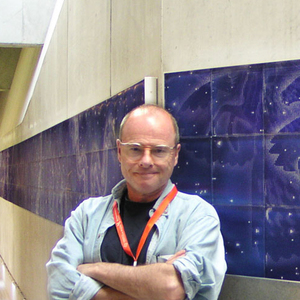
“I’m mostly interested in finding ways to make magic,” says Seder, now 56, who has created a small industry around the technique he invented called scanimation.
“It combines the eye’s ability to use parallax perception with moiré-style multiple-line patterns, and a sheet of acetate. Ultimately, the brain thinks that the images on the page are actually moving. But really the only thing that is happening is what is going on between your ears. It’s a wonderful, patented, optical illusion.”
Open the cover of Waddle!, for instance, and the penguin on the page appears to slip, slide and swoop. The frog on the second spread leaps and flips, flops, flops. A pig prances, a snake slithers, and so on until the climax, which (shhh, it’s an alligator) is certain to make a 4-year-old scream with delight.
In the mid 1980s, Seder made his mark on the independent film industry when he founded the Boston Black And White Movie Company. Judges at the Cannes Film Festival Medal recognized his work, and he also received funding from the National Endowment for the Arts.
His films included Phantom Subways, a study of an underground railway station; Sun Run, a pixilated animated short about a sunbather reading Kafka whose attempt at getting a tan is thwarted by the shadows thrown by nearby buildings, and Live in Fear, the story of a giant eyeball living atop a human body who battles a giant cat and an enormous parrot.
“Admittedly, these weren’t big box office smashes, but we were definitely making a contribution to the artistic side of the independent film business,” offers Seder, who during this time attended the American Film Institute as a directing fellow. For nine years, he taught filmmaking at the School of the Museum of Fine Arts in Boston.
Living LIFETILES
In 1990, he was inspired to take the concept of moving pictures to a new dimension. He figured out how to create murals that used no electricity, moving parts or special lighting — but still appeared to move as the viewer walked by. After some experimentation, Seder developed a 3-pound, 8-inch square, lens-ribbed glass tile that appears to move. He calls it LIFETILES.
These “movies for the wall,” as Seder explains it, became a new revenue stream. He continues to design and install these moving works of art, which range in price from $50,000 to $200,000, at Union Station in Washington, DC, the Miami Zoo, museums and other public spaces around the world. In 2010, in fact, he’ll be designing a LIFETILE project in San Francisco’s Golden Gate Park, which will be installed in 2011.
What tickles Seder most, he says, is watching people react to his work. “Some people walk or run back and forth, making the pictures ‘move,’ while others stop, stare, smile to themselves, and sway from side to side. The people can be as fun to watch as the work itself.”
By 1999, Seder was ready for a new adventure. He and his then bride, and business manager Penny Sander, decided it would be fun to marry Seder’s passion for antique toys with his love of moving pictures. They opened Eye Think, Inc. www.eyethinkinc.com and designed Seder’s first toy, the CineSpinner — animated sun-catchers that come to life and animate continuously as they gently rotate in a window: dancers dance, horses gallop and monkeys swing from vine to vine.
He also began designing Smart Move greeting cards — elaborate paper gifts with images of hearts, ballroom dancers, piano hands, penguins, and more, that move when you open the cover.
Then, during a trade show in 2006, a book buyer for Workman Publishing named Raquel Jaramillo happened to walk up to Seder’s booth where he was selling those cards. She spent quite a bit of time examining the drawings and playing with them to see what they’d do. Soon after, she called Seder to ask if he’d like to turn them into a book.
“I was tickled at the offer, although slightly hesitant at first because I didn’t really want to give away the secret to how I make them work,” Seder shares. “But it’s very hard to say no to Raquel.”
Three years later he is working on book number four for Workman Publishing — this one using the Star Wars characters. Although he didn’t get to meet George Lucas, he admits it was a challenge to create R2-D2 and C-3PO in scanimation. Nonetheless, Seder found a way to make it happen. The new book will be out this spring.
Seder’s Advice to Parents
Although he doesn’t have kids of his own, Seder says that all the great parents he knows followed one golden rule.
“Children are sponges,” he says. “The more cool stuff you expose them to, the more you get them thinking and asking questions. I watch kids play with my toys and walk past my LIFETILES and you can almost see the wheels turning. So don’t keep your kids in the house! Get them in front of art, take them to the movies, walk in the forest or around town — and talk about the themes and how things work. You’ll be amazed what they see, and what they can teach you!”
“You just never know,” he adds. “What is turning around in their young heads may come out as a great work of art, a film or book, or the cure for a challenging disease.”
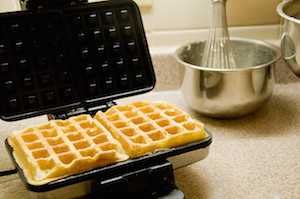
Check out this fun recipe for waffles by French student Dylan Gibbs, age 17, currently a junior at St. Christopher’s high school in Richmond, VA. Videography by his sister, Anna, a photo/film major at VCUarts.
Vous aurez besoin de :
2 tasses farine tout-usage
3/4 tasse sucre
3-1/2 c. à thé de poudre à pâte
2 gros oeufs, séparés
1-1/2 tasse de lait
1 tasse de beurre fondu
1 cuillère à café d’extrait de vanille
sirop
Voici comment :
1. Dans un bol, mélanger la farine, le sucre et la poudre à pâte. Dans un autre bol, battez légèrement les jaunes d’oeufs.
2. Ajouter le lait, le beurre et la vanille et bien mélanger. Remuer dans les ingrédients secs jusqu’à ce que le combiné.
3. Battre les blancs d’oeufs jusqu’à la formation de pics mous; replier dans la pâte.
4. Cuire dans un gaufrier préchauffé selon les instructions du fabricant jusqu’au brun d’or.
5. Servir avec du sirop.
Rendement: 10 gaufres (environ 4-1/2 pouces).
Prép/Temps Total : 20 min. : 5 portions
rend la nutrition : 1 portion (2 de chaque) équivaut à 696 calories, 41 g de lipides (25 g de graisses saturées), 193 mg de cholestérol, 712 mg de sodium, 72 g de glucides; 1 g de fibres, 10 g de protéines.
What you’ll need:
2 cups all-purpose flour
3/4 cup sugar
3-1/2 teaspoons baking powder
2 large eggs, separated
1-1/2 cups milk
1 cup butter, melted
1 teaspoon vanilla extract
syrup
Here’s how:
1. In a bowl, combine flour, sugar and baking powder. In another bowl, lightly beat egg yolks.
2. Add milk, butter and vanilla; mix well. Stir into dry ingredients just until combined.
3. Beat egg whites until stiff peaks form; fold into batter.
4. Bake in a preheated waffle iron according to manufacturer’s directions until golden brown.
5. Serve with syrup.
Yield: 10 waffles (about 4-1/2 inches).
Prep/Total Time: 20 min. MAKES: 5 servings
Nutrition: 1 serving (2 each) equals 696 calories, 41 g fat (25 g saturated fat), 193 mg cholesterol, 712 mg sodium, 72 g carbohydrate, 1 g fiber, 10 g protein.
About Dylan Gibbs
While a rising senior at St. Christopher’s School in Richmond, Virginia, Dylan Gibbs loved to make — and eat — French cuisine. From waffles and omelets to steak au poivre, the boy is not afraid of butter. Now an architecture student at the University of Virginia, cooking (well, mostly warming up bags of prepared dishes from Trader Joe’s) continues to be a passion. Learn more at DylanGibbs.com. And click here to read an article by Dylan, How the Boy Scouts Saved My Life.
About Anna Gibbs
An award-winning photographer at age 16, Anna Gibbs is a graduate of VCUarts in Richmond, VA. Learn more at AnnaGibbs.com.
A Note from Hope Katz Gibbs, publisher, Inkandescent Kids magazine — If learning about American history never tickled your fancy, you haven’t read one of Rosalyn Schanzer’s illustrated picture books. Although the stories are written for children in elementary and middle schools, the hardbacks are filled with so many interesting facts and such incredibly detailed artwork that they appeal to all ages.
Take Roz’s most recent title, What Darwin Saw: The Journey That Changed The World, published in 2009 by National Geographic.
Roz begins the tale when Darwin was 22 years old and offered the chance to join the adventurous crew of the Beagle, a sailing ship about to begin a five-year journey around the world. In her deliciously illustrated graphic novel filled with quotes from Darwin’s diary, letters and books, Darwin discovers gigantic fossils and exotic animals.
For the first time, he watches volcanoes explode and earthquakes destroy entire towns. He explores jungles dripping with orchids, climbs mountain peaks, and visits tropical islands surrounded by living coral reefs.
Of the book, The Washington Post wrote: “For her tribute to Darwin’s five-year voyage around the world, Rosalyn Schanzer melds a graphic-novel style, lively illustrations, straightforward narration and excerpts from Darwin’s journals. The landscapes are gorgeous (the white cliffs of Patagonia’s Atlantic coast, the tortoise-and-lizard-filled Galapagos), the animals expressive and the amount of information dizzying.”
John Smith Escapes Again!
Also published by National Geographic was Roz’s 2006 book, John Smith Escapes Again! It was released the fall before the 400th anniversary of the founding of Jamestown.
Not only are the illustrations dynamic and engaging, but Roz’s story also puts Disney’s version of Pocahontas to shame. Did you know, for example, that as a young man John Smith was tossed into the briny deep and became a pirate? Or that he later became a wretched slave? Or that he didn’t have blond hair — as he did in the Disney version — but a mane of dark-brown locks and a thick beard?
Of course, a brave and beautiful American Indian girl named Pocahontas did rescue the courageous and cunning Smith from certain death, though she was never his girlfriend; she was only 10 or 11 years old at the time. Still, odds are good that Smith, who Roz says was perhaps the greatest escape artist of his time, could probably have wiggled his way out of a dangerous situation with the Powhatan Indians all by himself.
Roz also discovered other little-known details, including those about Smith’s last trip downriver in Virginia. Smith had fallen asleep with a bag of gunpowder on his lap. In a twist of fate, a fellow sailor apparently lit up a pipe — and a stray spark blew onto the gunpowder, exploding it.
Smith awoke with a start, jumped into the river and put out the flames, but unfortunately, he had to go all the way back to London to get medical treatment. Though he did make a single expedition to New England in 1614, terrible luck at sea and a lack of new backers kept him from returning to his beloved America again.
And that was a real shame, Roz says, for it was Smith whose books first kindled the Great American Dream. “He believed that America was the one place on earth where everyone, no matter how lowly their status, could make a better life for themselves if they were willing to work hard,” the author shares. “I have to admit, after spending about a year creating this book, John Smith has become a hero of mine.”
Bringing history to life
Although falling for her characters isn’t a prerequisite for Roz, she is a stickler for getting the details right. When preparing to write and illustrate a book, she puts on her detective hat and doesn’t rest until she lays eyes on nearly every word her protagonists have written themselves, and also the best of everything else written about them. Smith, for example, wrote several books about his adventures. Roz also combed through the works of his most scholarly biographers.
Ditto for her other subjects, including King George III and George Washington (for her 2004 title George vs. George: The American Revolution as Seen from Both Sides, published by National Geographic; and Benjamin Franklin in How Ben Franklin Stole the Lightning, published in 2003 by HarperCollins.
In her best-selling story, How We Crossed the West: The Adventures of Lewis and Clark, which also won a San Francisco Chronicle Best Book of the Year award, Roz tracked down an exact replica of the keelboat used in the famous journey. To do this, she conferred with experts all the way across the country at Fort Clatsop, the final western outpost of the Lewis and Clark expedition.
“Other illustrations I’ve seen depicting the Lewis and Clark boats showed canoes made of birch bark, but my research showed that the explorers would never have used any such thing,” she says.
In fact, Roz will go to incredible lengths to get everything just right. Consider Gold Fever! Tales From the California Gold Rush, published by National Geographic in 1999. Roz traveled to every California gold mining site she could find and took over 600 photos of gold nuggets, saloons, unusual mining equipment, and each odd item or interesting bit of scenery that would help make her pictures both accurate and fun at the same time.
“When I create the images, I want to get every shoe, every party dress, every uniform exactly right for the time period,” she shares, noting that when she looks at other historical books, she gets frustrated if the details aren’t accurate. “I think it is the job of a historical illustrator to exactly replicate all the little things. Otherwise, how will kids know what life really looked like all those years ago?”
The heart of a traveler
Roz is never one to pass on taking a great trip. Her thirst for a good adventure has taken her to Belize, where she swam with sharks; to Alaska, where she kayaked with whales; and to the Amazonian jungles of Peru, where she fished for piranhas. Roz and her husband, Steve, checked out volcanoes and gigantic marine iguanas in the Galapagos Islands in preparation for her book about Darwin.
Those travels provide a stark contrast to her early jobs. At the start of her career, she sat in a small cubicle, illustrating cards for Hallmark. Then in 1974, shortly before following Steve to Northern Virginia for his job in a think tank, she began illustrating children’s books.
It proved to be the perfect thing to do while raising son Adam and daughter Kim. By 1993, Roz decided it was time to craft her own stories.
A fearless flier
One of her first releases was Ezra In Pursuit: The Great Maze Chase, published by Doubleday. It was the story of a boy and his dog chasing three bank robbers through the Wild West in 1874. By 2000, she was ready to tackle a topic near and dear to her heart. She wrote Escaping to America: A True Story, the tale of her Jewish ancestors, who escaped from war-town Poland in 1921 to seek a better life in America.
“This book featured illustrations of my father, then a young boy, as he struggled to find his way to a new environment,” Roz explains. “It was very exciting to get inside of my family’s heads.”
Of that book, noted children’s book review service Kirkus wrote: “Steerage has been described in many books, but never so clearly for this younger age group. Schanzer draws pictures with words as well as with her art.”
Roz admits that having an esteemed literary publication pay her such compliments has given a nice little boost to her ego. “I never really considered myself a writer or a historian, but looking back at my body of work, I guess that I am,” she says. “Ultimately, I just want to make the books so much fun and so interesting that my readers will get caught up in the story. I’d like to bring the past to life and if I can, then I’ll consider my work to be a success.”
About Roz Schanzer
When she isn’t buried inside a dusty history book at the library or on one of her exciting adventures, Rosalyn Schanzer can often be found talking to students in countless elementary and middle schools and at teacher in-services, universities, seminars, conferences and more. Beginning in April, she will also be available via videoconferencing and webinars.
A Note from Hope, publisher, Inkandescent Kids magazine — We bet you have heard of Fran Capo, a 9-time Guinness Book World Record holder — best known as the World’s Fastest Talking Woman (at 603.32 words per minute).
The comedienne, keynote motivational speaker, actress, and 21-time author is also an ordained minister, hypnotherapist, and event producer. Fran dives with sharks, eats fire, bungee jumps, climbed Kilimanjaro, visited the Titanic and is the first woman in history to zipline into an active volcano.
Wild and crazy, right? Yes, of course! That is why since we met Fran in 2011 she has been one of our favorite Truly Amazing Women. But there’s more to the woman who has wowed folks on more than 6,000 shows — including giant audiences that watched her features on Entertainment Tonight, Dr. Oz, Larry King Live, and the Discovery Channel.
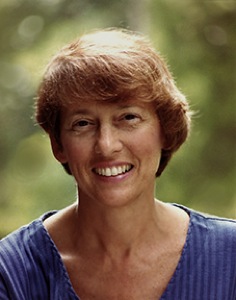
It’s Fran’s giant heart — and amazing courage — that makes her tick.
Sure, Fran’s schtick and quick wit have landed her gigs at Caroline’s and Dangerfield’s in New York City, the Tropicana in Las Vegas, the Grand Ole Opry in Nashville and performing to private groups on Yachts in the Antarctic.
But it’s that huge heart that has inspired fundraisers to make her part of their campaigns at the Make-A-Wish Foundation, Comedy Cures, Firehouse 9-11, and the Marines stationed in Okinawa, among many others. It’s also why she always adds humor to all her motivational talks. “Laughter reaches the heart,” she knows.
And because Fran’s philosophy is that speaking is about teaching, touching and transforming lives, she insists: “Whether you are speaking to a large live audience — or on Zoom during the pandemic that doesn’t seem to want to quit — as a speaker you are not required or expected to be funny. But how wonderful would it be if you use motivation, storytelling and humor to liven it up. It’s a powerful mixture, and in speaking combining all three is a win-win-win situation.”
“Unlike comediennes, there is very little risk to a speaker who bombs with a joke. If you “bomb” as a comedienne, you risk never getting booked again. If your humor fails as a professional speaker, simply continue with the presentation,” shares Fran.
No one, however, likes to hear a round of silence instead of one of laughter. In my book, “The Humor Approach” I talk about tips for adding humor into everything you do. Here are some tried-and-true methods to give your humor the best chance to succeed on the platform.
You don’t have to be a comedienne to be funny. Anyone can tell a joke. Find your comic persona. What type of humor are you most comfortable with? Some speakers are better at one-liners, some at observational humor, others excel at storytelling. Timing is essential. The closer you stick to your natural timing, the more success you will have and the audience will believe it’s coming from you not a set up joke.
Know your audience. Ask yourself: Are they blue collar or white collar? Liberal or
conservative? Millennial or Boomer? What do they have in common? Are there regional sensibilities? The nature of your audience determines the type of humor. A colleague of mine once jokingly yelled out, “Last call at the bar!” only to discover most of his audience were members of Alcoholics Anonymous!
Localize and personalize your materials. Audiences love to be included as part of the show. Tailor your humorous anecdotes to make them fit your audience. Make it seem as if it just happened. They will think you are incredibly talented. Mark Twain said, “The best improvisation is rehearsed for 48 hours.” It is better to say, “On my way here from Newark Airport” than, “A month ago when I was in Dallas.” Personalize humor from a joke book or speaker’s file. The audience wants to relate to you, and you want to relate to them.
Be prepared. Always have some “what-IF” lines ready. For instance, what would you do IF the mike malfunctions? IF the lights go out? IF a fire alarm sounds? IF someone yells out an insult? IF, IF, IF. Have stock joke answers that you will use in these situations, and you will remain in control no matter what happens.
There are many ways to speak funny without being a comic.Make enlargements of relevant funny cartoons. Use props. Use jokes you have read. Have silly pledges or awards. You are only limited by your imagination. (Note: Don’t steal a comic’s act — we get rather annoyed when that happens because being funny keeps our kids fed.)
Keep your audience interested.Humor and storytelling does that. It keeps the audience wanting to hear more. Your job is to impart information, and humor keeps an audience tuned into your message. The more attentive they are, the more they will retain. The more they retain, the more you succeed as a speaker. Remember: educate, motivate, captivate!
Space out the humor.The beginning, middle, and end of a speech are the strategic places for a joke. You want to start with a laugh to warm them up, throw some humor in the middle to keep them interested, and end with a laugh so they will have a nice, warm feeling.
Practice, practice. practice.Tell your jokes to unsuspecting friends. Just like with your speech, practice your jokes and delivery. Never tell someone you are going to tell them a joke because then they sit in judgment, just work it into a conversation and watch their reaction, that’s the best way to gauge if it will work. If they laugh, you know you have a winner on your hands and you’ve mastered the joke.
Do not telegraph the end of the joke. Surprise them.Suspense is the key in any good joke. If someone feels they know the punch line, the joke is a letdown. The listener should be waiting to find out what the punch line is, that’s what causes the laughter.
Be yourself, and have a good time.If the audience sees you are really enjoying being on stage, your enthusiasm will be contagious. If you are having a good time, then your audience will, too.
And here’s one for the road: Always leave them laughing!
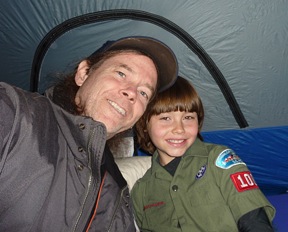
By Dylan Zane Glenwood Gibbs, Awritten at age 11 (and in 2025, a graduate of Harvard University’s Graduate School of Design)
September 1, 2010: This summer, I learned some big lessons about the perils of catching grapes in my mouth, the importance of knowing first aid, and what an amazing dad I have.
It happened in August when my dad and I went on a biking and camping trip with two of my best friends and their fathers. Our mission was to bike at least 25 miles along the C&O Canal towpath, camp overnight, and bike back the next day as part of our Boy Scout cycling merit badge.
A Note from Hope, publisher, Inkandescent Kids magazine — When I was a little girl, my mother’s mother, Pearl — my Mommom — always knew how to heal what ailed me. Her famous chicken soup was a recipe handed down by her mother, and her mother’s mother, and her mother’s mother, from the shtetl in Kyiv. I think all that love was poured into every pot of soup.
My sister, Kim Katz, grew up to be an award-winning chef and shares recipes for a delicious holiday dinner in this month’s Heart column — named our daughters (Anna Paige and Emma Pearl) after this beloved woman who died when I was 10. In our kids, and with this soup recipe, her love lives on.
“Prepare this family whenever you are feeling punk — mind, body, spirit, or soul,” Kimmy says. “We believe it can also help heal a broken heart.”
Scroll down for this heart-warming recipe! And please add your own special touch to your pot of soup. Don’t like onions or celery? Don’t add them. Love matzah balls? Let me know, and I’ll send you her recipe for the kind that float vs. sink. One of Pearl’s greatest gifts was loving people as they were, and that meant letting them express themselves in life, art, and soup.
The gift that keeps on giving: We always whip up a big pot at the first sniffle of a cold — and especially on the first night of Channukah. Trick: Keep adding broth to the pot, as well as more chicken and veggies, it’ll last all eight nights! — To your health!
A Valentine note from Chef Hilary Schwab, the Edible Garden Girl: This past year, I am thrilled to report that I met my forever boyfriend. Finding love in your 50’s after a failed marriage and raising your kids is a special thing. When I finally took reproducing, finding my voice, and figuring out what I truly want from this life of mine — I was at last able to hone in on the perfect mate.
This has been very empowering, to say the least. For me, I wanted a life partner who would help make me a better me—someone whose values I respected and whose company makes me relax and be myself. I am thrilled to report that love, laughter, and calm fills my life now. My hope for everyone is to find this special place in their own lives.
If you have found that perfect someone — and want to show that special man or woman how much you love and appreciate them — nothing says I love you more than a homemade healthy, delicious treat. This chocolate-dipped apricot recipe has a knock-out presentation. These treats are so easy to make — but look like you slaved all day for your honey. Scroll down for the recipe below.
Now go wow your significant other!
What you’ll need: Makes 30 candies
1/3 cup sugar 1 cinnamon stick
1 cup water
30 dried apricots
3 ounces semi-sweet
Bakers chocolate
2 tablespoons peeled chopped pistachio nuts
Here’s how:
Line a baking sheet with parchment paper, and set it aside.
In a small saucepan, combine the sugar, cinnamon stick, and water. Bring to a boil.
Reduce heat to medium-low and add the apricots.
Simmer the apricots in the sugar mixture for 10 minutes.
Remove apricots with a slotted spoon and place them on the parchment paper so they are not touching.
Melt chocolate in a small microwave dish. Microwave on high for 1 minute, then mix.
Return to microwave at 30-second intervals until the chocolate is melted and smooth. (This usually takes 2-3 minutes total.)
Dip each apricot individually into the melted chocolate halfway, sprinkle some chopped nuts on top of the chocolate and return the apricot to the parchment paper. Once all of the apricots have been dipped, place the baking sheet in the refrigerator for 60 minutes to set the chocolate.
Chocolate can help boost the immune system, lower the risk of heart disease, cancer, diabetes, and perhaps even increase your lifespan. That’s because 1.5 ounces of high-quality chocolate contains the same amount of antioxidants as a 5-ounce glass of wine, but without the side effects of alcohol.
Chocolate is packed with mood-enhancing ingredients, including phenylethylamine, which is considered the “love drug,” as well as serotonin.
The ingredients in chocolate can also relieve a host of ailments, including depression, fatigue, pain, and PMS. It may also help rev up your sex drive.
Apricots do a body good: Registered Dietitian and the founder of Taste of Nutrition Katey Davidson, MScFN, RD,explains that apricots are a great source of many antioxidants, including beta carotene and vitamins A, C, and E. They are high in a group of polyphenol antioxidants called flavonoids, which have been shown to protect against illnesses, including diabetes and heart disease. And, all dried fruit contains the same nutritional qualities as the original fresh version. Weight for weight the dried form contains more of the antioxidants, minerals, and fiber than the raw original.


 “I’m mostly interested in finding ways to make magic,” says Seder, now 56, who has created a small industry around the technique he invented called scanimation.
 Living




 It’s Fran’s giant heart — and amazing courage — that makes her tick.
 How to Use Humor Effectively
 Be prepared. Always have some “what-IF” lines ready. For instance, what would you do IF the mike malfunctions? IF the lights go out? IF a fire alarm sounds? IF someone yells out an insult? IF, IF, IF. Have stock joke answers that you will use in these situations, and you will remain in control no matter what happens.