Who she is: A hard-working recent graduate of Cabrini University with a Bachelor of Science with a major in biology and double minors in environmental science and writing.
What she does: Skilled in biology, chemistry, environmental studies, TLC, GEL electrophoresis, writing, oral presentations, collecting field data, identifying plant species, bird-banding, organization, and time-management, Jamie completed several projects relating to environmental science, including grant writing for obtaining sustainable infrastructure for campus and working on an independent study regarding campus sustainability and renewable energy sources. She also, conducted and presented an independent project on how acid rain affects flora, specifically Wisconsin Fast Plants. Graduated summa cum laude (GPA: 3.92) while also playing soccer for my university’s soccer team and being involved in various clubs and activities. After being the co-editor of her university’s international literary magazine, Jamie freelances for The River Reporter in Narrowsburg, NY, when she isn’t working as a nature guide in the picturesque Poconos.
Why she does it: “I love utilizing my science background in all ways possible. I look forward to seeing what the future holds for me and my generation.”
What she thinks about being Empowered Together: Jamie on Clothing and Gender
When I was a kid, I wore the same shirt for an entire summer. Not every day, of course (it would get dirty, and my parents had to wash it for me), but whenever I could, I wore it. It was a red T-shirt with the words Old Navy scribbled across the front in blocky white lettering. I was around three years old then, and I wore it so often that my family started calling it my “uniform.” Eventually, I grew out of the shirt, but I was still extremely picky about what I liked to wear. I hated clothes growing up. Jeans were too stiff, stockings were too itchy, dresses too breezy. Finding clothing to look “presentable” in was hard for me. I would have been perfectly content wearing that Old Navy shirt for the rest of my life.
When I was 11, I dressed up as an FBI agent for Halloween. I told everyone it was because I wanted to be one when I grew up, which was partially true, but I also wanted to see what it would feel like to wear a suit. In my hometown, it would not have been acceptable for me as a young girl to wear a suit in public unless it was a costume. I remember loving how I looked in the suit, wishing I could wear it more often, but I also remember being scared it would make me feel like less of a girl. It didn’t. I was still the same person I was before putting on the suit. So, why did I think that wearing an article of clothing generally seen as masculine would diminish my femininity? The answer is binary oppositions.
Structuralist Lévi-Strauss believed that humans tend to separate the world around them into binary oppositions, meaning that we categorize ideas into sets of conflicting groups. These groups, especially regarding narrative, are often pinned against one another, such as light versus dark or good against evil. These fundamental binary oppositions are seen throughout all types of narrative, so over time, we began to take them for granted and accept them as normal. However, this behavior is not normal or natural but arises from a culture’s values and beliefs (Thomas, 32). Placing objects in distinct categories with no room for overlap can be confusing and harmful. This is certainly the case when examining the ideologies surrounding femininity and masculinity.
From infancy, we are bombarded with the idea of gender. This, of course, is different from the notion of biological sex. Biological sex is something that is assigned at birth based on physical characteristics. Gender, on the other hand, is a social construct that is often presumed to align with a person’s biological sex, although for some people, this is not the case (“Understanding Gender”). The toys we play with, the books we read, and especially the clothes we wear are separated based on gender. Boys play with trucks and wear the color blue. Girls wear pink and play with dolls. These ideas are ingrained in children from such a young age that we assume this is the natural order. We must consciously try to remember that we as a society made up this to make things neater and categorize people into separate boxes.
Eviatar Zerubavel, a professor of sociology at Rutgers University, brings forth the idea of marking and unmarking these binary oppositions. Just as there is no natural reason to split objects and concepts into binary oppositions, there is no reason to mark certain objects and leave others unmarked. In his book Taken for Granted: The Remarkable Power of the Unremarkable,
Zerubavel states, “In reality, nothing is inherently marked or unmarked. Both markedness and unmarkedness, indeed, are but products of specific and therefore nonuniversal marking conventions…” (Zerubavel, 24). Regarding binary oppositions, society tends to leave one opposition unmarked, effectively considering it normal, whereas the other opposition is intentionally marked, therefore labeling it as abnormal.
There is no instinctive reason to pin masculinity against femininity. In fact, according to a Mintel Press Office poll, as of 2020, nearly half of all Americans (46%), regardless of how they identify, view gender as a spectrum, meaning that not everyone falls neatly within the category of “male” or “female.” Similarly, around 3/10 of Americans have personally felt limited regarding the traditional gender binary model of males and females (“Gender Spectrum Mainstreams”). Understanding that gender is a spectrum allows people to explore their own gender identity, and a popular way people tend to push back against this idea of having to identify as either male or female is through fashion and clothing.
Although ideologies are starting to change, in society today, clothing is often marked depending on the identity of the person wearing it. When a woman walks down the street in a dress, it goes unnoticed. However, if a man wears that same dress, suddenly, people start to pay attention. Interestingly, if two people of the opposite sex are wearing the same outfit, such as jeans and a sweatshirt, neither sex is marked. This simply exemplifies the idea that nothing is intrinsically marked or unmarked, notably in regard to clothing.
As a society, we have the power to push back against harmful binary oppositions. Some people have already begun, but going against traditional gender norms in regard to femininity and masculinity is just the tip of the iceberg. Marking certain objects and activities while leaving others unmarked is so common within societies, it is often forgotten this is not natural. Once
people begin to consciously make an effort to not take the unmarked for granted, and remember that most binary oppositions can often be seen as a spectrum, we can finally start to move past these limiting characteristics so that society can progress as a whole.
Who she is: A goal-oriented, purpose-driven woman on a mission to stand up for one another, support one another, and push forward, even in the face of resistance.
What she does: I am attending Towson University pursing a Bachelor’s of Fine Arts in Mass Communications, and working full-time to be to afford my education.
Why she does it: I am personable, adaptable, and possess the ability to build authentic relationships that will help further organizational success.
What she thinks about being Empowered Together: In the recent election, a notable shift occurred in the voting patterns of men, with a significant increase in support for Donald Trump across multiple demographic groups.
According to the Associated Press, 25% of Black men cast their ballots for Trump, with the majority of them under 45 years old. Hispanic men also showed increased support, roughly half favoring the former president, while 60% of white men voted for him. The results left many surprised, given Trump’s history of offensive, racist, and sexist rhetoric. However, these voting patterns show a troubling reality: the struggle to garner male support for women’s rights despite decades of feminist efforts.
For context, let’s look at the genesis of the #MeToo movement. According to the Global Fund for Women, the #MeToo movement, founded in 2006 by Tarana Burke, was created to support survivors of sexual violence, especially young women of color from low-income communities, by providing healing resources and fostering a community of advocates. The movement gained global attention in October 2017 when the #MeToo hashtag went viral, encouraging survivors worldwide to share their experiences with sexual assault. For millions of women, this was the start of no longer continuing the shame and feelings of guilt for experiencing sexual abuse, and they instead began calling out their abusers and turning that shame and public humiliation onto them.
The movement aimed to expose the extent of sexual violence against women and highlight its long-lasting impact. As part of this reckoning, high-profile men—including Trump—were publicly accused of sexual misconduct. In May 2023, Trump was found liable for sexual abuse against journalist E. Jean Carroll (Neumeister et al., 2024), a pivotal moment that added fuel to the ongoing conversation about the abuse of power in the workplace and society at large.
Yet, despite this cultural shift, the 2024 election results suggest that many men, particularly in key demographic groups, rejected the feminist call for change. While some men did listen, reflect, and support the #MeToo movement, others seemed to view the growing conversation around sexual violence as a personal attack. Rather than embracing a call for empathy, many turned to backlash, with Trump’s reelection campaign benefiting from this male resistance. The day after his victory, the slogan “Your body, my choice”—a stark parody of the pro-choice mantra “My body, my choice”—began circulating, a symbolic gesture of the regressive wave that Jia Tolentino of The New Yorker has warned could define a new era of gendered backlash.
The results of this election underscore a harsh reality: Despite years of feminist advocacy and the #MeToo movement’s bold attempts to engage men in the fight for women’s rights, many men remain indifferent to or even antagonistic toward these issues. For many, women’s struggles are seen as peripheral to their own lives, and as a result, empathy for women’s rights often remains scarce.
These electoral outcomes must not discourage women. While the majority of men may continue to prioritize their own interests, there are still spaces where women can find solidarity and strength. The path forward lies in continued mutual support—whether by shopping at women-owned businesses, volunteering at shelters, or helping one another access healthcare and abortion services. The fight for women’s rights is far from over, and the challenges ahead may be great, but we must remain motivated.
Together, we can continue to stand up for one another, support one another, and push forward, even in the face of resistance.
The Youth Committee of the Most Beautiful Bays in the World Association (MBBWA) is pleased to invite young people under the age of 14, residing in any of the bays within our network, to participate in a drawing contest.
“This contest, in partnership with the Veolia Foundation, will reward four (4) winners with cash prizes to fund educational activities related to sustainable development at their school or class,” organizers explain. “The winners will be honored at the MBBWA’s annual congress, which will be held in Canada in September 2025.”
Students are invited: We encourage you to share this information with the schools in your bay and encourage the participation of young people in this exciting and enriching contest. Click here to find all the details.
A friend since childhood (while attending Juilliard, he was the drama counselor at Camp Akiba, which I attended from ages 10-20), Greg and I have remained in touch. When I reached out to ask if he’d be willing to be the cover story of my magazine’s next issue, BeInkandescent Health & Wellness www.BeInkandescent.com — Greg said YES!
While I am a publicist — and Greg plays one on TV – we had a ball talking about his career, his role on CBS’ Blue Bloods, his mission as an actor, and what it’s like to have lived the life of his dreams!
The Cast, Creative Team and Band for the San Diego Rep production of EVERYBODY’S TALKIN’/The Music of Harry Nilsson Summer 2015 front row L-R Conception and direction by Javier Velasco, vocalist Alice Ripley, vocalist Gregory Jbara, conception and musical arrangements by Steve Gunderson. back row L-R Jesse Audelo on winds, David Rumley on drums, musical direction/piano/vocals by Korrie Paliotto, vocalist Kurt Norby, PJ Bovee on guitars/Keyboard, Isaac Crow on bass/percussion. Costumes designed by Gregg Barnes, set design by Sean Fanning, lighting design by Phillipe Bergman, projection design by Daniel Fine, sound design by Kevin Anthenil photo credit: Daren Scott
Below, you’ll find the commencement speech that Greg gave to the graduating class of his alma mater: Michigan’s Wayne Memorial High School. We think his words of wisdom and encouragement are perfect to guide us all to truly can manifest anything we set out to accomplish. Scroll down for that.
First, here’s a little more about Gregory Jbara: Greg began his undergraduate studies at the University of Michigan with a minor in physics and a major in communications. By his second year, he was enrolled as a theatre major, and his third year was a founding inaugural class member of the renowned University of Michigan Musical Theatre Department. He also co-founded the still flourishing Impact (Jazz) Dance Company through the University Activities Center.
Christina Haag and Gregory Jbara in a scene from Brian Friel’s TRANSLATIONS performed live on PBS/Live From Lincoln Center — JUILLIARD AT 80 directed by Eve Shapiro. 1985
Greg transferred to The Juilliard School, where he completed his BFA in acting in 1986. In the fall of his fourth year of training at Juilliard, he was selected to join five other acting students to represent the Drama Division performing live on the televised 80th-anniversary celebration of the Juilliard School, “PBS Live From Lincoln Center: Juilliard at 80.”
He remained a New York resident through December of 1997.
Born and raised in suburban Detroit, Jbara resides with his wife Julie and their sons Zachary and Aidan in Los Angeles.
First, let me say this is the greatest honor that has ever been bestowed upon me—the privilege to celebrate with you the VERY significant accomplishment of being the graduating class.
I have had the opportunity to speak before many different groups of people: Adults, students in grade school to college, other actors, and oh so many more audiences. But I’m usually asked to discuss what it’s like to be a working actor and also to provide insight and guidance on how one might pursue a career in the performing arts.
Gregory Jbara as “Billy Flynn” in the Broadway revival of CHICAGO Summer of 1997 with Tina Paul, Mary Ann Lamb, Caitlin Carter, Leigh Zimmerman, Lisa Leguillou, and Mamie Duncan-Gibbs photo credit: Carol Rosegg
The majority of that talk tends to be about me and my experiences. While I’ll admit I DO love talking about myself, speaking before the graduating class of the high school that significantly shaped me is a particular honor. This was my high school. Where I grew up. The home town that I miss so very much.
I was also terrified to speak here today. I thought: What on earth could I possibly offer that would be worthy of your accomplishment that is being celebrated?
While looking for inspiration, I came across a file on my computer titled “tips for actors.” It’s a paragraph I keep and share when aspiring actors (often high school and college students) write to me asking for advice on how to get started in the business.
Remember: The entertainment industry doesn’t exist to “make you happy.” The business of entertainment exists solely to “make money.” So figure out what you must do to be happy and then do it with all your being.
And here’s the thing: Being happy is what it is all about.
I can remember sitting right where you are now. And honestly, I don’t think the foremost thought running through my head was what am I going to do with my life that will make me truly happy.
I was probably thinking: I can’t believe I actually got away with this. They just put a diploma in my hands and I’m home free! And come August, I’ll be living in a dorm room in Ann Arbor, MI, out from under the supervision of my parents! Woohoo!
When I graduated, I really wanted to pursue acting as my major. But after much discussion with my parents (who loved and supported me always), it was decided that the wiser choice would be to major in communications and minor in physics. Understandably, my parents wanted me to feed myself once I graduated from U of M. And we didn’t know anyone who made a living as an actor. So it made sense to make that safe choice.
While I was in Michigan, it became clear what it was that was truly making me happy. At first, I was happy following my parent’s suggestion. I loved physics at Wayne (thanks to Mr. Vanwingerden), but the physics at U of M wasn’t about blowing things up and building cars that could run over 100 feet down the hall on the power of a mousetrap.
Production still from INFILTRATORS aka 9th Floor: Quest For The Ancient Relic. Pete Partida (Dicer), Sunny James Lohden (Pince), Gregory Jbara (Eric Volker)
Many of my classmates were solving mathematical problems in their heads — equations that would take me hours of studying to figure out. Making matters more difficult, instead of studying, I was in rehearsals for the student-run theatre productions, building sets, making work-study money operating TV cameras and floor managing at the university public access TV studio, founding Impact Jazz Dance Company (that is still in existence today thru the University Activities Center).
Gregory Jbara as “Dickie Heffman” in the comedy web series THE OTHER HEF with Mircea Monroe, Jessica Morris, Samantha Alacorn, Desiree Anderson, Krisi Ballentine and Stephanie Tiraldo.
It was the spring of my first year at Michigan, and there was a paper due for my History of Western Civilization course. I was so behind with that paper because all I wanted to do and DID do was perform and rehearse, and I completely neglected my academics that were unrelated to performing arts. The night before that paper was due, I chose to copy at least a quarter if not half of my paper straight out of one or two of the reference books. I turned that paper in the next morning. The following week we were given our graded papers back, and mine had a big red “F” followed by the note, “see me in my office after class.”
Gregory Jbara as “Dad” and Trent Kowalik as “Billy” in the original Broadway cast of BILLY ELLIOT the musical. 2008 photo credit: Carol Rosegg
It has been so long ago I don’t remember the exact conversation, but I remember the teacher calmly sat down with me and said something to the effect: Are you aware I could have you expelled from school for plagiarism? What are you doing? Why are you here?
What made this meeting all the more interesting was that I had skipped more than half of his classes. He and I had gotten off on the wrong foot our first day of class for reasons I can’t go into right now. Anyway, I spoke very candidly about how it was clear from day one that he didn’t like me or at least did not treat me with respect, so I chose to skip his class if I was behind in sleep.
I also told him of all my accomplishments and gratifying experiences thru the performing arts at U of M. After hearing me out, he basically encouraged me to stop wasting my time and go after that, which made me happy — the thing for which I had true passion. I still had to re-write that mid-term paper over spring break. I am sorry I don’t remember that teacher’s name because, after that meeting, he regained my respect and gratitude for choosing to challenge me to honor myself.
The “fast-forward” version of what happened next was I changed to a theatre major my second year, became a member of the pilot program for what is now the Musical Theatre Program within the school of music. That is when I realized that completing the BFA for Musical Theatre meant staying at Michigan for an additional two years.
Instead, I dropped out halfway thru my third year (which did NOT make my parents happy), and I became a cook at Mountain Jacks Restaurant. I also toured the Great Lakes area performing in a children’s musical theatre tour about the founding of America, with encouragement from several of my U of M mentors I auditioned for the acting program at The Juilliard School. And I got in.
I graduated from the Juilliard School in 1986 with a BFA (which made my parents VERY happy) and have been supporting myself and my family with income earned as a union actor ever since.
The Kennedy Center presented My Fair Lady in Concert for its annual Spring Gala black-tie event on May 5, 2013 at 8:00 PM. Pictured during the curtain call are: Laura Michelle Kelly as “Eliza Doolittle,” Gregory Jbara as “Alfred P. Doolittle,” and Cloris Leachman as “Mrs. Higgins,”. Also starring were: Jonathan Pryce as “Henry Higgins,” Mary Beth Peil as “Mrs. Pearce,” Max von Essen as “Freddy Eynsford-Hill,” and Michael York as “Colonel Pickering.” Directed and choreographed by Tony nominee Marcia Milgrom Dodge. Orchestra conducted by James Moore.
So here is what I’d like to leave with you today.
Figure out what it is that you simply must do to be happy and then do it with all your being.
You don’t have to know what is tomorrow or next week or in the next five years.
Be open to the idea that the definition of your happiness may change—many times.
I’m up here today because I am a proud graduate of Wayne Memorial HS class of 1979.
I have two beautiful sons and a beautiful wife who I love madly and who love me right back. And I am fortunate to make a living doing the thing that has always made me happiest.
Because a 4-year college degree isn’t for everyone, in this column we bring you thoughts, ideas, and examples of people who have opted for technical ed certifications. As you’ll learn from their essays, these careers can be incredibly satisfying and lucrative. If you have a tech ed success story, please let us know: Send an email to Hope, publisher, InkandescentKids.com.
What is technical education? This industry focuses on practical skills and knowledge needed for specific careers, often in fields like engineering, technology, or skilled trades. It prepares individuals for jobs that involve hands-on work, problem-solving, and the application of technical principles. This type of education can range from secondary to post-secondary levels and includes vocational schools, technical colleges, and apprenticeships.
Key aspects of technical education:
Practical Skills: Emphasis on hands-on training and the development of specific skills relevant to a particular occupation.
Career Focus: Designed to prepare students for direct entry into the workforce or for further specialized training in a chosen field.
Industry Relevance: Often aligned with current industry needs and standards, ensuring graduates are prepared for in-demand jobs.
Variety of Settings: Can be found in high schools, vocational schools, technical colleges, and through on-the-job training programs.
Credentials and Certifications: Can lead to industry-recognized credentials, certifications, or associate degrees, depending on the program and level of study.
Distance education has become a learning modality staple in K-12 education in United States public schools. Virtual learning and online instruction have become vital parts of current teaching and learning, almost synonymous with what is considered part of a modern education experience. However, with the potential shuttering of the Department of Education, there are many questions surrounding the short- and long-term impacts on how distance learning will be delivered, funded, and regulated. Here, we discuss the urgency to begin a dialogue about the potential positive and negative implications of distance learning without the DOE, as we grapple with virtual futures now on ambiguous foundations.
During the 2024 presidential race, then-candidate Donald Trump campaigned on the pledge to eliminate the federal Department of Education and return control of our nation’s K-12 public schools back to state governments and local school districts. His pledge was met with significant backlash from teachers, teachers’ unions, and state legislators concerned that decentralizing public education would have negative long-term implications in multiple areas, ranging from funding to specialized student services. In the first 100 days of the Trump presidency, the legal challenges to his executive orders to begin dismantling the Department of Education entered the federal court system, with multiple plaintiffs contending that program cuts and personnel reductions would have a substantial and systemic negative impact on district budgets, teacher quality and retention, and student learning outcomes. One such legal challenge related to personnel reduction was eventually appealed to the United States Supreme Court (SCOTUS).
On July 14, SCOTUS sided with the Trump administration in its proposal to begin dismantling the Department of Education. In a decisive 6-3 decision, the Court ruled that plans to discharge as many as 1,500 DOE employees were within the privileges of the Executive Branch as part of its constitutional authority to manage its 15 administrative agencies. While the President does not have the unilateral constitutional mandate to completely shutter the DOE (this would need Congressional action under separation of powers), he is granted the authority to manage its operational structure, shape educational policies through executive orders, and influence Congress to eliminate or merge the department with others. For example, there has been discussion of educational funding being managed through the Department of the Treasury, specialized student needs being supervised by the Department of Health and Human Services, and civil rights issues being handled by the Department of Justice.
Here, we must ask ourselves why the reduction of DOE personnel, moving services to other federal agencies, or the potential elimination of the department matter for K-12 distance learning programs?
While much of the recent conversation in education is focused on emerging technologies like AI, cultural issues such as parental rights, and political topics like DEI in education, we are missing the immediate and essential discussions of what happens to distance education if there is no federal fiduciary management or standards oversight. While federal and state departments of education have unique and compartmentalized roles, there is an overlap, particularly in the areas of accessibility and funding, both of which directly implicate distance learning programs. No matter what one’s personal or political perspective regarding these far-reaching changes to the original purpose and operationality of the DOE, a more pragmatic approach is essential in considering the potential positive and negative impacts a disappearing federal educational agency has on a K-12 public education system that relies on distance learning as an essential part of its overall curricular structure and educational programming.
Positive Implications for Distance Learning
Dismantling the DOE allows for more flexibility among state and local K-12 school districts to design distance learning that better reflects local needs, allowing for greater innovation and customization to be more responsive to regional needs and student demographics.
It eliminates the layers of bureaucracy that would free administrators, educators, and other K-12 stakeholders to allocate additional time and resources to address student needs, rather than being burdened with navigating a complex federal system to do the same.
It would increase freedom for school districts to directly partner with private entities that could provide high-quality digital tools, expanded resources, and enhanced instructional support.
Negative Implications for Distance Learning
The loss of federal oversight, particularly in funding, could have negative impacts on lower-income and lower-resourced school districts that rely heavily on federal assistance, particularly for the infrastructure needed for quality distance learning programs.
Disparities in access to distance learning among wealthier and underprivileged districts could substantially increase without balanced oversight from a centralized agency.
The Department of Education plays a crucial role in educational research and data reporting, which helps provide national guidelines for distance learning and virtual education. Without such guidance, the definitions of what constitutes distance learning could vary widely from state to state, leading to questions of program quality and measurable student success.
Complex questions about the future of K–12 distance learning remain with the immediate downsizing and potential closure of the Department of Education.
While local innovation and responsiveness could thrive, the loss of centralized funding and coordination may exacerbate inequities, leading to a weakening of systemic support, particularly for vulnerable districts. As K-12 distance learning programs continue to adapt and evolve, there must be an ongoing risk analysis of such a dramatic systemic change in federal oversight, while, at the same time, balancing long-term innovation and progress and always keeping the best interests of students as the core of every decision and outcome.
Rebecca J. Blankenship, Ph.D.
About the author: Rebecca J. Blankenship is an award-winning educator and researcher with over 25 years of
teaching experience. Her current research examines the ecologies of meanings as a systems-based, hermeneutic approach to ethics in AI and gen-AI teaching and learning modalities. She is currently an Associate Professor in the College of Education at Florida Agricultural and Mechanical University.
Day after day, I’m bombarded with alarming headlines: “BREAKING NEWS!” Another tariff imposed. Another restriction announced. We’re still within the first 100 days of the Trump presidency, and already, everything feels bleak.
As a first-generation American and a young woman aspiring to study healthcare, the future I had once envisioned now feels uncertain. I had dreamed of conducting research as an undergraduate, but recent funding cuts have made those opportunities more limited. I had hoped to work with government health organizations like the NIH or CDC—institutions I once saw as beacons of public service, but they are now facing political constraints and shifting leadership under figures like RFK Jr.
Rules and protections that once stood to safeguard people are being dismantled. It’s frightening. Even here at Penn, where women slightly outnumber men, I still notice gender imbalances—in classes, clubs, and especially in leadership roles within fields like engineering and finance. There are still too few women in the room.
The national debate around Diversity, Equity, and Inclusion (DEI) only adds to the tension. Americans are deeply divided on DEI Programs—some think that DEI prioritizes race or gender above merit and skill; others say it is necessary for unity and inclusivity.
While some DEI efforts are sparking outrage, I don’t think completely removing them is the solution. When done correctly, it can make a huge difference for people to help those from diverse backgrounds feel safe. It can boost productivity by strengthening worker retention and making employees feel comfortable enough to reach their potential. DEI is still relatively new, so the policies aren’t perfect and need much more work to develop, but they are a step in the right direction. Deeply rooted systemic inequalities have caused the gap between different groups to widen, and this is an effort to try to close that gap.
DEI is a complex topic with many nuances to consider. The intersectionality of my identities puts me at an advantage and disadvantage when it comes to DEI. On the one hand, I am a first-generation citizen, a child of immigrants, a person of color, and a female-identifying person. On the other hand, I am a model minority, come from a stable socioeconomic background, and have been educated at elite institutions.
While some DEI efforts have sparked outrage, I don’t believe eliminating them entirely is the answer. When implemented thoughtfully, DEI can make a real difference. It helps people from diverse backgrounds feel seen, safe, and supported. It can also improve outcomes—when people feel like they belong, they’re more likely to stay, contribute, and reach their full potential.
DEI is still a relatively new and evolving field. The policies aren’t perfect and need refining, but they represent a step in the right direction. Deeply rooted systemic inequalities have widened the gap between different communities. DEI is one attempt to close that gap.
It’s a complicated issue, especially for someone like me. The intersectionality of my identity places me both at an advantage and a disadvantage. I am a first-generation American, a child of immigrants, and a woman of color. But I also benefit from the privileges of being a so-called “model minority.” I come from a stable socioeconomic background and have been educated at elite institutions.
When I was applying to college, I struggled with the concept of Affirmative Action. The policy was overturned the summer I began my applications—a decision that was supposed to benefit people like me.
I remember being told to “hide” my race on applications if I could and not checking “East Asian” if it wasn’t required. But with a common Chinese last name, that wasn’t exactly an option. Some students began checking “Mixed” or “Pacific Islander” to distinguish themselves from the stereotype of the “high-achieving but robotic”Asian student.
Asian Americans occupy a complex space in conversations about race and equity. Many are first-generation college students, children of immigrants, and come from working-class families—yet they are often expected to excel academically. I knew so many kids growing up who would spend their afternoons helping out at the family restaurant before starting their homework late into the night.
I’ve been lucky. My parents have always supported me, and I’ve had access to resources that have helped me succeed. But my path hasn’t been without struggle. My parents didn’t know how the college admissions process worked. They only began to understand it through friends and neighbors. In elementary school, I was translating mail and writing emails for them. When I was learning the alphabet in preschool, my mom was learning it too—sitting beside me, sounding out the letters.
So why is it that so many Asian American children excel in school despite starting from behind? Because, for many immigrant families, education is everything. It’s seen as the one path to stability, to success, to belonging. But that emphasis on achievement can come with a cost. Asian Americans are often held to impossibly high standards and reduced to stereotypes of being hardworking, quiet, and academically robotic. These assumptions flatten our experiences and erase the struggles that many Asian American families face—like language barriers, financial pressure, or a lack of institutional support.
This complexity is why DEI efforts are so necessary, yet so often misunderstood. Even for communities that appear successful on paper, like Asian Americans, there are unique challenges that policies must account for. And for others—whether they are women entering male-dominated industries or students from lower-income backgrounds—the barriers may look different, but they are no less real.
Even those who benefit from DEI policies may feel conflicted. There’s a growing discomfort among students and professionals who are made to feel like they’ve only earned a position because of their identity—not their qualifications. The term “DEI hire” can be used dismissively, as if someone’s background negates their effort or ability. That kind of backlash can discourage people from even pursuing the opportunities that were created to help level the playing field.
As someone who holds many privileges, I constantly remind myself that what we call “merit” is often just a reflection of opportunity. Not everyone has the freedom to dedicate hours to studying. Some have to work jobs, care for siblings, or navigate systems their families don’t understand. DEI isn’t about giving people a shortcut; it’s about recognizing the obstacles in their path and making it possible for them to compete on equal footing.
About Erin: I just finished by freshman year studying healthcare policy at the University of Pennsylvania, where I’ve been inspired to dig deeper into the complexities of our healthcare system. I’ve always believed that access to quality care is a basic human right, and my studies help me understand the legislative, economic, and social factors that affect who gets that care and why. By immersing myself in research, collaborating with peers, and staying engaged in campus forums, I hope to uncover and champion solutions that make healthcare more equitable for all. Being part of the Empowered Together Network reinforces my sense of purpose and shows me the power of a collective vision. When people come together to share ideas and advocate for change, we create a force for good that’s greater than the sum of our individual efforts. It’s empowering to know that my voice matters and that my work can contribute to a larger movement committed to improving lives around the world. Through collaboration, empathy, and a drive to serve, I aim to shape policies that will make a lasting, positive impact on communities everywhere.
A Note from Hope Katz Gibbs, publisher, Inkandescent Kids magazine — I had the privilege of meeting Dr. James Thorne just before his entertaining educational children’s program hit the stratosphere. The former Air Force officer with a lifelong passion for space exploration has created an increasingly popular program to teach kids about the solar system. You can see the sparkle in his eye when he talks about it — making it easy to see he was going to do whatever it took to bring his musical message about the joy of space travel to kids everywhere.
So it is with great pride that I introduce you to the man who this year won the Telly Award for his show, Space Quest with Dr. Jim. Scroll down to learn more about his journey from child protege to TV personality. And learn more about Dr. Jim here: jimthornemusic.com.
Follow Apollo
Who grows up to be a rocket scientist? “A kid who is fascinated by space travel,” explains Dr. Jim Thorne, who has combined his passion for astronautical engineering with a love of music to give us Space Quest with Dr. Jim — a 2020 Telly award-winning TV show.
The educational series is based on Jim’s CDs of songs, To Follow Apollo, and A Race In Space, which teach children (and adults) about space science and history. Jim brings the adventure to earth by telling the tale through the voices of two kids from the future — Tommy and Laura — who explore space with their robot companions, Piper and Vista.
In the decade that he’s been crafting the CDs and TV series, Jim’s stories and catchy tunes that have caught the attention and imagination of children around the world.
But that’s the sort of thing that Jim would have wanted for himself as a child growing up in western PA. Identified as a gifted student in the third grade, Jim was selected as the subject of a special research project by a graduate student in education.
He filled the next decade learning everything he could about math, science and space engineering, while studying to play the piano, guitar, banjo, trombone, and later jazz flute and mandolin.
Jim graduated from high school in three years, then began earning a degree in space engineering at Purdue University. “I wanted to follow in the footsteps of Neil Armstrong,” says Jim, who spent the next 21 years in active duty in the US Air Force working with space systems. He also completed his masters and PhD degrees in astronautical engineering.
One of his proudest accomplishments is solving a 300+ year-old problem in orbital mechanics. “It was described as difficult by Isaac Newton,” admits Jim, proudly noting the equation he derived is known in scientific literature as Thorne’s Solution of the Lambert Problem.
Making Music
For fun, Jim began performing music at venues near his home in Northern Virginia and Washington, DC. In 2014, he was contacted by a talent agent from New York who liked his family-friendly comedy songs, and suggested that he might try writing for children.
“After writing several folk-style story songs, I noticed that a song I wrote about space travel called The Stars Go Bycaptured the imaginations of the children,” says Jim, so he started playing it in elementary schools as part of space science presentations.
“The response was so positive, he decided to inspire children with a full album called To Follow Apollo about two characters, a young boy and girl named Tommy and Laura, who go on scientifically accurate adventures in the solar system and beyond.”
Jim then released A Race in Space, where Tommy and Laura continue their missions to the planets and also take a trip back in time to photograph the early space launches to create a history display in the future.
Seven new songs touch on specific questions from the state Standards of Learning (SOLs) for elementary students to help them prepare for their tests in school. Some local students were very pleased when they used the title track “A Race in Space” to study for, and pass their standardized tests.
As for where Dr. Jim is going next, he plans to create even more episodes for his award-winning TV show, writing music and singing songs about space.
He insists: “Life is a grand adventure. Keep your eye on the sky — and keep thinking for yourself!”
In March, Billboard posted this message: “After scouting the U.S. to find the most promising unsigned bands, Billboard has found three of the Northeast’s best. Click here to read about each of the groups, check out a video, and listen to a song from each.
Believe it or not, one of those three bands features my nephew, Collin McLoughlin.
Being the proud auntie that I am, I couldn’t resist blasting this amazing news out to everyone I knew. I am a journalist, after all. When Be Inkandescent magazine’s publisher Hope Katz Gibbs got the note, she asked if I’d do the honors and interview Collin about his success, his journey, his thoughts on the sometimes-scary music business, and his plans for the future.
With the help of my sister, Collin’s mom Nancy McLoughlin, following is our Q&A.
Lee Woodruff: What lights your fire in terms of music genre and lyrics?
Collin McLoughlin: I listen to pretty much every style, from country to electro house. I stay open to writing in different genres as well. Some of the best new music combines attributes of different genres. It’s like cooking. You never know how it’s going to taste until it is finished.
Mood and setting dictate so much about what is the very best kind of music to listen to at any particular time. If I am working out, then the music choice is something like Avichii’s “Levels,” but when I am driving the car (always a great time to listen to music) I like deadmau5.
Lee Woodruff: Where do you get your inspiration?
Collin McLoughlin: I get inspiration from segments of each of the different genres I listen to. The two I am most drawn to currently are progressive house / trance (think Deadmau5 or Four Tet) and ballads in the vein of Adele.
Lyrically I try to write about things that directly involve me or those around me. I tend to write what can be interpreted in a wide variety of ways depending on how the listener approaches it.
The words don’t always mean what they seem to at first. “House of Cards” is my new original release and the lyrics say: “it’s a house of cards, a fragile man of glass, it’s the life we are living in, … one gust of wind and the house of cards tumbles down from within.”
Lee Woodruff: How did you get into the music business?
Collin McLoughlin: I knew I wanted to make music when I listened to a friend play guitar and sing songs on a summer camp overnight in the mountains. He and I wrote our first song together after that. I got my vocal start as a shivering male lead in a furry Tarzan costume (school 5th grade play). After the mandatory audition results were posted, my peers looked at me as though I had achieved something coveted (and that was a first, even though it didn’t last long).
Lee Woodruff: Were you the big musician on campus in high school?
Collin McLoughlin: My high school image of myself didn’t leave a lot of room for music or theater, but that didn’t stop the music director from hunting me down freshman year anyway. She passed a music practice room (where I was studying for a math final) and heard me singing at the top of my lungs. We negotiated guitar lessons after she insisted that I had no choice but to contribute in some way to the music culture of the school.
Lee Woodruff: What happened when you hit the college campus?
Collin McLoughlin: I went to Colgate, and as a freshman I won a talent contest for my fraternity by singing a mash-up of popular songs and stringing them into a creative rap. It didn’t take long for a few musicians to find one another, and our group at Colgate, Nautical Young, was born. We ended up enjoying our time in the music studio, writing and recording songs and performing around campus at events.
When the Duke basketball team won the championships that year, they flew us down to perform in the stadium for their charity event. I was honored when I learned they were big fans and blasted our original songs like “Hit the Floor” in the gym during their warm ups. We opened for major acts like Lupe Fiasco, K’naan, Wale, and others during our tenure at school.
The group said goodbye at graduation two years ago. We all needed to follow a variety of different life opportunities, but we stay in touch and at least one member of the band lives near me in New York City. He spent many nights on my couch after we worked on music that first year when I was in grad school full-time.
Lee Woodruff: Who are some of your heroes in the music business?
Collin McLoughlin: The people I respect the most are the ones who truly have a hand in a wide variety of their brand, from production to songwriting to marketing and performing. As always the first pioneers stand out in memory.
Music becomes an all-encompassing passion. I took a leave of absence halfway through the master’s coursework (music business) at NYU, to focus completely on my music 24/7. Kanye West exemplifies a music hero perhaps better than anyone in modern music, along with other multi-talented stars like Pharrell and Will. i.am from the Black Eyed Peas. I hope that as my career progresses I will continue to be able to have a hands-on role in every aspect of my musical enterprise as they have done.
Lee Woodruff: How do you deal with any politics you have bumped up against in the industry?
Collin McLoughlin: It’s a brutal business, and one that is changing fast with the Internet. That is the first thing out of the mouth of anyone who knows it well, and no one is quite sure where it will all go. The big record execs are working hard to try and figure it out faster than anyone else. There is tension and still, the music produced and written has never been better in my opinion.
The music business end of things does not get a great review for an industry that provides so much enjoyment and entertainment for the customers and critics (the ones with the headphones in their ears). Money, royalties, and contract law are entirely another story. Attorneys might still be the big winners in that realm.
I think a true artist has a passion and a need to make music every single day no matter what is happening around them. Bombs could be going off and they are still off in their head-strumming guitar. That is me. I imagine it is like the computer programmer who sits for hours solving a problem and tunes out everything else. When you are in your art, the politics and the petty can fall away. Music is a great salve for all of it.
In my short journey, I have been fortunate to meet creative and mentoring people, but have also sampled my share of disappointments and deals that were “almost but not quite.” At the same time I have been given great opportunities, like the nomination for Billboard’s 2012 unsigned artist, which I am extremely grateful for.
The Internet has led me to important people along the way and also brought some to me. It’s provided access to fans in places of the world that would otherwise never see or hear my music and videos. I have fans reaching out from Sweden, Ireland, China, and geographies I have never seen. I have collaborated on writing and recording music with people I have never met across the globe as we produce together on the Internet and send the sound back and forth as we work. A music studio’s walls no longer contain the creative process.
Lee Woodruff: What are your dreams for the future?
Collin McLoughlin: I want to be a successful international artist and writer-producer. Later in life I would like to run my own independent record label, managing and developing new burgeoning talent. For now my immediate goal is to improve my artist brand and build my fan base into a fully sustainable lifestyle doing what I love.
Right now each time I write a song and put out a video, people can purchase that directly on Itunes.
Currently, as an unsigned artist, I can earn a living based on how well my compositions and performances are received by the music-buying consumer. And while this may not always be the case (there are compelling reasons to throw a hat in the ring with a larger music group and benefit from the collaboration and the reach), I am fine for now, going at my own pace. I am finding my way and like the title of one of my new original songs, “I am Chasing Dreams.”
The better I become at singing, writing, and producing, the better I will do financially. The direct vote on the success or failure of my work comes from the very consumers for whom it was designed to please. There is no middleman and no politics beyond that. It is music to my ears.
Lee Woodruff is no stranger to the limelight. The wife of well-known ABC News correspondent Bob Woodruff—the reporter who in 2006 suffered a traumatic brain injury while covering the War in Iraq—is a contributor to “Good Morning America,” a former senior vice president of the PR firm Porter Novelli, a contributor to Health, Redbook, Country Living and Prevention magazines, and a spokesperson for “Family Fun” on TV and radio, where she discusses parenting and family life.
When Bob began recovering from his injury, they penned “In an Instant: A Family’s Journey of Love and Healing,” an eloquent, candid description of what happened in Iraq, and the struggles the couple and their children faced as Bob recovered.
In 2009, the mother of four published her second book, “Perfectly Imperfect: A Life in Progress,” where she shares deeply personal and uproariously funny stories highlighting topics such as family, marriage, friends, and how life never seems to go as planned.
While most women reserve such discussions for girls-night-out with their gal pals, Woodruff bravely shares it in print. Her friends, in turn, took a turn to review the book. Actress Jamie Lee Curtis called Woodruff, “a modern-day truth teller.” Journalist Liz Smith likened Woodruff’s writing to “Nora Ephron + Erma Bombeck.”
We now find ourselves in a questionable situation with the precipitous acquiescence that AI, specifically genAI, is the technical panacea for all of our educational quandaries. After all, that which is within our technical capability and potential is not necessarily within our ethical boundaries. The machine’s potential must be tempered by the humanology of our ethical principles.
As educators and educational professionals, we find ourselves constantly inundated with the latest trends in teaching methods and learning modalities. Each new technique or emerging technology comes with the typical promises that this new approach or that new tool will revolutionize instruction and help strengthen student learning outcomes. School districts and educator preparation programs, eager to be considered advanced, competitive, and progressive, often forgo measured, rational vetting processes in favor of rapid adoption and immediate implementation. This hasty adoption method is heuristic, meaning that the information used to determine if integrating AI into traditional teaching and learning practices has long-term, positive benefits is primarily based on what it can do in the immediate. Thus, the question emerges of what evidence do we have that the heuristic acceptance of emerging technologies like AI can result in an adverse outcome on teaching effectiveness and learning gains?
Rebecca J. Blankenship, Ph.D.
We don’t have to look too far in the current past for examples of the negative effects of hastily and heuristically implementing new technologies into traditional human-based teaching and learning spaces. The most recent case in point is the cautionary tale of smartphones. When mobile phones experienced increased popularity in the late 1990s and early 2000s, they were initially a novelty used to make calls on the go, send short messages, and play games. Initially, their appearance in classrooms was approached by educators as more of a nuisance and was managed as more of a disciplinary issue than as a potential learning tool. The development of smartphones in the early 2000s decisively changed how mobile phones were used to augment or supplement conventional learning tools.
Now, rather than being perceived as an annoyance, tech companies were quickly introducing all types of apps and interactive tools that teachers and students could use to complete a range of tasks, and they were embraced quickly and with much enthusiasm. While there were certainly early projections of the transformational promise smartphones could bring to conventional learning modalities, those promises were tempered as we slowly came to the realization that deeper learning had devolved into cognitive laziness. There was such a rush to use all of the most up-to-date phones and apps that there was little deliberation, no intentional guardrails, and no purposeful frameworks put in place. The heuristic euphoria of using the shiny, new apps on the latest iPhone completely overshadowed the needed value-driven (ethos) structures of accountability, human autonomy, and transparency.
The lack of pause, questioning, and reflection plunged teachers and students into a sort of technical inertia that created a cognitive, emotional, and social disequilibrium, unsure of the long-term implications of their heuristic naïveté. Thus, we seem to be left in a perceptive stasis, undecided about how to responsibly move forward with new technologies while still ambiguous about the lingering effects of impulsively adopting smartphones.
We now find ourselves in a similar situation with the precipitous acquiescence that AI, specifically genAI, is the technical panacea for all of our educational quandaries. That somehow relinquishing partial or complete human agency to an automaton is the next logical advancement in teaching and learning. Here, we must then ask ourselves if we truly learned our proverbial lesson from the swift descent into the smartphone abyss. After all, the questions about the long-term cognitive, emotional, and social effects are still the active and ongoing subjects of cultural, educational, psychological, and social research, just to name a few.
Embracing an untested tool like AI without the proper ethical questions and more meaningful, iterative reflection will open another Pandora’s box. Being innovative does not absolve us of our responsibility to question the efficacy of AI in teaching and learning spaces, before we precipitately embrace it, which may lead to unintended consequences in the name of educational and technological advancements. Without sufficient inquiry, we are destined to again mistake innovative convenience for consequence-free evolvement.
We understand that AI in educational contexts is here to stay, and the question then becomes not one of whether we can integrate it into traditional human-to-human teaching and learning experiences and modalities. The question becomes whether we can integrate it into our educational spaces ethically, intentionally, and wisely, while still maintaining human worth through technical innovation.
About the author: Rebecca J. Blankenship is an award-winning educator and researcher with over 25 years of
teaching experience. Her current research examines the ecologies of meanings as a systems-based, hermeneutic approach to ethics in AI and gen-AI teaching and learning modalities. She is currently an Associate Professor in the College of Education at Florida Agricultural and Mechanical University.








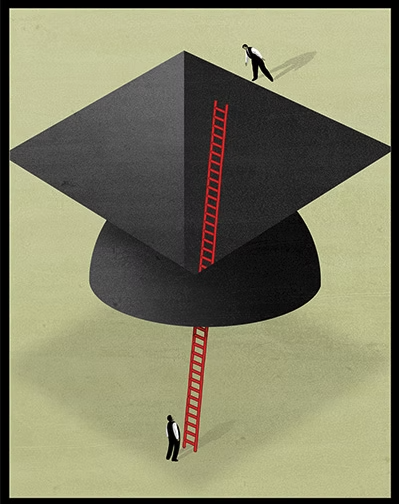

 Here, we must ask ourselves why the reduction of DOE personnel, moving services to other federal agencies, or the potential elimination of the department matter for K-12 distance learning programs?
 Negative Implications for Distance Learning

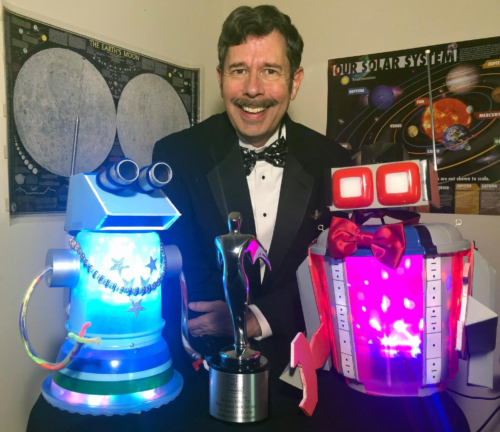
 The educational series is based on Jim’s CDs of songs,
  Making Music
 Jim then released


