“When Your Child Is Struggling, Look for Patterns Before Solutions,” by Sarah Collins, Homeschool OT
When something is hard for our kids, we naturally want to fix it. If handwriting is messy, we practice handwriting. If shoe tying is hard, we practice tying shoes. Sometimes that is exactly what a child needs. But as an occupational therapist and homeschool mom, I’ve learned to ask another question: Where else am I seeing this? One Hard Thing Doesn’t Tell Us the Whole Story.
Let’s say handwriting has become a struggle. Your child complains that writing takes too long. They lean across the table, constantly reposition themselves, or avoid assignments that require writing.
Now zoom out.
Is tying shoes also difficult? Do they avoid buttons and zippers? Is using a knife and fork together awkward? Do they avoid climbing or activities that require both sides of the body to work together?
That doesn’t mean all of those challenges have the same cause. And it certainly doesn’t mean we should diagnose our children based on our observations.
It simply means we have a pattern worth getting curious about.
Homeschooling Gives Us a Unique View
One advantage of homeschooling is that we see our children across their entire day.
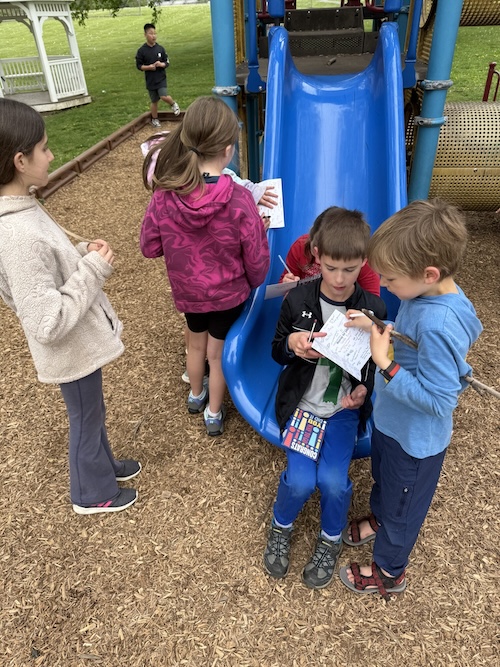
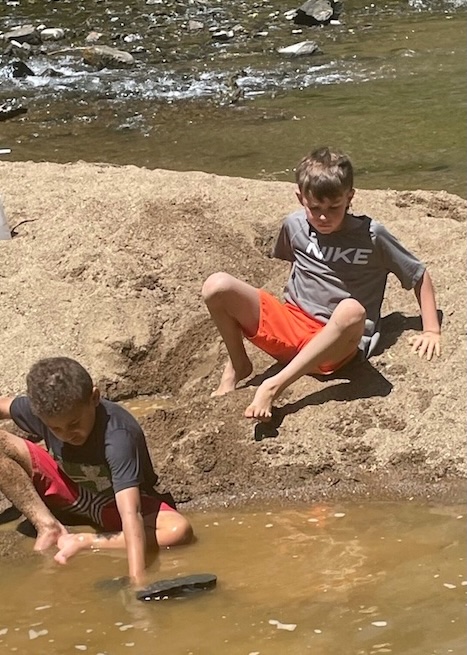
We see them writing and doing math, but we also see them make lunch, get dressed, do chores, play outside, and interact with siblings.
Occupational therapists call these activities occupations, and they all give us information about how a child participates in everyday life.
Try choosing three parts of your child’s day: learning, self-care, and play.
Notice what comes easily. What requires more effort? What does your child avoid? When do they ask for help?
And don’t forget to notice strengths. We aren’t compiling a list of everything our children can’t do. We’re getting to know the learner in front of us.
Ask Before You Assume
When a child says, “I don’t want to do this,” try asking:
“What part feels hardest right now?”
Is it thinking of what to say? Does their hand feel tired? Is keeping their place difficult? Does the task feel too big?
Understanding what is difficult doesn’t mean removing the expectation. It helps us decide what kind of support may help.
And sometimes that means bringing someone else onto the team.
Homeschooling is not alone schooling.
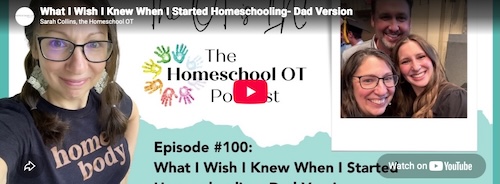
Want to Dig Deeper? In Episode 102 of The OT is IN, “Spotting Hidden Roadblocks to Learning,” fellow occupational therapist and homeschool mom Tiffany Parsons joins me to use handwriting as a starting point for looking at patterns across a child’s day. Listen to Episode 102, above.
And if you find yourself thinking, But what about my child?: Join Tiffany and Sarah inside OT is INsiders. We meet monthly for practical teaching and live Q&A with homeschool families. Our October 7 session is all about handwriting.
Learn more about OT is INsiders: homeschoolot.com/otinsiders

Sarah Collins, founder of HomeschoolOT
About Sarah Collins, MSOT, OTR/L, occupational therapist, homeschool mom, author, and founder of HomeschoolOT. With more than 17 years of experience supporting children and families, she helps parents understand how learning, movement, sensory processing, executive functioning, and daily life skills work together.
Since beginning her own homeschool journey in 2017, Sarah has combined her professional expertise with real-life experience, helping families create learning environments that honor each child’s unique strengths and challenges. Through HomeschoolOT and The OT is IN podcast, she shares practical strategies that help parents move beyond curriculum choices and better understand how their children learn best.
Sarah believes that homeschooling is not about recreating school at home. It is about helping children grow into capable, confident learners while building strong family relationships along the way.
Learn more: homeschoolot.com
- Instagram: instagram.com/homeschool_ot
- Facebook: facebook.com/thehomeschoolot
- LinkedIn: linkedin.com/in/homeschoolot
- Tiktok: tiktok.com/@homeschool_ot
- Podcast: podcasts.apple.com
- Youtube: youtube.com/@homeschoolot
- Check out Sarah’s book, “A Chameleon Tale: A Colorful Sensory Story,” on Amazon