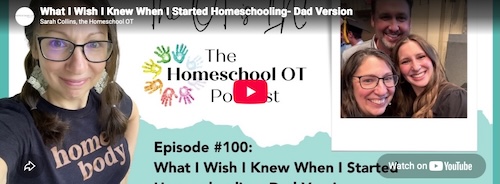
“How Do You Know Your Homeschool Is Working?,” asks HomeschoolOT founder Sarah Collins
A Note from the InkandescentKids editors: If it’s Friday, it’s time for our weekly spotlight on HomeschoolOT founder Sarah Collins, homeschoolot.com. Today she’s shining a light on one of the biggest questions homeschool families ask themselves. Scroll down to read all about it!
One of the hardest things about homeschooling is that you don’t always know whether it’s working while you’re in the middle of it. You can check a math assignment or see whether you finished the science curriculum, but how do you measure confidence, independence, responsibility, or the ability to manage time?
For the 100th episode of The OT is IN podcast, I sat down with my family to look back on nearly a decade of homeschooling. My husband was initially skeptical, my daughter recently graduated, and my youngest is still being homeschooled. Their perspectives reminded me that homeschool success often becomes clearer when we stop looking only at what our children accomplished today and consider how they have changed over time.
As an occupational therapist, I look at function and participation. We can use that same lens in our homeschools. Consider whether your child is:
- Taking more responsibility for schoolwork or daily routines
- Managing time and belongings with fewer reminders
- Becoming more comfortable asking for help or advocating for what they need
- Developing meaningful friendships and learning to navigate disagreements
- Attempting things that once resulted in an immediate “I can’t”
- Participating more independently in family, community, work, sports, or other activities
These changes may not appear on a transcript, but they matter tremendously as our children move toward adulthood.
My daughter is heading to college with nineteen credits already completed through dual enrollment. That is an easy accomplishment to measure. What interests me just as much is her ability to manage her own schedule, balance responsibilities, maintain friendships, and understand how she learns best.
None of those skills appeared overnight.
Homeschooling gives us the flexibility to pay attention and adjust along the way. Sometimes our children need more time. Sometimes they need a different approach. Sometimes expectations need to change, and other times we need to keep the expectation while changing the support.
If you’re wondering whether your homeschool is working, look backward before you look ahead. What can your child do today that they couldn’t do a year ago?
Celebrate that growth, notice where they’re still struggling, and keep adjusting. Those ordinary changes may be some of the best evidence that your homeschool is working.
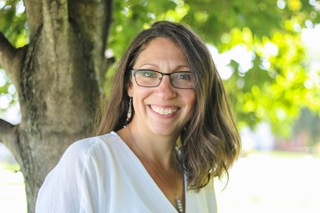
Sarah Collins, founder of HomeschoolOT
About Sarah Collins, MSOT, OTR/L, occupational therapist, homeschool mom, author, and founder of HomeschoolOT. With more than 17 years of experience supporting children and families, she helps parents understand how learning, movement, sensory processing, executive functioning, and daily life skills work together.
Since beginning her own homeschool journey in 2017, Sarah has combined her professional expertise with real-life experience, helping families create learning environments that honor each child’s unique strengths and challenges. Through HomeschoolOT and The OT is IN podcast, she shares practical strategies that help parents move beyond curriculum choices and better understand how their children learn best.
Sarah believes that homeschooling is not about recreating school at home. It is about helping children grow into capable, confident learners while building strong family relationships along the way. Learn more: homeschoolot.com
- Instagram: instagram.com/homeschool_ot
- Facebook: facebook.com/thehomeschoolot
- LinkedIn: linkedin.com/in/homeschoolot
- Tiktok: tiktok.com/@homeschool_ot
- Podcast: podcasts.apple.com
- Youtube: youtube.com/@homeschoolot
- Check out Sarah’s book, “A Chameleon Tale: A Colorful Sensory Story,” on Amazon